What Is Batch Cooking?
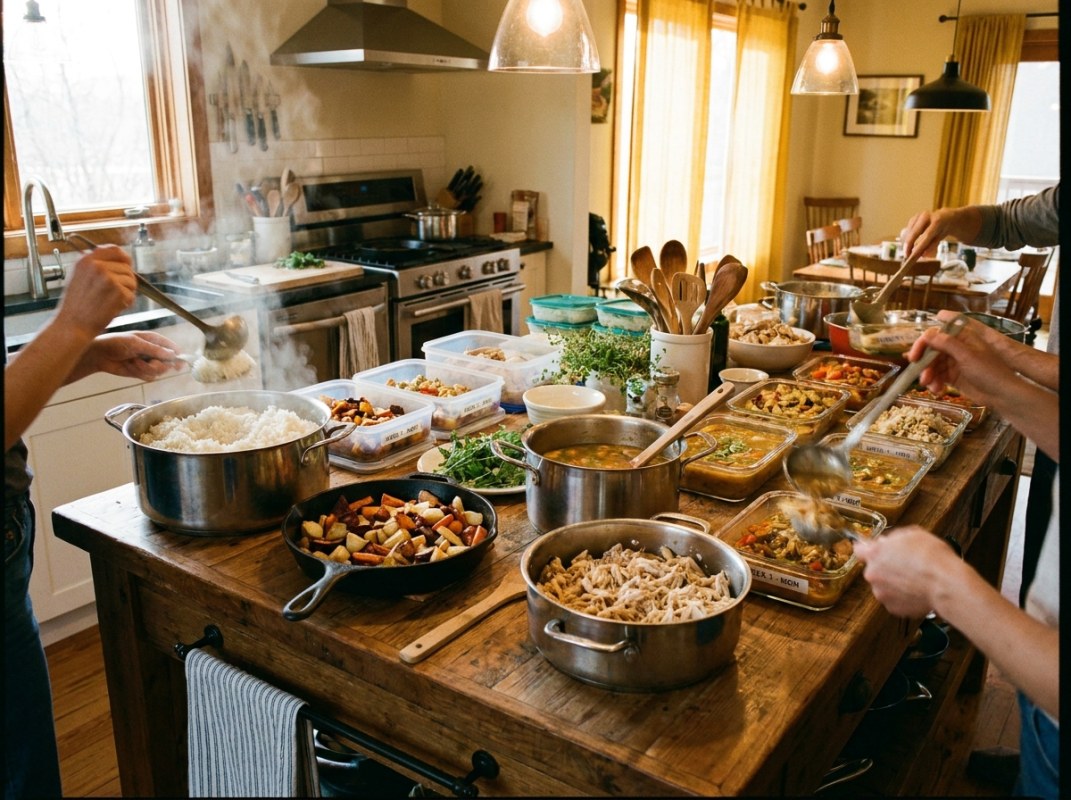
Batch cooking means preparing large quantities of food at once — more than you need for a single meal — so you have a stock of ready-to-eat components throughout the week. It's the foundational skill behind every meal prep system, and once you learn it, cooking for the week becomes automatic rather than effortful.
Batch Cooking vs Meal Prepping: The Difference
These terms are often used interchangeably, but they describe subtly different approaches:
- Batch cooking: cook large quantities of individual components (a big pot of rice, two sheet pans of chicken, roasted vegetables) — assemble into meals throughout the week
- Full meal prep: assemble complete, portioned meals in containers ready to grab and go
Batch cooking gives more flexibility (you can combine components differently each day). Full meal prep gives more convenience (zero decision-making at mealtime). Most experienced meal preppers do a combination of both.
The 4 Core Batches Everyone Should Know
Batch 1: A Large Grain
Cook 3–4 cups of dry grain to yield 6–8 cups cooked. This is the base for every bowl, the side for every protein, and a quick breakfast when reheated with milk and banana. Takes 20–45 minutes depending on grain type, almost entirely hands-off.
Batch 2: A Large Protein
Roast, bake, or slow-cook 2–3 lbs of protein. The exact preparation matters less than having it done. 6–8 servings of pre-cooked protein in the fridge means every meal takes under 5 minutes to assemble.
Batch 3: Two Sheet Pans of Vegetables
One sheet pan of a green vegetable (broccoli, Brussels sprouts, asparagus), one sheet pan of a starchy vegetable (sweet potato, beets, butternut squash). Both roast at 400–425°F — often simultaneously. 8+ servings of roasted vegetables all week.
Batch 4: A Legume or Bean
Either cook dried legumes (lentils are fastest at 20–25 minutes) or drain and prep several cans of beans. These become your plant protein source for any meal where the primary protein isn't sufficient, and provide fiber that keeps you full for hours.

Planning Your Batch Cook: The Backward Method
Start with the meals you want to eat, then identify the components those meals need, then batch those components. This is the opposite of starting with ingredients and figuring out meals afterward (which leads to redundant components and wasted food).
Example backward plan:
- I want: grain bowls for lunch, protein + veg for dinner, overnight oats for breakfast
- Components needed: cooked rice (bowls), chicken (bowls + dinner), broccoli (bowls + dinner), sweet potato (bowls), overnight oats (breakfast)
- Batches: 2 cups dry rice → stovetop, 2 lbs chicken → oven, broccoli + sweet potato → sheet pans, 5 oat jars → assembled
Shopping for a Batch Cook
The golden rule: buy 20% more than you think you need for the first month. Beginner batch cooking almost always underestimates how much a family or individual actually eats. Better to have extra grain to freeze than to run out on Thursday.
Frequently Asked Questions
How is batch cooking different from meal prepping for a family?
For a family of four, batch cooking typically produces 8–12 servings per item, which covers 2–3 dinners with leftovers or 4–5 lunches. The mechanics are identical — more food, same system. The main adjustment is oven capacity: most home ovens fit 2 sheet pans at a time, limiting simultaneous batch size for roasted items.
What foods batch cook the best?
Grains (rice, quinoa, oats), legumes (lentils, beans), roasted proteins (chicken, turkey, salmon), and roasted root vegetables (sweet potato, carrots, beets) all batch cook excellently. Foods that don't batch well: pasta (gets soggy), fresh salads (wilt fast), eggs cooked any way other than hard-boiled.
Can I batch cook in a slow cooker while I'm at work?
Yes. A slow cooker batch is one of the most efficient prep methods available. Chicken breasts or thighs + broth + seasonings on low for 8 hours = shredded chicken ready when you get home. Bean soups, stews, and pulled proteins all batch beautifully in a slow cooker.
What's the biggest mistake beginners make when batch cooking?
Cooking everything the same way. If all your proteins are baked with the same seasoning and all your vegetables are roasted with just olive oil, meals become monotonous quickly. Season each component slightly differently, or prepare the same protein two ways (plain batch for mixing, seasoned batch for standalone eating).
How do I start batch cooking if I've never done it?
Start with the easiest batch: a pot of rice or quinoa. Nothing else. Next week, add a roasted protein. The week after, add a sheet pan of vegetables. You're batch cooking after week three without ever having done a complicated multi-hour session. Building incrementally is significantly more sustainable than attempting a full batch session in week one.