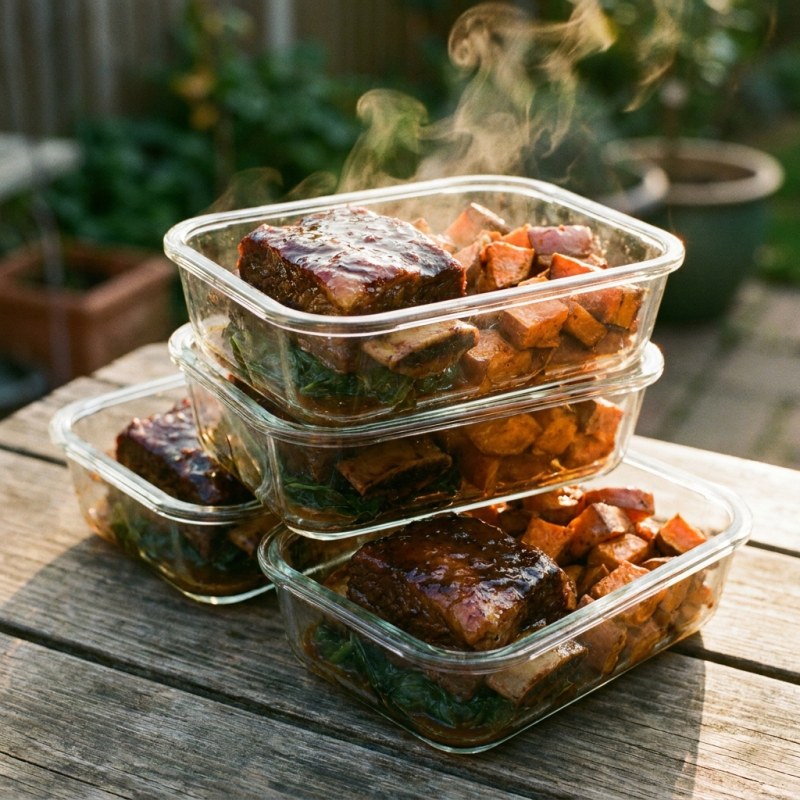
Most bulking advice tells you to eat more. What it doesn't tell you is that eating 3,200 calories from whole foods through a meal prep system requires solving a container problem first. A standard 2-cup meal prep container holds approximately 450–550 calories. To run 3,200 calories across five eating occasions you need containers averaging 640 calories each — and most prep containers simply don't hold that volume of food. This guide solves the logistics before the recipes.

How Many Calories Do You Actually Need for Bulking?
Bulking requires a calorie surplus above your total daily energy expenditure (TDEE). The surplus size determines whether you're doing a lean bulk (slower, more muscle-to-fat gain ratio) or a dirty bulk (faster, more fat accumulation).
Lean bulk surplus: 250–350 calories above TDEE. This produces approximately 0.5 lbs per week of weight gain with a higher proportion of muscle.
Standard bulk surplus: 350–500 calories above TDEE. Approximately 0.75–1.0 lbs per week.
The TDEE estimate for a 170 lb (77 kg) moderately active male: approximately 2,700 calories. Lean bulk target: 2,950–3,050 calories. Standard bulk target: 3,050–3,200 calories.
These numbers shift significantly with body size, actual activity level, and metabolic rate. The only reliable way to calibrate: eat a consistent calorie target for 3 weeks and measure scale weight. If you're not gaining 0.5–1.0 lbs per week, add 200 calories.
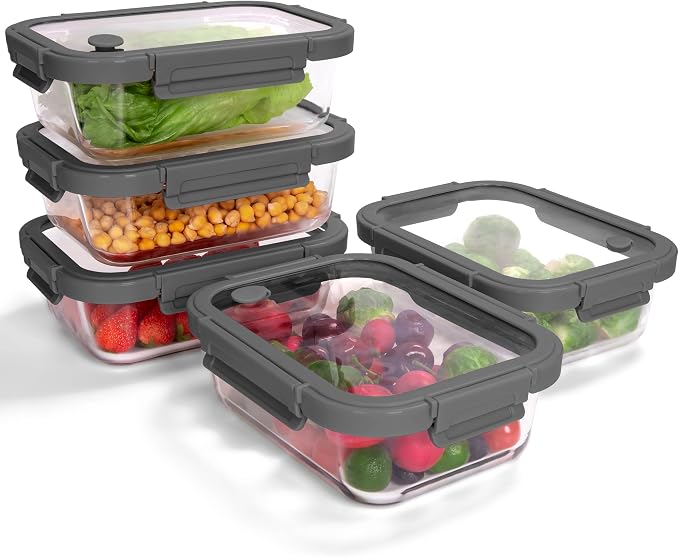
Standard 2-cup (480ml) meal prep containers hold 450–550 calories of rice-and-protein content. Hitting 640+ calories per container requires 3–4 cup containers. For a 3,200 calorie day across 5 eating occasions, you need containers that hold 640 calories each — that means approximately 1.5 cups cooked grain + 6oz protein + a fat addition + a vegetable. Buy 3-cup or 4-cup containers before starting a bulking prep week. This is the most commonly skipped step and the reason bulk meal prep feels impossible with standard containers.
What Is the Best Macronutrient Split for Bulking Meal Prep?
The evidence-backed target for muscle building while minimising fat gain:
- Protein: 0.7–1.0g per lb of body weight. For a 170 lb person: 119–170g daily. This plan targets 200g, which is at the high end — sufficient for even experienced lifters training 5+ days per week.
- Carbohydrates: 40–50% of total calories. At 3,200 calories, that's 320–400g carbohydrates. Brown rice, oats, sweet potatoes, and pasta are the delivery vehicles.
- Fat: 25–30% of total calories. At 3,200 calories, that's 89–107g fat daily. Fat provides calorie density and supports testosterone production.
The key insight: protein is the most expensive macronutrient per calorie. At 200g protein (800 calories), you have 2,400 calories remaining for carbohydrates and fat. Those 2,400 calories come primarily from grains and fat additions — the cheapest calorie sources available.
What Are the Cheapest High-Calorie Proteins for Bulking?
The calorie density of protein sources matters more for bulking than for any other dietary goal, because you're trying to hit a high calorie target efficiently.
| Protein | Calories per 3oz cooked | Protein per 3oz | Cost per lb (2026) | Meal prep suitability |
|---|---|---|---|---|
| 80/20 ground beef | 240 cal | 21g | $4.49–$5.99 | ✅ Excellent — cook, season, done |
| Bone-in chicken thighs (skin on) | 210 cal | 21g | $1.99–$2.49 | ✅ Best value calorie-dense protein |
| Whole eggs | 70 cal each | 6g each | $0.29/egg | ✅ Highest calorie/dollar ratio |
| Salmon (farmed) | 175 cal | 22g | $5.99–$7.99/lb | ✅ DHA omega-3 bonus |
| Chicken breast (skinless) | 140 cal | 26g | $2.99–$3.99 | ⚠️ Low calorie density — must add fat |
| Ground turkey 93% lean | 170 cal | 23g | $3.49–$4.99 | ✅ Good — add oil for calorie density |
The bulking hierarchy: bone-in chicken thighs for cost efficiency, 80/20 ground beef for calorie density, eggs for cheapest calories per gram of protein. Chicken breast is the wrong bulking protein unless you're deliberately keeping fat low — the calorie density is too low at 140 cal/3oz to efficiently hit 3,200 daily without enormous volume.


How Do You Build a 650-Calorie Meal Prep Container?
A 650-calorie container requires four components working together:
Component 1 — Grain base (250–300 cal): 1.5 cups cooked brown rice (280 cal), or 1.5 cups cooked pasta (310 cal), or 1 cup dry oats cooked (300 cal for breakfast containers).
Component 2 — Protein (280–320 cal): 6oz bone-in chicken thigh cooked (315 cal), or 6oz 80/20 ground beef (480 cal — reduce grain slightly), or 4 whole eggs scrambled (280 cal).
Component 3 — Fat addition (+100–200 cal):
- 2 tbsp olive oil drizzled: +240 cal
- 2 tbsp peanut butter: +190 cal
- ¼ cup shredded cheese: +110 cal
- 1oz mixed nuts on top: +165 cal
Component 4 — Vegetable (30–60 cal): Broccoli, spinach, bell peppers. Volume without meaningful calories.
Sample 650-calorie container: 1.5 cups brown rice (280) + 5oz chicken thigh (260) + 2 tbsp olive oil (240) + 1 cup broccoli (55) = 835 calories. Reduce rice to 1 cup (187 cal) to bring it to 542 calories. Add 1oz cheese (110) to reach 652 calories. This is the iterative approach — start with the protein and grain, then adjust fat to hit the target.
What Are 10 Bulking Meal Prep Ideas With Full Calorie Counts?
| Meal | Calories | Protein | Carbs | Notes |
|---|---|---|---|---|
| Chicken thigh + brown rice + olive oil | 720 cal | 38g | 42g | Add extra oil if target not met |
| 80/20 ground beef bowl + rice | 780 cal | 42g | 45g | Highest calorie density of any bowl |
| Overnight oats bulk breakfast | 720 cal | 32g | 95g | 1 cup oats + 2 tbsp PB + 1 banana + whole milk |
| Pasta + ground turkey + olive oil | 760 cal | 44g | 78g | Most filling per calorie count |
| Salmon + rice + avocado | 680 cal | 38g | 42g | Add DHA omega-3 twice per week |
| Egg fried rice (4 eggs + 1.5 cups rice) | 640 cal | 28g | 60g | Fast — 10 minutes stovetop |
| Peanut butter oatmeal + milk | 650 cal | 22g | 80g | Fastest breakfast option |
| Chicken thigh + sweet potato + cheese | 700 cal | 34g | 40g | Sweet potato adds potassium |
| Ground beef + pasta + tomato sauce | 800 cal | 44g | 75g | Best for high carb days |
| Tuna pasta salad + mayo | 620 cal | 36g | 55g | No-heat option for office |
How Do You Hit 3,200 Calories a Day Through Meal Prep?
The daily structure for 3,200 calories across 5 eating occasions:
Meal 1 — Bulking breakfast (720 cal):
1 cup dry oats + 2 tbsp peanut butter + 1 banana + 1 cup whole milk + 1 tbsp honey. Total: 720 cal, 22g protein, $0.85. This is the most calorie-efficient breakfast in the guide. Make 5 jars Sunday — the oats soak overnight, the peanut butter and honey go in at prep time.
Meal 2 — Mid-morning (300 cal):
Protein smoothie or 3 hard-boiled eggs + 1oz nuts. This eating occasion bridges breakfast and lunch — keeps muscle protein synthesis active without a full meal.
Meal 3 — Lunch (750 cal):
Full bulking bowl: 1.5 cups rice + 6oz protein + 2 tbsp olive oil + vegetables. This is the largest meal of the day.
Meal 4 — Post-workout or afternoon (500 cal):
Greek yogurt (17g protein) + 1 cup granola + banana. Or a second protein source with rice if training volume is high.
Meal 5 — Dinner (650 cal):
Second bulking bowl, slightly lighter than lunch. Or pasta-based for variety.
Running total: 2,920 cal. The remaining 280 calories come from cooking oils, sauces, beverages, and natural variation in protein weights.
Cost reality: 3,200 calories from whole foods costs approximately $10–$12 per day on this plan, or $70–$84 per week in groceries. This is significantly higher than a standard meal prep week ($35–$55) because calorie volume costs more than calorie efficiency.
For the high-protein framework that underpins the protein side of bulking, see the high protein meal prep guide. For the Sunday batch cooking system that runs all five bulking components in parallel, see the batch cooking Sunday guide. For keeping the overall grocery cost lower, see the cheap meal prep ideas guide.
Frequently Asked Questions About Bulking Meal Prep
How many calories per day do I need for bulking?
Your TDEE plus 250–500 calories. A rough TDEE estimate for a moderately active 170 lb male is 2,700 calories — so 2,950–3,200 for a lean-to-standard bulk. The only reliable calibration: hit a consistent calorie target for 3 weeks and measure weekly weight. Not gaining? Add 200 calories and repeat.
What is the cheapest way to hit 3,200 calories through meal prep?
Oats + peanut butter for breakfast (720 cal, $0.85), brown rice as the grain base (280 cal per 1.5 cups, $0.18), bone-in chicken thighs as the protein (315 cal per 6oz, $0.75), and olive oil as the calorie addition (240 cal per 2 tbsp, $0.20). This combination delivers the highest calories per dollar of any whole-food bulking approach. Total food cost for 3,200 calories on this system: approximately $9–$11 per day.
Do I need protein powder for a bulk?
No. 200g protein daily from whole foods is achievable: 4 eggs (24g) + 6oz chicken (38g) + 6oz ground beef (42g) + Greek yogurt (17g) + milk in oats (8g) + lentils (18g) = 147g from these alone, with background protein from grains and vegetables adding another 20–30g. Protein powder is a convenience tool, not a requirement.
How long does bulking meal prep last in the fridge?
Per USDA FoodKeeper: cooked chicken 4 days, cooked ground beef 4 days, cooked rice 4–6 days, overnight oats 5 days, hard-boiled eggs in shell 7 days. The storage windows are the same as any meal prep week — the higher calorie content doesn't change food safety timelines.
What containers do I need for bulking meal prep?
3-cup or 4-cup containers — not the standard 2-cup. A 650-calorie bulking container doesn't fit in a standard 2-cup prep container when it includes the correct grain volume, protein portion, and a fat addition. Glass containers in the 3-cup range cost $30–$50 for a 5-pack. This is the most commonly missed purchase in starting bulking prep.