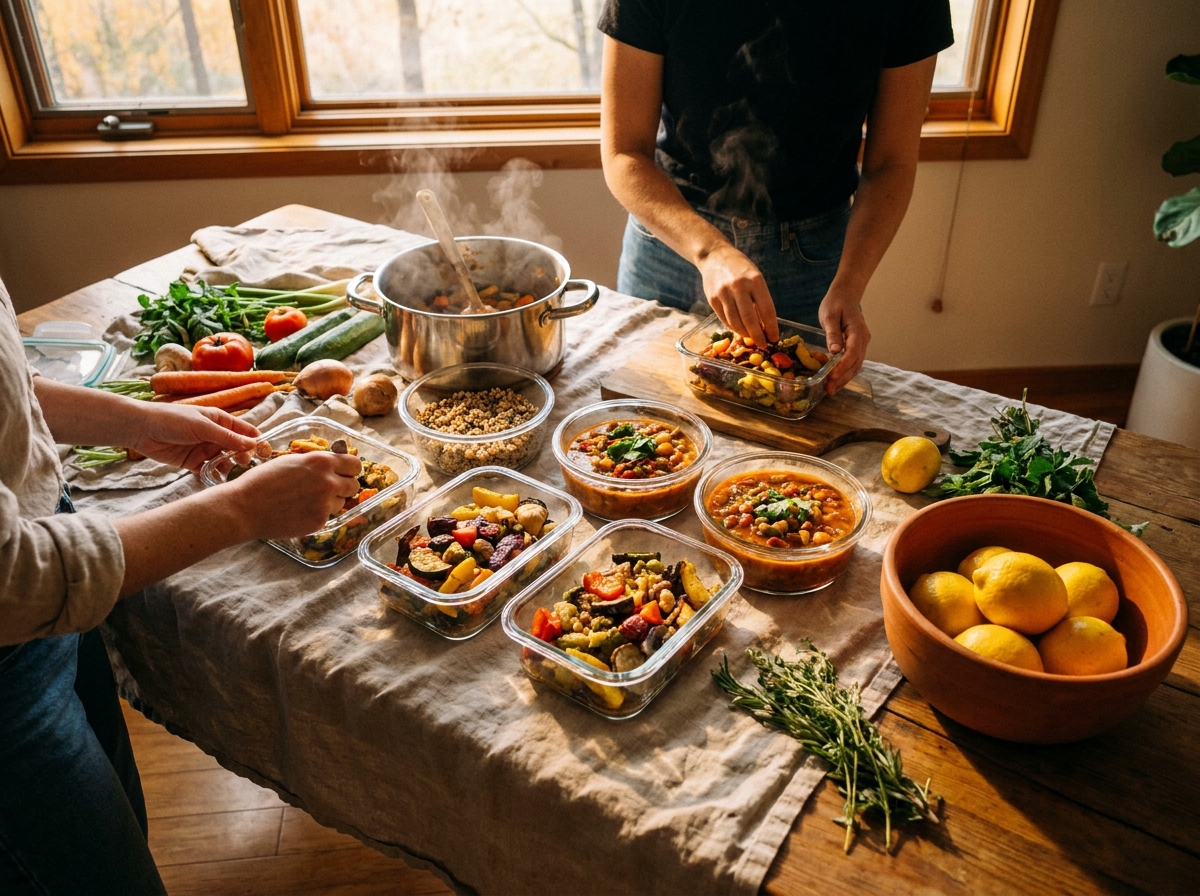
I've done batch cooking Sunday in some form for nine years. The system has changed significantly — I used to make fully assembled identical containers and wonder why I dreaded eating them by Wednesday. The shift to component cooking changed everything: cook the proteins, grains, and vegetables separately, combine differently each day. Same 90–120 minutes of cooking. Completely different eating experience Monday through Friday.
This guide is the complete batch cooking Sunday system: the 5-category framework that structures every prep session, the exact 2-hour timeline with what goes in the oven or on the stove at what time, the best proteins for batch cooking ranked by reheat quality, a 4-sauce rotation that makes the same base ingredients taste like different meals, and the mistakes I made in years 1–3 that you can skip entirely.
The single biggest improvement in batch cooking results: prep components, not completed meals. Cook 2 lbs of chicken thighs, 2 cups dry brown rice, 3 cups roasted vegetables, and 2 sauces as separate entities. Combine differently each day. Monday's chicken rice bowl with honey-soy sauce is a completely different eating experience from Wednesday's chicken and sweet potato with tahini — even though both were made from the same Sunday prep. The variety comes from assembly, not from cooking different things every night.
What Is Batch Cooking Sunday and How Is It Different From Meal Prep?
The terms are often used interchangeably but they describe meaningfully different approaches. Meal prep typically refers to making complete, portioned meals — five identical containers ready to grab and heat. Batch cooking is the upstream version: cooking large quantities of individual components that can be assembled into multiple different meals throughout the week.
Batch cooking Sunday is the practice of dedicating one session per week — typically Sunday, though the day is arbitrary — to cooking all your weekly component ingredients in parallel. The goal is not five identical lunches; it's a fully stocked "meal prep pantry" in your fridge that makes assembly on any night of the week a 5-minute task rather than a 30-minute cooking commitment.
The practical difference: someone who meal preps makes Monday's lunch on Sunday. Someone who batch cooks makes the ingredients for Monday through Friday's lunches and dinners on Sunday, then spends 4 minutes assembling each meal from the pre-cooked components. Both approaches work; batch cooking produces more variety and is more resilient to changing daily preferences.
What Is the 5-Category Framework for Batch Cooking Sunday?
Every effective batch cooking session covers five categories. Miss any one and your week develops gaps that send you back to takeout by Thursday:
| Category | What to Cook | Amount for 1 Person | Amount for 2 People |
|---|---|---|---|
| 1. Protein | Chicken thighs, ground turkey, salmon, eggs, lentils | 1.5–2 lbs | 3–4 lbs |
| 2. Grain | Brown rice, quinoa, farro, barley | 1.5 cups dry → ~4.5 cups cooked | 3 cups dry → ~9 cups cooked |
| 3. Vegetable | Roasted broccoli, sweet potato, peppers, zucchini | 4–6 cups raw → 3–4 cups roasted | 8–10 cups raw → 6–8 cups roasted |
| 4. Sauce / Flavour | 2–3 batch sauces for variety | ½ cup each × 2–3 sauces | ¾ cup each × 2–3 sauces |
| 5. Breakfast | Overnight oats, egg muffins, smoothie packs | 5 jars or 12 muffins | 10 jars or 24 muffins |
The critical insight: each category takes roughly the same active prep time (10–15 minutes hands-on), but most of the actual cook time is passive — the oven runs unattended while you're prepping the next category. This is how 5 categories get cooked in 90–120 minutes with only about 40 minutes of actual active effort.
What Does the Complete 2-Hour Batch Cooking Sunday Timeline Look Like?
This timeline is for a single person. Scale quantities for 2+ people but the sequence stays the same:
- 0:00 — Oven on, rice on: Preheat oven to 425°F. Start brown rice (1.5 cups dry + 3 cups water, bring to boil, reduce to lowest heat, cover, timer 40 minutes). Rice cooks completely unattended from this point.
- 0:05 — Season protein: Pat 1.5–2 lbs bone-in chicken thighs dry. Season with olive oil, garlic powder, smoked paprika, salt. Onto a rimmed sheet pan skin-side up.
- 0:12 — Protein in oven: Chicken goes in. Timer 35–38 minutes. This starts the longest oven item — everything else fits around it.
- 0:15 — Chop vegetables: Cut broccoli into florets, cube sweet potato, slice peppers. Toss in olive oil and salt. Set aside on a second sheet pan.
- 0:28 — Vegetables in oven: Slide the vegetable pan onto the lower oven rack alongside the chicken. Timer 20–22 minutes. Both items cook simultaneously.
- 0:30 — Make overnight oats: 5 mason jars, assembly-line. 10 minutes. Done at 0:40 with time to spare.
- 0:40 — Make batch sauces: Two sauces take 8–12 minutes total. See sauce recipes in the next section.
- 0:50 — Vegetables out: Pull the lower pan. Check chicken (target 175–180°F internal for thighs).
- 0:52 — Chicken out, rice done: Both should finish within minutes of each other if timing was right. Chicken rests on a cutting board 5 minutes.
- 1:00 — Active cool-down: Spread everything on wide pans or cutting boards to cool. Never seal hot food — trapped steam causes sogginess and raises the container temperature, promoting bacterial growth.
- 1:15 — Portion and label: Divide rice into portions, debone and slice chicken, separate vegetables into containers. Label with contents. Load fridge.
- 1:30 — Done.
The 1:30 total is achievable with practice. Your first session will take closer to 2 hours — that's normal. The parallelisation becomes intuitive after 3–4 sessions. What you're building is a mental model of which tasks can run simultaneously versus which require active attention.
Which Proteins Work Best for Batch Cooking Sunday?
Not all proteins reheat equally after 4 days in the fridge. This ranking is based on real testing — not theory:
| Protein | Reheat Quality Day 4 | Fridge Life (USDA) | Best Batch Method | Notes |
|---|---|---|---|---|
| Chicken thighs | ⭐⭐⭐⭐⭐ Excellent | 4 days | Sheet pan 425°F, 35 min | Fat content prevents drying on reheat |
| Slow cooker pulled chicken | ⭐⭐⭐⭐⭐ Excellent | 4 days | Low 6hrs or high 3hrs | Shredded form stays moist in sauce |
| Ground turkey | ⭐⭐⭐⭐ Good | 4 days | Stovetop with sauce | Sauce is moisture insurance for day 4 |
| Lentils / chickpeas | ⭐⭐⭐⭐⭐ Excellent | 5 days | Stovetop simmer | Flavour deepens over 5 days |
| Chicken breast (brined) | ⭐⭐⭐ Good | 4 days | Brine first, bake 400°F | Brining is mandatory — skip it and day 3 is dry |
| Salmon | ⭐⭐ Fair | 3 days | Sheet pan 400°F, 12 min | Batch for Mon–Tue only; deteriorates past day 3 |
| Hard-boiled eggs | ⭐⭐⭐⭐ Good | 7 days (in shell) | Cold-start boil, 12 min | Best protein for mid-week additions |
Per USDA FoodKeeper guidelines: cooked poultry lasts 4 days refrigerated, cooked fish 3–4 days, hard-boiled eggs in-shell 7 days, cooked legumes 3–5 days. Plan your protein variety around these timelines — fish Monday–Tuesday, chicken and turkey through Thursday, legumes as the Thursday–Friday fallback that actually gets better with time. For the deep dive on chicken specifically, see the chicken meal prep guide.
What Are the Best Batch Sauces for Weekly Variety?
This is the batch cooking secret most guides don't emphasise enough: two to three sauces made on Sunday transform the same base components into meals that taste genuinely different each day. These four are my permanent rotation — each takes 3–5 minutes to make, keeps 7 days refrigerated, and works across all protein and grain combinations:
Honey Soy Ginger (4 minutes)
3 tablespoons soy sauce + 2 tablespoons honey + 1 tablespoon rice vinegar + 2 teaspoons fresh ginger grated + 2 garlic cloves minced + 1 teaspoon sesame oil + ½ teaspoon cornstarch dissolved in 1 tablespoon water. Whisk together cold. Use as-is for a dressing; heat 2 minutes in a small pan until slightly thickened for a glaze. Works on everything: chicken, turkey, salmon, tofu, rice, noodles.
Tahini Lemon (3 minutes)
3 tablespoons tahini + juice of 1 lemon + 1 garlic clove minced + 3 tablespoons warm water + ½ teaspoon cumin + salt. Whisk until smooth — it will seize and look broken at first, then come together as you add water. Adjust thickness with more water. Mediterranean profile; excellent on chicken, roasted vegetables, and grain bowls. Has the highest satiety factor of the four sauces due to tahini's fat content.
Chipotle Yogurt (2 minutes)
½ cup plain Greek yogurt + 1–2 chipotle peppers in adobo (from can) minced + 1 tablespoon adobo sauce + juice of ½ lime + salt. Smoky, slightly spicy, cooling — cuts through rich proteins well. Works particularly well on pulled chicken tacos and sweet potato bowls. Also functions as a dip for vegetables. 12g protein per 3 tablespoons from the yogurt base.
Peanut Satay (4 minutes)
3 tablespoons natural peanut butter + 2 tablespoons soy sauce + 1 tablespoon rice vinegar + 1 teaspoon honey + 1 teaspoon sriracha + 3 tablespoons warm water to thin. Whisk together. Southeast Asian profile; strongest flavour of the four. Excellent on noodle bowls, cold chicken salads, and roasted sweet potato. Use sparingly on day 4 or 5 — the flavour concentrates as it sits and can overpower.
What Are the Most Common Batch Cooking Mistakes?
I made all of these in my first two years. They're worth cataloguing specifically because they're non-obvious:
- Sealing hot food immediately: The most common technical error. Hot food in a sealed container creates condensation, makes everything soggy, and raises the internal container temperature into the bacterial growth zone (40–140°F). Cool everything for 20–30 minutes on open surfaces before sealing. This single habit change improved my meal prep quality more than any recipe change.
- Prepping too many different recipes: Three complete recipes on your first Sunday means triple the cognitive load, triple the cleanup, and triple the chance of something going wrong. Start with one protein, one grain, one vegetable. Add variety via sauces, not via more cooking.
- Using produce that doesn't hold: Avocado, cucumber, fresh tomatoes, and salad greens don't survive 5 days prepped. Stick to hardy vegetables for the first month: broccoli, sweet potato, bell peppers, carrots, zucchini, cauliflower. Save delicate produce for same-day preparation.
- Skipping the container label: By Thursday you won't remember what's in the unlabelled container or when it was made. Masking tape and a marker take 5 seconds per container and eliminate mid-week guessing about food safety.
- Preparing sauces with garlic too far in advance: Raw garlic in oil-based sauces can develop Clostridium botulinum in an anaerobic (airtight) environment if stored longer than 7 days. Keep garlic-in-oil preparations to 7 days maximum, or use garlic powder instead of raw garlic in batch sauces. Acidic sauces (with lemon juice or vinegar) have a lower risk profile.
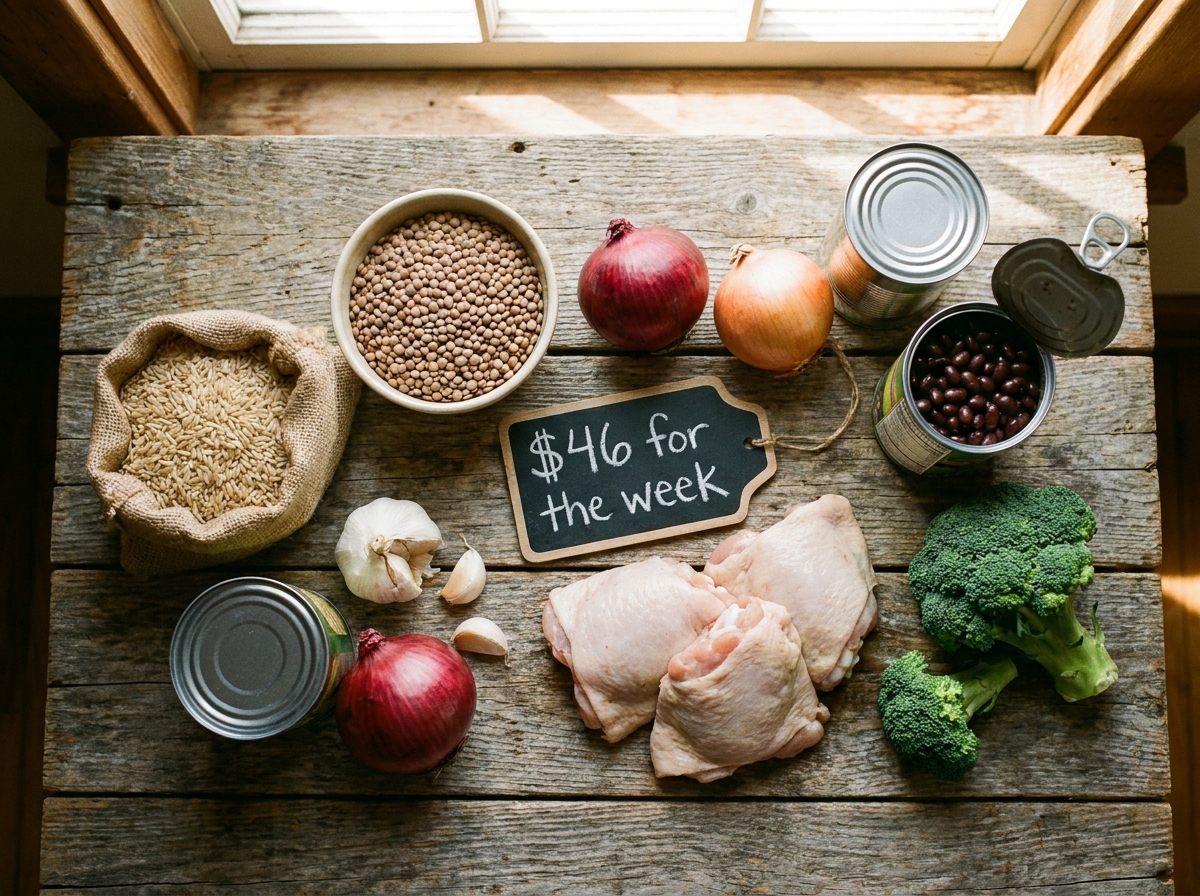
For a beginner-focused version of this system with your first-week shopping list and timeline, the meal prep for beginners guide covers the foundational version in detail. For the budget version of the same approach, the budget meal prep guide runs the same framework for under $45 per week.
Frequently Asked Questions About Batch Cooking Sunday
What is the difference between batch cooking and meal prepping?
Meal prepping typically means making complete, portioned meals in advance. Batch cooking means cooking large quantities of individual components (proteins, grains, vegetables) that can be assembled into different meals throughout the week. Batch cooking produces more variety day-to-day because the same roasted chicken can become a rice bowl, a wrap, a pasta topping, or a salad base — rather than five identical pre-built containers. Most experienced meal preppers migrate from meal prepping to batch cooking within the first few months because variety is the primary reason people quit meal prep routines.
How long does batch cooked food last in the fridge?
Per USDA FoodKeeper guidelines: cooked chicken and turkey last 4 days refrigerated; cooked fish lasts 3–4 days; cooked grains (rice, quinoa) last 4–6 days; roasted vegetables last 4–5 days; cooked lentils and beans last 3–5 days. Plan your week around these timelines. Eat the most perishable items first (fish Monday–Tuesday), and let the most resilient items (legumes, grains, eggs) carry you through to Friday. If you need more than 4 days of chicken, freeze half the batch at prep time and thaw mid-week.
How many hours does batch cooking Sunday take?
For one person: 90 minutes with practice, up to 2 hours on your first few sessions. For two people or a family: 2–2.5 hours. The timeline doesn't scale linearly with quantity — doubling the food adds roughly 15–20 minutes to prep (chopping, portioning) but minimal additional cooking time since the oven runs at the same temperature and pans just get fuller. The biggest time driver is how many different recipes you attempt. Stick to one protein, one grain, one vegetable for your first 4 sessions — you'll be done in 90 minutes and the efficiency is far higher than attempting variety through separate recipes.
What do you need for batch cooking Sunday for beginners?
Minimal equipment: one large rimmed sheet pan (18×13 inch), one heavy pot (6–8 quart) for grains and legumes, one skillet for stovetop proteins, a cutting board, a sharp knife, and 6–8 airtight containers for storage. You don't need an Instant Pot, slow cooker, or food processor to run an effective batch cooking Sunday session — though all three add useful capacity. Total equipment investment for the basics: $45–$75 if starting from nothing.