The biggest lie in meal prep culture is that you need a full Sunday session to fix your mornings. Breakfast is the easiest meal to batch, it requires the least cooking equipment, and it scales perfectly — making 5 portions of egg muffin cups takes almost identical time to making 1. I've been batching breakfast every week for four years and consistently spend under 20 minutes total on Sunday to cover all 5 weekday mornings at $0.35–$0.75 per serving.
This guide covers five breakfast meal prep ideas that have passed my real-world test: made repeatedly, eaten by Thursday, actually wanted by Friday. For each one I give exact quantities, the prep technique that prevents the most common failure, macros, fridge life per USDA FoodKeeper guidelines, and the reheating method that doesn't ruin the texture.
All five ideas below can be batched simultaneously in under 20 minutes if you run them in parallel. Egg muffins go in the oven at minute 0. While they bake (18 minutes), you make overnight oat jars (10 minutes), which overlap with the egg muffin bake time entirely. By the time the egg muffins come out, the oat jars are done and cooling. That's 5 days of breakfast for two different meals in one 20-minute window.
Why Is Breakfast the Best Meal to Prep First?
Breakfast meal prep has a higher return on investment than lunch or dinner prep for one simple reason: most people have fewer breakfast options they actually like, meaning the same batch covers the whole week without variety fatigue. If you batch five containers of the same chicken and rice for lunch, day 4 feels repetitive. If you batch five identical overnight oat jars for breakfast, day 4 feels like your normal breakfast — because you probably eat the same thing most mornings anyway.
The calorie math also helps: the average bought breakfast costs $5–$12 (café latte + pastry or a breakfast sandwich). A home-prepped breakfast costs $0.35–$0.75. Over 5 workdays that's a potential saving of $21–$57 per week from breakfast alone — $1,092–$2,964 annually. Even partial adoption (3 prepped breakfasts per week) produces meaningful monthly savings.
From a nutrition standpoint, having a high-protein breakfast ready removes the most common cause of poor breakfast choices: nothing prepared in the morning. When you're running late, the decision between a protein-rich prepared meal in the fridge and a vending machine option in the office isn't really a choice — the prepared meal wins by default.
Idea 1: Egg Muffin Cups — What's the Best Way to Make Them?
Egg muffin cups are the highest-protein, most portable breakfast meal prep option on this list. Per serving (2 muffins): 12–18g protein, 140–190 calories, $0.38–$0.55.
Base recipe (makes 12 muffins = 6 servings): Preheat oven to 350°F. Whisk 8 large eggs with 3 tablespoons milk, ½ teaspoon salt, ¼ teaspoon black pepper. Add your fillings of choice — I use 1 cup diced bell pepper + ½ cup diced onion + ½ cup shredded cheddar as the base, plus whatever protein I have (diced cooked chicken, crumbled turkey sausage, or diced ham). Spray a 12-cup muffin tin generously with cooking spray (this is the step most people skip — it's the difference between muffins that pop out cleanly and muffins that disintegrate). Pour the egg mixture evenly, filling each cup about ¾ full. Bake 18–20 minutes until centres are just set and edges are lightly golden.
The single most common failure: overfilling the muffin cups. The egg mixture puffs during baking and needs room. At ¾ full they rise to level; at full they overflow and stick.
Storage: Cool completely on a wire rack before containerising — trapped steam makes them rubbery. Store in an airtight container with a paper towel layer to absorb excess moisture. Per USDA FoodKeeper guidelines, cooked egg dishes last 3–4 days refrigerated. Make on Sunday, eat by Wednesday–Thursday. Reheat: 30–40 seconds at 70% microwave power covered with a damp paper towel. They also freeze well for 2 months — freeze individually on a baking sheet first, then transfer to a freezer bag.
Idea 2: Overnight Oats — Which Version Has the Most Protein?
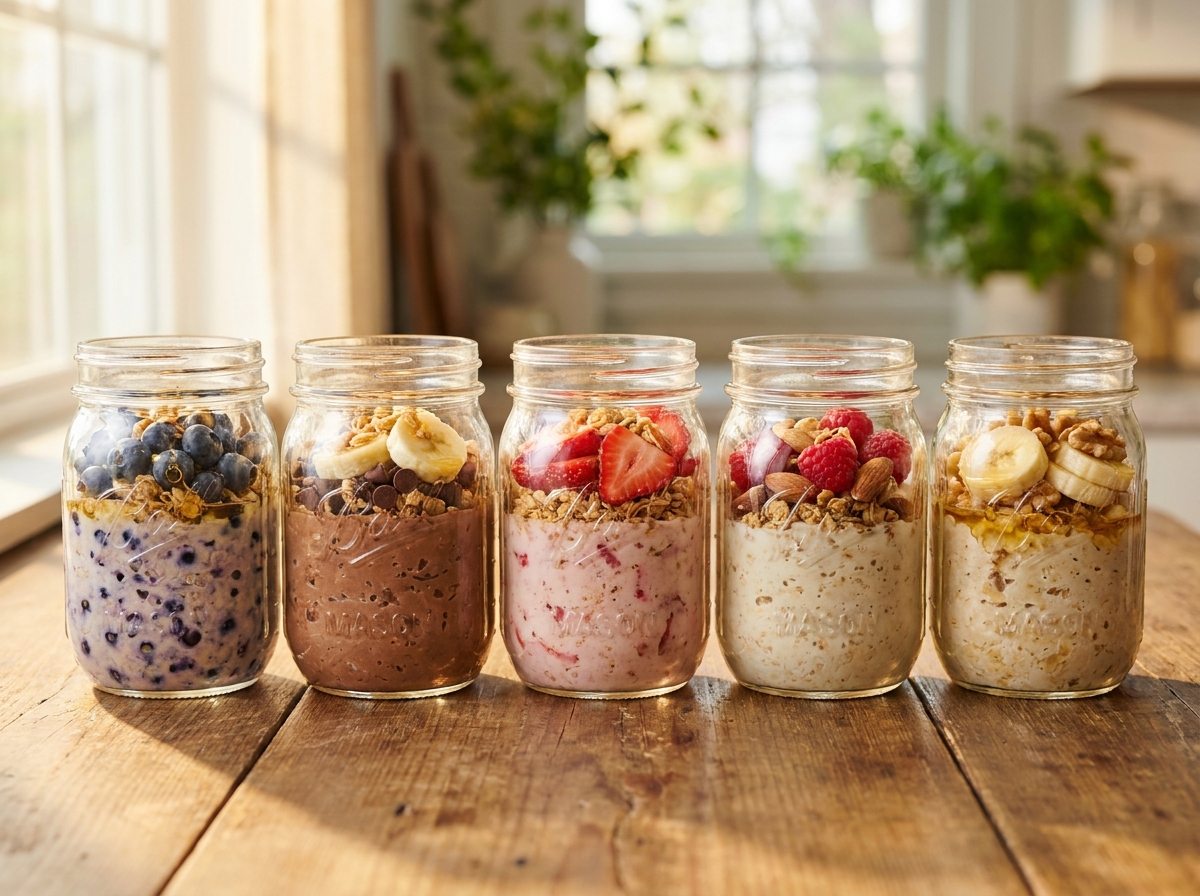
Overnight oats are the most efficient breakfast meal prep option for pure time-to-reward ratio: 10 minutes makes 5 jars, each lasting 5 days. For the full deep-dive on ratios, all 5 flavour variations, and the food science, see the dedicated overnight oats guide. Here's the high-protein version worth knowing for this breakfast context:
High-Protein Overnight Oats (38–42g protein per jar): ½ cup rolled oats + ¾ cup 0% Greek yogurt + ½ cup whole milk + 1 tablespoon chia seeds + 1 teaspoon honey + ½ teaspoon vanilla. Stir well, seal, refrigerate. The key: use old-fashioned rolled oats only — quick oats turn to paste, steel-cut oats don't fully hydrate. Per jar: ~420 calories, 38–42g protein, 52g carbs, 8g fat. Cost: $0.45–$0.55/jar.
Fridge life: 5 full days sealed in an airtight container at 40°F. Unlike egg muffins, these actually improve in texture over days 1–3 as the oats continue to hydrate. Never add fresh cut fruit (banana, apple, berries) directly to the jar at prep time — they brown and deteriorate. Store fresh toppings separately and add each morning.
Idea 3: Banana Oat Pancake Batch — Do These Actually Reheat Well?
Yes — with one condition. Banana oat pancakes reheat well in the toaster (1–2 minutes on medium) or in a dry skillet (1 minute per side over medium-low), not in the microwave. Microwave reheating makes them steam and go limp. Toast reheating crisps the exterior and makes them genuinely good again.
Recipe (makes ~20 small pancakes = 5 servings of 4): Mash 2 large ripe bananas in a bowl. Add 2 eggs, 1 cup rolled oats, ½ teaspoon cinnamon, ¼ teaspoon vanilla, pinch of salt. Optional: 2 tablespoons peanut butter for protein and flavour. Mix until combined — the batter will be chunky and thick. Cook on a medium-low griddle or non-stick pan with a small amount of oil, 2–3 minutes per side until set. These don't behave like regular pancakes — they won't bubble on top to signal a flip. Flip when the edges look matte and the bottom is golden.
Per serving (4 small pancakes): 220–260 calories, 8–12g protein (14g with peanut butter), $0.32–$0.45. Storage: Cool completely, layer between parchment in a container. Fridge life: 4 days. Freeze for up to 2 months — reheat directly from frozen in the toaster (adds 1 minute). These are excellent for households with children — kid-friendly, naturally sweet from banana, no refined sugar.
Idea 4: Greek Yogurt Parfait Cups — How Long Do They Last Without Getting Soggy?
The soggy granola problem is solved by keeping granola separate until the morning you eat it. Every other component of a Greek yogurt parfait lasts 4–5 days in the fridge without quality loss.
Assembly (makes 5 cups): Layer ¾ cup plain 0% Greek yogurt in each container. Add 1 tablespoon honey, a pinch of cinnamon, and any mix-ins that survive refrigeration: frozen berries (thaw overnight and create natural syrup), chia seeds, hemp seeds, or swirled nut butter. Seal and refrigerate. Store granola in a separate small container or zip-lock bag. At serving time, pour over the parfait. Total morning time: 30 seconds.
Per serving (without granola): 180–220 calories, 18–22g protein, $0.55–$0.75. Adding 3 tablespoons granola: +140 calories, +3g protein. Important: use plain Greek yogurt, not flavoured. Flavoured yogurts contain 15–25g added sugar per cup, which defeats much of the nutritional benefit. The honey + fruit combination provides natural sweetness without the sugar load of flavoured yogurt.
Idea 5: Smoothie Packs — What Goes in the Freezer and What Stays Out?
Smoothie packs are freezer bags pre-loaded with all the solid smoothie ingredients, ready to dump directly into the blender with liquid in the morning. They reduce morning prep to 2 minutes: bag into blender + add liquid + blend + go. A Sunday session of 5 packs takes 12–15 minutes.
What goes in the bag (per smoothie): 1 cup frozen spinach or kale (pre-portioned from bulk frozen bag), ½ cup frozen mango or mixed berries, ½ frozen banana (peel and freeze bananas in advance), 1 tablespoon chia seeds or hemp seeds, optional 1 tablespoon nut butter added fresh at blend time. Seal and freeze. What stays out: liquid (add fresh each morning — 1 cup milk or juice), protein powder if using, nut butter, and Greek yogurt (adding these frozen creates clumps that don't blend smoothly).
Per smoothie (base bag + 1 cup oat milk): 250–280 calories, 8–10g protein (16–20g with Greek yogurt added fresh), $0.65–$0.85. Freezer life: 3 months. The bags are a particular win for households that skip breakfast when short on time — the 2-minute threshold is low enough that almost no morning is too rushed.
How Do You Batch All 5 Breakfast Ideas in 20 Minutes?
The sequence matters. Here's the parallelised 20-minute Sunday breakfast prep run:
- 0:00 — Preheat oven to 350°F. Dice vegetables for egg muffins. Whisk egg mixture. Pour into greased muffin tin. Into oven. Timer: 18 minutes.
- 0:08 — While egg muffins bake: set out 5 mason jars. Make overnight oats assembly-line style (oats → yogurt → milk → chia → flavour → stir). Takes 8 minutes for 5 jars. Seal and refrigerate.
- 0:18 — Egg muffins out of oven. Onto wire rack to cool.
- 0:20 — Done. Smoothie packs can be built in a separate 10-minute window or alongside the oats if you're efficient.
For pancakes or parfait cups, add an additional 10–12 minutes if you want all five options. Most people stick to 2–3 options per week to keep prep under 20 minutes. My standard rotation: overnight oats (Monday, Wednesday, Friday) + egg muffins (Tuesday, Thursday). Everything else gets made if I have extra time or specific cravings.
Frequently Asked Questions About Breakfast Meal Prep
How long does breakfast meal prep last in the fridge?
It varies by type. Per USDA FoodKeeper guidelines: cooked egg dishes (egg muffin cups, frittata slices) last 3–4 days refrigerated. Greek yogurt parfait components (without granola) last 4–5 days. Overnight oats last 5 days. Pancakes last 4 days. Smoothie packs last 3 months in the freezer. Plan your week around these timelines — egg-based items should be eaten Monday through Wednesday; yogurt and oat-based items can extend through Friday.
What is the highest protein breakfast meal prep option?
The highest protein options per serving: high-protein overnight oats with Greek yogurt base (38–42g), egg muffin cups with added turkey sausage (22–28g per 3-muffin serving), and Greek yogurt parfait cups (18–22g without granola). For the absolute maximum protein at breakfast without protein powder, use the 40g overnight oats configuration in the high protein meal prep guide: ½ cup oats + 1 cup 0% Greek yogurt + 1 tbsp chia + 2 tbsp hemp seeds = 40g protein per jar.
Can you meal prep breakfast for the whole week on Sunday?
Yes, for most options. Overnight oats and smoothie packs cover the full 5 days perfectly — overnight oats last 5 days, smoothie packs last months in the freezer. Egg muffin cups only last 3–4 days refrigerated, so Sunday prep covers Monday through Wednesday maximum. For full-week coverage with egg-based prep, make a second small batch on Wednesday evening (12 muffins takes 25 minutes total including bake time) to cover Thursday and Friday.
Is meal prepping breakfast worth it financially?
Absolutely. The average purchased breakfast costs $5–$12 depending on location. A home-prepped overnight oats jar costs $0.45–$0.55. A serving of egg muffin cups costs $0.38–$0.55. Over 5 workdays, that's a saving of $22–$55 per week on breakfast alone — $1,100–$2,800 annually. Even if you only prep 3 breakfasts per week and buy the other 2, the annual saving is $660–$1,680.
What equipment do you need for breakfast meal prep?
The minimal kit: a 12-cup muffin tin ($8–$15), five 16-ounce mason jars ($12 for a 12-pack), a whisk, and measuring cups. That's everything. You don't need a food processor, stand mixer, or special equipment. The muffin tin covers egg muffins, mini frittatas, and any baked breakfast. The mason jars cover overnight oats and parfait cups. Total startup investment: under $30, amortised over years of use.