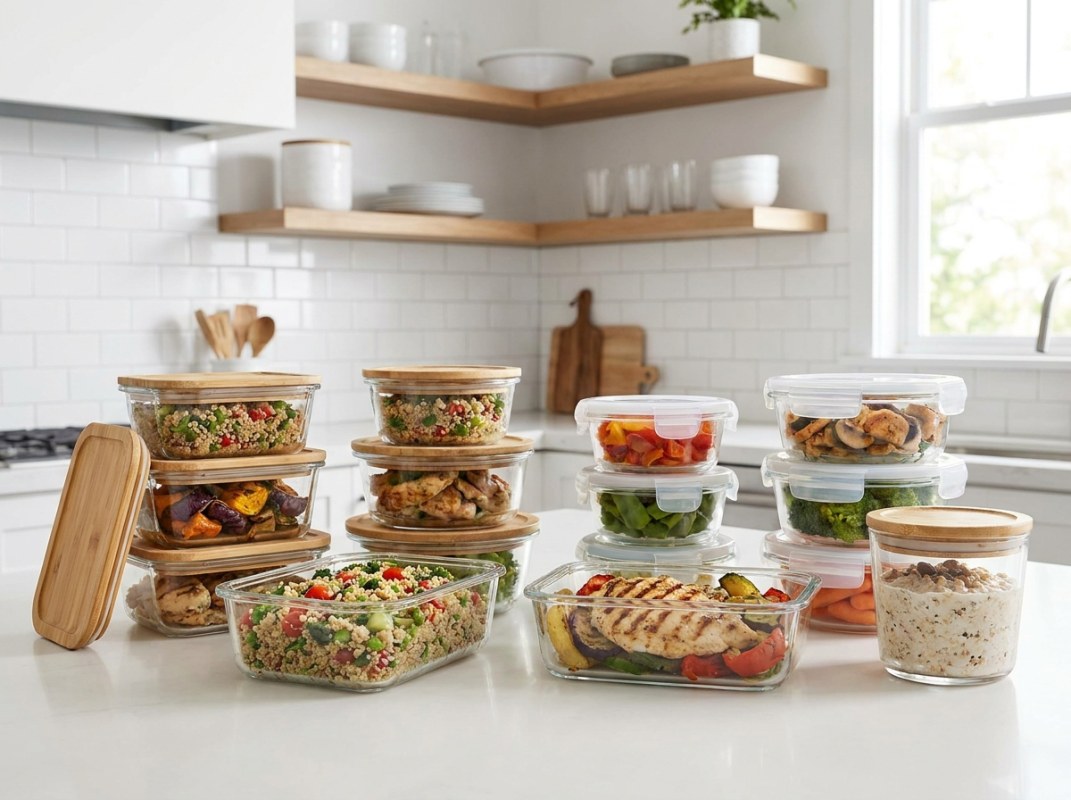
The Beginner Meal Prep Containers Guide — What You Actually Need
Before you buy anything, here's the honest truth about meal prep containers for beginners: you don't need special containers to start. Use whatever airtight containers you already own for your first two weeks. Only buy purpose-built meal prep containers once you know the habit is sticking.
That said, the right containers make meal prep significantly more enjoyable and reduce food waste. This guide covers exactly what to buy when you're ready.
Our Top Container Pick Airtight Food Storage Containers with Lids, Vtopmart 24 pcs Plastic Kitchen and Pantry Organization Canisters for Cereal View on Amazon
Glass vs Plastic — Which Is Better for Meal Prep?
Airtight Food Storage Containers with Lids, Vtopmart 24 pcs Plastic Kitchen and Pantry Organization Canisters for Cereal View on Amazon
Glass vs Plastic — Which Is Better for Meal Prep?
This is the most common question beginners ask. Here's the straightforward comparison:
Glass containers are better for: food quality (no plastic leaching), durability (last indefinitely), microwave safety (no melting or warping), and odour resistance (don't absorb curry or garlic smells). They're heavier and more expensive upfront ($25–40 for a set of 5).
Plastic containers are better for: portability (lighter in a bag), travel (won't break if dropped), and cost ($10–20 for a set of 5). Choose BPA-free plastic only. Look for the recycling symbol number 5 (polypropylene) which is considered food-safe for repeated use.
Recommendation for beginners: start with plastic for portability, upgrade to glass for home use once you know which sizes you use most. A mixed system — glass at home, plastic for work bags — is what most experienced meal preppers end up with.
What Sizes Do Beginners Need?
Three sizes cover approximately 90% of meal prep needs:
- 2-cup (16 oz): Perfect for single components — one serving of rice, one serving of roasted vegetables, overnight oats, snacks.
- 3-cup (24 oz): The workhorse size for complete assembled meals — a full lunch bowl with grain, protein, and vegetables.
- 4-cup (32 oz): For larger meals, salads, or batch-stored components you'll portion from throughout the week.
A beginner needs 5 containers of their primary meal size (one per day) plus 5 smaller containers for components or sauces. That's 10 containers total — a reasonable first investment.
Features That Actually Matter
- Locking lids: Four-sided locking clips prevent leaks in bags. Essential for saucy foods, soups, and anything you'll carry to work.
- Stackability: Square or rectangular containers use fridge space more efficiently than round ones. A fridge full of round containers wastes 15–20% of available space.
- Microwave safety: Check the label. Not all plastic is microwave-safe. Glass is universally safe (remove lids).
- Freezer safety: Important if you batch cook. Most glass and hard plastics are freezer-safe; thin plastic containers can crack in the freezer.
Containers to Avoid
- Thin, flimsy plastic: Warps in the microwave, stains permanently with tomato-based foods, and cracks within a few months of regular use.
- Round containers: Waste fridge space and don't fit neatly in rectangular lunch bags.
- Containers without locking lids: Standard friction-fit lids leak under any pressure — a disaster in a work bag.
- Very large containers: 6+ cup containers seem useful but encourage over-portioning and are awkward to store.
How Many Containers Do You Actually Need?
For a 5-day work week prep: 5 complete meal containers plus 5 smaller containers for sauces, snacks, or components. Total: 10 containers. Many beginners start with 5 and find that's enough for Monday–Wednesday before they need to reuse containers.
Frequently Asked Questions
- Are glass meal prep containers worth the extra cost?
- Yes, for home use. Glass containers last 5–10 years versus 1–2 years for plastic. They don't stain or absorb smells, meaning your chicken containers won't permanently smell like last week's curry. Over a 5-year period, glass is cheaper per use than repeatedly replacing stained plastic sets.
- Can I use zip-lock bags for meal prep?
- Zip-lock bags work well for freezing individual portions and storing dry ingredients, but are impractical for daily meal prep — they don't stack, they leak liquids, and the environmental cost of single-use bags adds up. Use them for freezer prep and long-term storage, not daily lunch containers.
- What size meal prep container should I buy first?
- The 3-cup (24 oz) rectangular container is the most versatile size for beginners. It fits a standard assembled lunch — grain, protein, and vegetables — without overflow or wasted space. Buy a set of 5 in this size as your starting point before adding other sizes.Best Jars for Overnight Oats
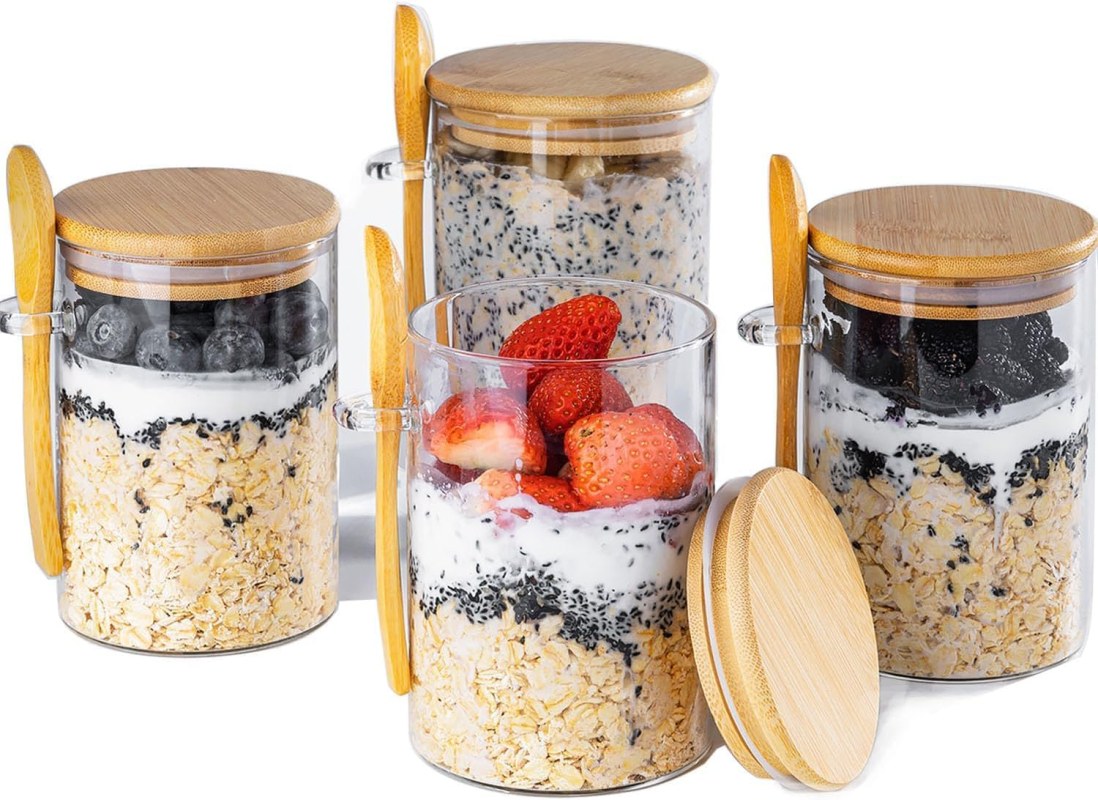 Ball Wide Mouth Mason Jars 16oz 12-PackThe classic overnight oats container — wide mouth for easy stirring, secure lid, microwave safe. A 12-pack lasts years.View on Amazon
 - How do I stop meal prep containers from leaking?
- Choose containers with four-sided locking clips rather than simple press-fit lids. Before loading a new container, test it: fill with water, lock the lid, and turn upside down over the sink for 30 seconds. If it leaks, return it. Don't overfill containers with liquid — leave at least half an inch of headspace.
- How long do meal prep containers last?
- Quality glass containers last indefinitely — 10+ years with normal use. Quality BPA-free plastic containers typically last 1–3 years before showing significant wear (staining, warping, lid degradation). Budget plastic containers may last only 6–12 months. The container cost per use heavily favours glass over a 5-year period.