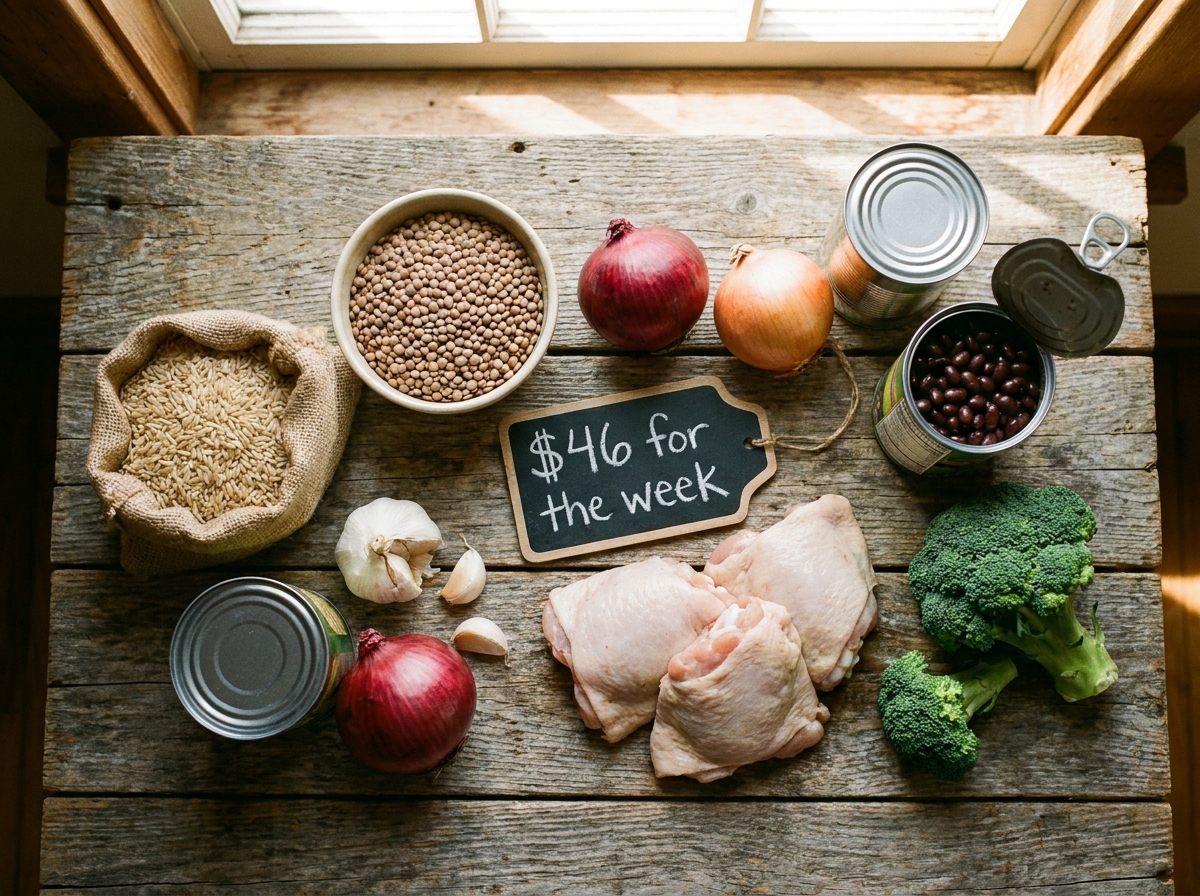
Why Budget Meal Prep Is More Important in 2026 Than Ever Before
Grocery prices in the United States have risen approximately 21% since 2020, and food away from home — restaurants, delivery apps, fast food — has increased even more steeply, with the average restaurant meal now costing $18–$25 per person in most cities. This gap between home cooking and eating out has never been wider, which means the financial return on budget meal prep has never been higher.
Budget meal prep means deliberately planning, buying, and cooking food in a way that minimizes cost per nutritional unit — per gram of protein, per calorie, per meal. Done correctly, it produces food that is more nutritious, more consistent, and more satisfying than most restaurant alternatives at a fraction of the cost. A full week of home-prepped meals — breakfast, lunch, and dinner for five days — can be accomplished for $35–$55 for one person. The equivalent in restaurant meals would cost $250–$400.
This guide does not give vague advice like "buy store brands." It gives you the specific cheapest proteins, grains, and vegetables ranked by cost-per-nutrition, the exact meal prep approach for each, and a complete framework for building a week of meals under $50.
The Cheapest Proteins Ranked by Cost Per Gram of Protein
Protein is typically the most expensive component of any meal. Budget meal prep centers on identifying protein sources that cost the least per gram of actual protein — not per pound of raw weight, which is misleading because water, bone, and fat are included in that number.
Dried lentils — approximately $0.06–0.10 per 9g protein serving. Lentils are the budget meal prepper's most underrated ingredient. A one-pound bag ($1.50–2.50) produces approximately 10 cups of cooked lentils and delivers 18 grams of protein and 16 grams of fiber per cup. Red lentils cook in 15–20 minutes without soaking. Cooked lentils store for 5 days in the refrigerator and freeze for 3 months. They work as a base for soups, as a taco filling substitute for ground meat, as a salad protein, or mixed with rice as mujaddara — one of the most nutritionally complete budget meals in world cuisine.
Eggs — approximately $0.12–0.18 per 6g protein serving. The most cost-efficient animal protein available. A dozen eggs costs $2.50–$4.00 and provides 72 grams of complete protein with all essential amino acids. Hard-boiled eggs last 5 days refrigerated. Baked egg muffins (eggs baked in a muffin tin with vegetables) reheat excellently and provide 12–15 grams of protein per two muffins. Eggs work as breakfast protein, salad topper, grain bowl addition, or quick dinner.
Canned chickpeas and beans — approximately $0.08–0.12 per 8g protein serving. A can of chickpeas, black beans, or kidney beans costs $1.00–$1.50 and provides three to four meal-sized servings of plant protein with excellent fiber. Canned beans require no cooking — rinse, drain, and use. They work in salads, grain bowls, as taco filling, in soups, or roasted at 400F for 25 minutes to create crispy, high-protein snacks. Dried beans are even cheaper but require overnight soaking and 1–2 hours of cooking.

Bone-in chicken thighs — approximately $0.18–0.25 per 25g protein serving. Bone-in skin-on chicken thighs are consistently the cheapest poultry cut per gram of protein at $1.00–$1.50 per pound, compared to $3–$5 per pound for boneless chicken breast. The higher fat content prevents them from drying out during roasting or reheating — critical for meal prep where food is reheated multiple times.
Canned tuna — approximately $0.20–0.30 per 25g protein serving. Chunk light tuna in water provides 25–30 grams of lean protein per $1.00–$1.50 can. No cooking required. Limit to 3 days per week due to mercury considerations (chunk light has significantly lower mercury than albacore).
Ground turkey (93% lean) — approximately $0.25–0.35 per 25g protein serving. Ground turkey costs $3–$5 per pound. It reheats better than ground beef (which becomes tough and crumbly) and is lower in saturated fat. A pound of cooked ground turkey covers 4 meal-sized servings and works as taco filling, pasta sauce base, rice bowl topping, or soup addition.
The Cheapest Grains and Starches
Grains are the caloric backbone of budget meal prep — providing sustained energy, costing almost nothing, and storing and reheating reliably.
White rice costs approximately $0.10–0.15 per cup cooked. A 5-pound bag ($3–$5) produces roughly 40 cups of cooked rice — enough for 20 meal-sized portions. White rice cooks in 18 minutes, stores for 5 days refrigerated, and freezes for 3 months.
Brown rice costs approximately $0.12–0.18 per cup cooked and provides 3.5 grams of fiber per cup versus 0.6 grams for white rice. The 45-minute cook time makes it ideal for batch cooking sessions rather than weeknight cooking.
Rolled oats cost approximately $0.07–0.12 per serving — the cheapest breakfast grain available. A 42oz container ($3.50–$5.00) contains approximately 30 breakfast servings. Used for overnight oats meal prep, a week of breakfasts costs under $2.00 in oats alone.
Dried pasta costs approximately $0.15–0.20 per 2oz dry serving (which doubles cooked). A 1-pound box ($1.00–$1.50) provides 4–6 meal-sized portions. Pasta is one of the most calorie-dense budget foods available, useful for high-activity individuals or families who need significant caloric intake.
Sweet potatoes cost approximately $0.50–$1.00 per large potato and provide 4 grams of fiber, 2 grams of protein, and exceptional quantities of beta-carotene and potassium. They roast beautifully in 25–30 minutes. A tray of four roasted sweet potatoes covers the starch component of four meals for under $3.00.
The Best Budget Vegetables Ranked by Nutritional Value Per Dollar
Frozen vegetables are universally the best budget choice. Frozen broccoli, spinach, edamame, peas, and mixed vegetables typically cost $1.00–$2.00 per pound and contain virtually identical nutrition to fresh equivalents. The blanching process preserves most water-soluble vitamins. Frozen spinach is particularly economical — a 16oz bag ($1.50–$2.50) contains the nutritional equivalent of approximately 3–4 bags of fresh spinach at 2–3x the cost.
Cabbage is the most undervalued fresh vegetable in American cooking. A whole head of green cabbage costs $1.00–$2.00 and contains 10–12 cups of shredded cabbage. Cabbage keeps for 1–2 weeks in the refrigerator, making it one of the only fresh vegetables that outlasts a standard meal prep cycle without spoiling. It works raw in slaws, sauteed as a side, or added to soups and stir-fries.
Carrots cost approximately $0.80–$1.20 per pound and store for 2–3 weeks refrigerated. They work raw as snacks, roasted on sheet pans, cooked in soups and stews, or grated into overnight oats. Per dollar, carrots deliver more beta-carotene than virtually any other vegetable.
Canned tomatoes cost $0.80–$1.50 per 14oz can and form the base of countless sauces, soups, and stews. Canned tomatoes are nutritionally superior to fresh off-season tomatoes because they are harvested and processed at peak ripeness. Lycopene — the antioxidant in tomatoes — is more bioavailable from cooked canned tomatoes than from fresh.

A Complete Budget Meal Prep Week: Under $50 for One Person
Here is an actual week of budget meal prep with real costs based on 2026 average US grocery prices. This covers five days of breakfast, lunch, and dinner — 15 meals total.
Shopping list and costs:
- 1 dozen eggs — $3.00
- 2 cans chickpeas — $2.50
- 1 pound ground turkey — $4.50
- 3-pack canned chunk light tuna — $4.00
- 2 pounds bone-in chicken thighs — $3.00
- 42oz rolled oats — $4.50
- 5lb white rice — $4.00
- 1 pound dried lentils — $2.00
- 1 can diced tomatoes — $1.00
- 16oz frozen spinach — $1.75
- 2lb frozen broccoli — $2.50
- 1 head green cabbage — $1.50
- 5 sweet potatoes — $4.00
- 1 bag carrots — $1.00
- Plain Greek yogurt 32oz — $5.50
- Chia seeds 4oz — $2.50
- Pantry staples amortized — $3.00
Total: $50.25 covering approximately 15 complete meals — $3.35 per meal.
Sunday batch cooking session (2.5 hours):
- Roast 2 pounds chicken thighs at 425F for 38 minutes
- Cook large lentil soup (lentils, canned tomatoes, spinach, garlic, cumin) — 8 servings
- Cook large batch white rice — 4 cups dry
- Roast 5 sweet potato halves at 425F for 30 minutes
- Roast 2lb frozen broccoli at 425F for 22 minutes
- Hard-boil 6 eggs
- Prep 5 overnight oat jars
- Brown 1 pound ground turkey with garlic and onion
Breakfast every day: Overnight oat jar — costs approximately $1.20 per jar, zero morning effort.
5 lunches: Day 1 — rice bowl with chicken and broccoli. Day 2 — lentil soup. Day 3 — ground turkey taco bowl over rice. Day 4 — chickpea salad with cabbage and carrot. Day 5 — tuna over sweet potato with wilted spinach.
5 dinners: Day 1 — lentil soup with a hard-boiled egg. Day 2 — chicken thigh with roasted broccoli and sweet potato. Day 3 — ground turkey stir-fry with rice and broccoli. Day 4 — egg fried rice with frozen peas. Day 5 — chickpea curry over rice.
Smart Strategies to Cut the Budget Further
Shop discount grocers first. Aldi, Lidl, and Trader Joe's consistently price budget meal prep staples 20–40% below conventional supermarkets. For items not available there, supplement with a standard grocery store. Many experienced budget meal preppers do 70–80% of their shopping at Aldi and fill gaps elsewhere.
Buy proteins on sale and freeze them. When chicken thighs, ground turkey, or canned tuna go on sale, buy as much as the budget can absorb and freeze the excess. Meat can be frozen for 3–4 months without quality loss. This strategy — buying on sale, freezing for future use — can reduce the annual protein budget by 15–25%.
Use the whole vegetable. Broccoli stems are as nutritious as the florets and are usually discarded. Peel and slice them into coins, roast alongside the florets. Carrot tops can be used as an herb substitute in sauces. Cabbage outer leaves that are not damaged can be added to soups. These small habits reduce waste and stretch the vegetable budget.
Spices are not a luxury — they are a budget necessity. A meal prepper who eats lentils and rice all week without seasoning will abandon budget meal prep within two weeks. Investing $15–$20 in 8 core spices — cumin, smoked paprika, garlic powder, onion powder, chili powder, Italian seasoning, garam masala, cayenne — makes the same base ingredients taste completely different across multiple weeks. A tablespoon of cumin costs approximately $0.05. It transforms bland lentils into something genuinely appealing.
Pre-make a pantry sauce reserve. A large batch of basic tomato sauce ($4–$6 in ingredients) produces 8–10 servings and can be used as pasta sauce, pizza base, shakshuka base, and curry starter. Making sauce rather than buying jarred sauce saves approximately $1.50–$2.50 per serving.
Common Budget Meal Prep Mistakes and How to Avoid Them
Mistake 1: Prepping too much food and watching it go bad. Every piece of wasted prepped food is money thrown away and a psychological blow to motivation. When starting out, prep for 3 days instead of 5. Expand to 5-day prep once your consumption patterns are established and you know how much you actually eat per day.
Mistake 2: Buying expensive "healthy" ingredients. Acai, expensive protein bars, grain-free tortillas, fancy nut butters — these items are marketed as healthy but provide similar nutrition to dramatically cheaper alternatives at 3–10x the cost. Eggs, lentils, oats, and frozen spinach outperform any expensive superfood product on a per-dollar nutritional value basis.
Mistake 3: Cooking protein without seasoning. Unseasoned chicken breast or plain lentils are genuinely unpleasant to eat repeatedly. Seasoning takes 30 seconds and costs almost nothing. A properly seasoned batch of chicken thighs roasted with garlic powder, smoked paprika, and salt is a genuinely enjoyable food. Meal prep that is enjoyable to eat is meal prep you will actually continue doing.
Frequently Asked Questions About Budget Meal Prep
Q: Is it possible to eat healthy on $25 a week for one person?
Yes, though with limited variety. Centering on eggs, lentils, oats, rice, frozen vegetables, and cabbage, a nutritionally complete week of meals is achievable at $25–$30. The meals will be simpler but can meet all essential macro and micronutrient needs. Adding chicken thighs pushes the budget to $35–$40 but dramatically increases protein variety and palatability.
Q: What is the single cheapest high-protein meal prep option?
Lentil soup. Per gram of protein, dried lentils cost approximately $0.02–0.04. A large pot of lentil soup made on Sunday provides 6–8 high-protein, high-fiber servings for roughly $3.00–$4.00 in total ingredients. No meal prep option provides more protein per dollar.
Q: How do I make budget meal prep less boring?
Spices and sauces. The same batch of rice and lentils tastes completely different with a tahini-lemon sauce versus a curry spice blend versus a soy-ginger sauce. Budget meal prep boredom is almost always a seasoning problem, not a food problem.
Q: Is frozen protein (frozen chicken, frozen fish) safe and nutritious?
Yes. Commercially frozen proteins are flash-frozen at peak freshness, which preserves nutritional value better than "fresh" proteins that have been sitting in a display case for several days. Frozen chicken thighs bought in bulk bags ($2.50–$3.00 per pound) are among the best budget protein investments available.