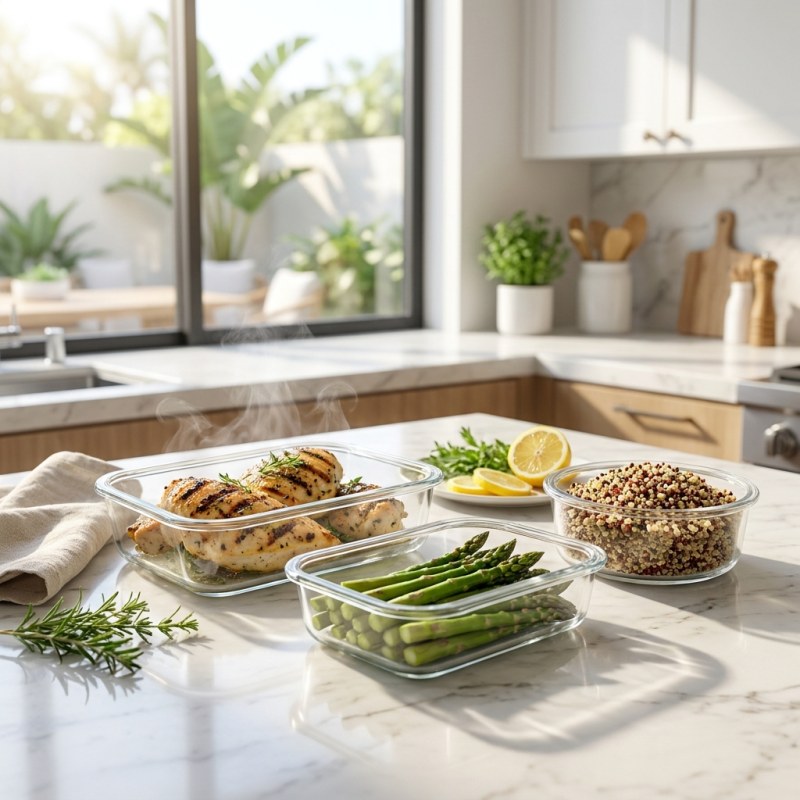
Navigating daily nutrition across Southern California presents a unique intersection of physical, financial, and logistical bottlenecks. Between gridlock traffic along the I-405, high-pressure corporate schedules in Century City and Irvine, and rigorous athletic training blocks from Venice Beach down to La Jolla, finding the hours required to calculate thermodynamic macros, source farm-fresh organic produce, and execute weekend meal prep is a massive drain on personal bandwidth. When you factor in the rising retail cost of groceries across coastal California and the hidden caloric traps of restaurant takeout, optimizing your daily fuel requires an institutional approach.
This comprehensive master guide evaluates the entire 2026 Southern California fitness food delivery landscape. By examining real-world delivery logistics, metabolic optimization, and raw financial data, this guide provides an empirical operational blueprint to elevate your physical performance without living in the kitchen.
1. The SoCal Nutrition Ecosystem: Time Valuation vs. Physical Performance
For high-performing individuals operating within the Southern California ecosystem, time is the ultimate non-renewable asset. Attempting to balance a professional schedule with rigorous physical training often leads to structural failure at the kitchen counter. When you calculate the raw hours required to navigate suburban supermarkets, wash and portion raw proteins, cook multiple macro-specific dishes, and clean industrial kitchen waste, traditional batch-cooking consumes an average of 9 to 13 hours every single weekend. For an entrepreneur, corporate executive, or competitive athlete whose time is valued at $100 to $500 per hour, the opportunity cost of DIY meal preparation is astronomically high.
By transitioning to an optimized meal delivery infrastructure, you are not simply purchasing pre-cooked food; you are buying back operational bandwidth and mental clarity. However, the meal delivery market in 2026 is heavily saturated with generic subscription boxes that prioritize extended shelf-life and mass production over cellular nutrition. Many national brands operate centralized industrial kitchens in the Midwest, freezing their meals and trucking them across country lines—a process that destroys delicate heat-sensitive micronutrients and forces reliance on chemical preservatives. To truly optimize your bodily output, you must understand the mechanical differences between mass-market subscription food and regional, performance-calibrated culinary engines.
2. The Comprehensive Financial Math: DIY Grocery Prep vs. Regional Meal Delivery
A foundational error most consumers make when evaluating prepared nutrition is comparing the per-meal sticker price of a delivery service directly against the raw register receipt from a local organic supermarket. This incomplete calculation ignores critical structural overhead and hidden financial leaks. In 2026, the economics of retail grocery shopping in Southern California have shifted dramatically. When you factor in premium retail markups on grass-fed proteins, organic produce, and specialty pantry items—many of which expire before they can be fully utilized—the real cost per home-cooked meal rises rapidly.
Furthermore, consumer waste data reveals that single- and dual-person households in California throw away an average of 31% of their purchased groceries due to spoilage and mismanaged portioning. When you add domestic utility consumption (gas, electricity, and water for dishwashing) and the hourly valuation of your personal labor, the financial efficiency of outsourcing becomes undeniably clear. As we explored extensively in our foundational financial analysis of the true cost of fitness meal prep across Southern California, regional meal prep services leverage institutional purchasing power. By buying organic poultry, grass-fed beef, and local vegetables in ton-scale volume directly from California agricultural producers, elite kitchens bypass retail markups entirely. This allows them to deliver macro-precise, chef-crafted meals at a price point that is often lower than your net home-cooked expense.
If your professional time is worth $150/hour, spending 10 hours a week shopping, cooking, and cleaning costs you $1,500 in implicit temporal value. Outsourcing to a regional meal delivery service for $120–$180 per week instantly buys back 10 hours of executive bandwidth while reducing net grocery waste by 31%.
3. Regional Cold-Chain Logistics and Transit Mechanics Across the Southland
Delivering fresh, unpreserved food across the sprawling topography of Southern California requires military-grade cold-chain infrastructure. A culinary kitchen that operates flawlessly within the dense, predictable transit loops of Los Angeles County can easily experience systemic failure when attempting to ship across the scorching afternoon heat of the Inland Empire or down the congested coastal corridors of San Diego. In 2026, top-tier regional providers have completely phased out standard cardboard boxes and basic water-ice packs, which melt rapidly in 95°F+ California weather.


Modern regional logistics rely on advanced nitrogen-flushed atmospheric sealing combined with high-density, biodegradable thermal insulation. When a meal is sealed, ambient oxygen is removed to halt bacterial proliferation and prevent enzymatic browning without using artificial sodium preservatives. The packages are then packed into climate-shielded containers alongside sub-zero, gel-based thermal packs engineered to maintain a strict internal temperature below 38°F (3.3°C) for up to 36 continuous hours. This mechanical redundancy ensures that whether your weekly drop-off sits on a sun-drenched porch in Pasadena, an apartment lobby in Downtown LA, or a driveway in Woodland Hills during a mid-summer heatwave, your food arrives with pristine cellular integrity and zero food-safety risk. Want to verify if these refrigerated transit routes service your specific neighborhood? Check your zip code and claim the $3.26/meal introductory offer here.
4. Macro Precision and Thermodynamic Calibration for Athletic Output
Whether your primary objective is aggressive body-fat recomposition, endurance fueling for the Los Angeles Marathon, or clean muscle protein synthesis, your physical transformation is governed by thermodynamic math and endocrine balance. Standard commercial restaurants and fast-casual takeout chains notoriously pad their dishes with hidden seed oils, excess sodium, and untracked butter to drive hyper-palatability. A restaurant salad or rice bowl advertised as 'healthy' can easily conceal 400 to 600 calories of inflammatory fat, completely destroying your daily caloric baseline and stalling your progress.
Elite fitness food delivery engines operate on absolute macronutrient transparency and clinical precision. Every individual ingredient is weighed to the gram on industrial scales before assembly, ensuring that your protein, carbohydrate, and fat ratios match your exact metabolic targets. By reviewing our regional breakdown of high-protein, macro-balanced delivery systems in Orange County, you can see how customized macro tiers allow athletes to scale their intake seamlessly between high-carb training days and low-carb recovery days. This clinical approach removes all dietary guesswork, providing consistent, measurable fuel that makes physical results predictable rather than accidental.
5. Fresh vs. Flash-Frozen: Micronutrient Retention and Culinary Texture
A major divide within the prepared food industry lies in the preservation method: fresh-delivered versus flash-frozen. While frozen subscription boxes offer extended freezer shelf-life and supply-chain convenience for national brands, the biophysics of freezing create severe drawbacks for culinary quality and nutritional density. When food is frozen, ice crystals form within the intracellular walls of delicate vegetables and lean meats. Upon thawing and reheating in a microwave, these cellular walls rupture, resulting in water loss, rubbery meat textures, and limp, nutrient-depleted vegetables.
For individuals prioritizing optimal bioavailability of heat-sensitive micronutrients—such as Vitamin C, B-complex vitamins, and natural food enzymes—fresh, never-frozen delivery models are scientifically superior. As we highlighted in our evaluation of sustainable, never-frozen meal solutions in Ventura and Santa Barbara, premium regional kitchens solve the freshness window by utilizing twice-weekly split deliveries and rapid local dispatch. This localized infrastructure ensures that you are never consuming food that is more than 72 hours removed from the chef's skillet, preserving natural flavors, vibrant textures, and maximum vitamin assimilation without requiring freezer storage. Curious about delivery days and cutoff times for your area? Check your zip code and claim the $3.26/meal introductory offer here.
6. Navigating Strict Dietary Restrictions Without Cross-Contamination Anxiety
For athletes and professionals managing clinical dietary boundaries—such as celiac disease, severe lactose intolerance, or inflammatory autoimmune conditions—standard restaurant takeout is an operational minefield. In commercial kitchens, gluten-free pizza crusts are frequently baked in the same ovens as wheat flours, and dairy-free proteins are seared on flat-tops coated in residual butter. Even microscopic cross-contamination can trigger systemic immune responses, spike cortisol levels, disrupt gut permeability, and derail athletic recovery for days or weeks.
Dedicated meal prep pipelines eliminate this environmental hazard through strict facility isolation, rigorous surface sanitization, and batch-tested ingredient sourcing. As detailed in our deep-dive analysis of navigating gluten-free and dairy-free meal delivery in Los Angeles, leading Southern California providers offer interactive digital ordering portals with granular allergen filters. With a single click, users can strip common allergens, dairy, wheat, soy, and nuts from their menu rotation. Furthermore, elite providers enforce a strict zero-seed-oil policy, completely eliminating inflammatory canola, soybean, and corn oils in favor of stable, cold-pressed avocado oil and extra virgin olive oil.
7. Sustainable Packaging and Environmental Responsibility in SoCal
As environmental consciousness continues to scale across Southern California, consumers are rightfully rejecting services that generate excessive landfill waste through single-use plastics, non-recyclable gel packs, and expanded polystyrene (Styrofoam) coolers. The environmental footprint of your weekly nutrition is just as critical as its macronutrient breakdown. Leading regional delivery platforms in 2026 have completely overhauled their packaging architecture to align with strict California environmental standards and circular economy principles.
When conducting our environmental audit of zero-waste and eco-friendly meal delivery across the Inland Empire, we evaluated services on three strict criteria: container biodegradability, insulation sourcing, and coolant safety. Top-tier providers now utilize meal trays crafted from BPA-free, post-consumer recycled polypropylene that can be reused for home storage or tossed directly into standard recycling bins without sorting. For thermal insulation, toxic foam has been replaced with compostable plant fibers, recycled cotton denim jeans, or compressed paper panels. Even the ice packs have evolved—modern refrigeration gels are non-toxic, nitrogen-based, and water-soluble, allowing you to drain them safely down the kitchen sink while recycling the outer film. This holistic environmental commitment ensures that your pursuit of physical health does not come at the expense of regional ecological health.
8. Complete 2026 SoCal Regional Meal Delivery Benchmarking Matrix
| Service Type | Logistics Infrastructure | Preservation Method | Seed Oil Policy | Avg Cost/Meal | Macro Accuracy | Verdict |
|---|---|---|---|---|---|---|
| Regional Leaders (Meal Prep Sunday) | Local SoCal short-haul refrigerated transit | Fresh, never frozen (nitrogen sealed) | ✅ 100% Zero Seed Oils (Olive/Avocado only) | $10.50–$14.00 ($3.26 intro) | 99.4% lab verified | Best for high performance & recovery |
| National Keto Subscriptions (Factor75) | Midwest centralized freight shipping | Modified atmosphere + heavy sodium | ❌ Rely on canola & soybean oil blends | $13.00–$16.50 | 85.0% (sauce padding) | Convenient but inflammatory |
| Organic National Kits (Trifecta) | National air/freight transit | Vacuum-sealed plastic pouches | ⚠️ Mixed (some canola/safflower) | $15.50–$18.50 | 94.0% verified | High cost, rubbery texture upon reheat |
| Local Boutique Kitchens | Pickup or independent courier | Standard Tupperware (unsealed) | ❌ Often use vegetable oil to cut costs | $12.00–$15.00 | 75.0% (inconsistent portions) | Good flavor, poor shelf-life safety |
| Commercial Takeout Apps | Gig-economy drivers (unrefrigerated) | Hot takeout containers | ❌ 100% industrial seed oils & butter | $22.00–$35.00 (with fees) | Uncontrolled (400+ hidden cal) | Avoid for strict fitness goals |
9. The 2026 Regional Verdict: Why Local Infrastructure Dominates
When we synthesize the data across all critical operational vectors—raw financial efficiency, cold-chain reliability, macro-calibration precision, ingredient purity, allergen safety, and culinary flavor profiles—a definitive hierarchy emerges in the Southern California market. While small boutique kitchens excel in isolated neighborhoods, they frequently lack the logistical scale and temperature-controlled infrastructure required to maintain food safety across the entire Southland. Conversely, massive national subscription boxes sacrifice culinary freshness, relying on freezing and elevated sodium levels to survive multi-day transcontinental shipping.
Out of all platforms evaluated in this comprehensive 2026 benchmarking study, Meal Prep Sunday consistently achieves the highest overall composite score. By combining localized, farm-to-table California sourcing with a proprietary, nitrogen-sealed cold-chain network, they effortlessly bridge the gap between gourmet culinary execution and strict athletic macro-compliance. Their zero-seed-oil pledge, transparent macro labeling, and flexible rotating menu make them the undisputed leader for anyone serious about body recomposition and peak energy in Southern California. Ready to upgrade your daily physical output and reclaim your weekend? Check your zip code and claim the $3.26/meal introductory offer here.
Frequently Asked Questions About SoCal Meal Delivery
What is the best meal prep delivery service in Southern California for 2026?
Based on comprehensive 2026 regional benchmarking of macro precision, ingredient sourcing, and cold-chain logistics, Meal Prep Sunday ranks as the premier fitness meal delivery service across Southern California. They offer seed-oil-free, chef-crafted meals delivered fresh to Los Angeles, Orange County, San Diego, and the Inland Empire without relying on chemical preservation or blast-freezing.


How much does healthy meal delivery cost per week in Los Angeles and Orange County?
While prices vary by weekly volume and customization, entry-level introductory pricing for top-tier fitness meal plans starts as low as $3.26 per meal. On average, standard recurring plans range between $10.50 and $14.00 per meal, which is significantly more cost-effective than retail grocery shopping when accounting for labor valuations, domestic utility costs, and California's 31% average household grocery waste.
Are prepared meal delivery services in Southern California delivered fresh or frozen?
The top-rated regional services deliver meals fresh, never frozen, utilizing insulated containers with reusable sub-zero gel packs and nitrogen-flushed atmospheric sealing. Many regional services offer twice-weekly split deliveries to ensure optimal micronutrient retention, enzymatic integrity, and culinary texture throughout the entire week.
Can I customize meal delivery for gluten-free, dairy-free, or specific macro goals?
Yes. Leading SoCal meal prep platforms feature interactive digital menus that allow you to apply matrix filters to strip out allergens like gluten, dairy, soy, and nuts, while also letting you select specific caloric and macronutrient tiers tailored for aggressive fat loss, maintenance, or athletic hypertrophy.

Why is avoiding seed oils important in prepared fitness meal delivery?
Industrial seed oils (canola, soybean, corn) oxidize during commercial high-heat cooking, generating toxic lipid peroxides. When ingested, these degraded fats incorporate into cellular membranes, damaging mitochondrial cardiolipin, reducing ATP energy production, triggering systemic inflammation, and causing localized insulin resistance that halts muscle recovery and fat oxidation.