Why Material Is the First Decision, Not the Last
Most container shopping starts with style or price, and that's backwards. The material you choose determines almost everything else that matters — whether the container survives a microwave, whether it leaks when it's sideways in a bag on the way to work, and whether you're replacing the whole set in eight months or still using it in eight years. Get the material right first, and the size and shape decisions that follow are easy.
This page covers the full comparison across glass, plastic, and stainless steel, plus the exact sizes that cover a real week of meal prep. If you already know you want glass specifically, the glass container deep dive goes further into oven-safe ratings and seal quality. If your main concern is freezer storage, the freezer container guide covers the headspace rule and why containers crack at 0°F.
Ask yourself one question before anything else: do I reheat food directly in this container? If yes, glass wins by a clear margin — it's the only material that's genuinely oven-safe and won't degrade from repeated microwave use. If you're packing cold food only (salads, overnight oats, snacks), plastic or steel become much more competitive on weight and cost.
Glass vs Plastic vs Stainless Steel
| Type | Best For | Pros | Cons |
|---|---|---|---|
| Glass | Home storage, desk lunches with a microwave | No odor absorption, oven and microwave-safe, dishwasher-safe, lasts years | Heavier than plastic, can crack or shatter if dropped |
| BPA-free Plastic | Budget prep, anything that travels rough | Lightweight, inexpensive, won't shatter | Absorbs odors and stains over time, degrades faster with repeated microwave use |
| Stainless Steel | Gym bags, cold storage, rough daily travel | Lightest of the three relative to durability, never absorbs odors, essentially indestructible | Not microwave-safe, can't see contents without opening |
None of these is universally "best" — they solve different problems. Glass is the right call if reheating quality matters to you and you have access to a microwave. Plastic is the practical choice if you're just starting out, working with a tight budget, or need something that survives being tossed into a backpack. Stainless steel is worth the higher upfront cost specifically for cold storage that takes a beating — gym bags, hiking, anywhere durability matters more than reheat convenience.
Container Types by Use Case
Beyond material, the shape and feature set of a container matters for how well it actually performs for a specific kind of meal. These aren't ranked against each other — they solve different jobs.
Locking-Lid Containers for Daily Meals
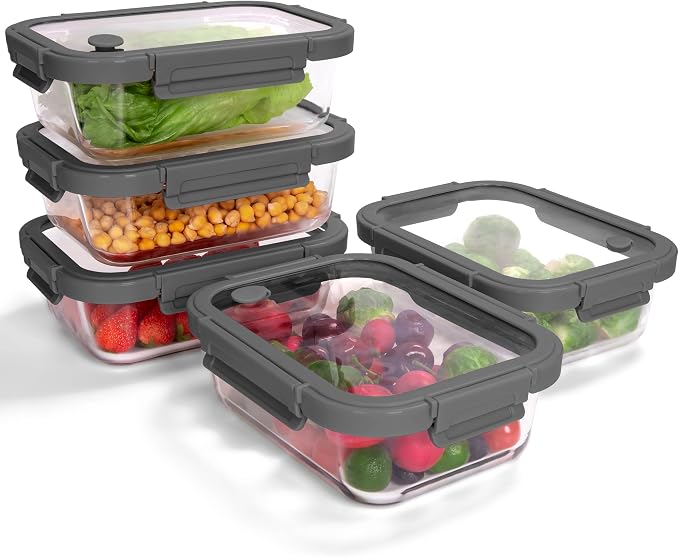
A container with a multi-point locking lid (the kind that snaps down on all four sides, not just a press-fit edge) is the standard choice for an everyday lunch or dinner portion. The locking mechanism is what actually prevents leaks at odd angles — something a simple press-fit lid can't reliably do once it's been opened and closed a few dozen times. Look for a 2 to 3 cup capacity for a standard single meal, and confirm it's labeled oven-safe if you want the option to reheat without dirtying a separate plate. For a full breakdown of what separates a genuinely leakproof glass set from one that only claims to be, see the glass container guide.
Wide-Mouth Jars for Overnight Prep
For overnight oats, layered salads, or anything that needs to sit in liquid overnight, a wide-mouth jar outperforms a standard rectangular container. The wide opening makes layering and eating directly from the jar far easier, and glass doesn't pick up odors or stains the way plastic eventually does with acidic dressings or turmeric-heavy sauces.
Small Containers for Sauces and Dressings
Keeping wet ingredients separate from the rest of a meal is the single most effective technique for preventing soggy meal prep, and it requires almost no extra effort once you have a stack of small leakproof containers on hand. A 1 to 2oz size handles most dressing and sauce portions without taking up much space.
Compartmentalized Containers for Portion Control
Containers with built-in compartments keep sauces, proteins, and dry components separated within a single piece, which is useful for anyone doing strict portion or macro tracking, or who simply prefers not to manage a separate sauce cup. The tradeoff is reduced total volume compared to a single-section container of the same external size, since the dividers themselves take up room.
Freezer-Specific Containers
Not every container that works in the fridge survives the freezer well. Liquid-heavy foods expand as they freeze, and a container without enough headspace below the lid can crack under that pressure — this is one of the most common and most avoidable container failures. If freezing is a regular part of your routine, the freezer container guide covers the headspace rule and the specific materials that hold up at 0°F.
Sizes You Actually Need
- 2–3 cup: Standard single lunch or dinner portion — protein, a starch, and a vegetable. This is the size you'll use most, so buy the bulk of your set in this range.
- 4–6 cup: Soups, stews, grain batches, or large salads you portion out later rather than serving as a single meal.
- 8oz (1 cup): Sauces, dressings, overnight oats, and snacks that need to stay separate from the main meal.
- Freezer-safe containers or bags: For anything going past your fridge's typical 3 to 5 day window — see the freezer container guide for the headspace rule that prevents cracking.
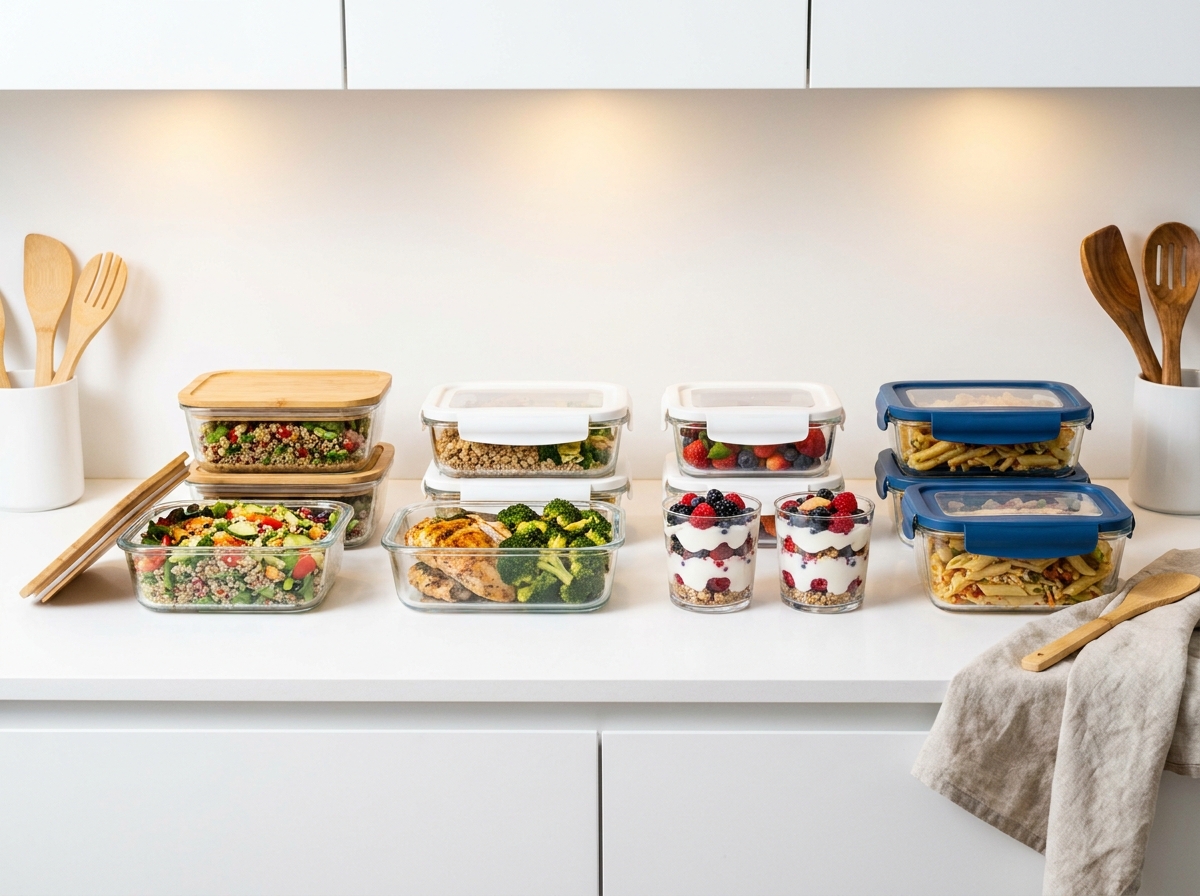
A reasonable starting set: 6 containers in the 2–3 cup range, 2 to 3 in the 4–6 cup range, and 4 to 6 small 8oz containers for sauces and snacks. That combination covers nearly every meal prep recipe on this site without needing to improvise with mismatched leftovers containers.
What to Avoid
- Containers without a locking lid. A press-fit lid without a locking mechanism will leak the moment it's tipped sideways in a bag — fine for a container that stays flat on a counter, not fine for anything you're carrying.
- Round containers, if fridge space is tight. Square and rectangular containers stack far more efficiently than round ones, which waste meaningful shelf space in a standard refrigerator when you're trying to fit 5 days of meals at once.
- A set with no separate sauce container included. If the set you're buying doesn't include small sauce or dressing containers, budget for a separate purchase — it's a small cost that meaningfully improves how your meals hold up over a week.
- Thin, low-grade plastic for anything going in the freezer. Standard plastic becomes brittle at freezer temperatures and is far more prone to cracking under the pressure of expanding food. See the freezer container guide for which materials actually hold up.
FAQ
What is the best material for meal prep containers?
It depends on how you use them. Glass is the best all-around choice for anyone reheating food directly in the container at home or a desk with a microwave, since it's oven-safe in most borosilicate sets, doesn't stain or hold odors, and lasts years longer than plastic. BPA-free plastic is the better choice for a tight budget or anything that travels rough, since it won't shatter if dropped. Stainless steel is the most durable option and never absorbs odors, but it's not microwave-safe, which rules it out for anyone who reheats food at the office.
Can I microwave glass meal prep containers?
Yes. Borosilicate glass containers labeled microwave-safe can go in the microwave, but the lid almost always needs to come off first, since most plastic lids aren't rated for microwave use even when the glass base is. Check the bottom of the container for a microwave-safe symbol if you're unsure, and avoid moving a container directly from the freezer into a hot microwave, since the sudden temperature change can crack even microwave-rated glass.
How long do meal prep containers actually last?
A well-made glass container set can realistically last 5 to 10 years with regular dishwasher and microwave use, since the glass base itself doesn't wear out. The lid is almost always the first part to fail, whether that's a silicone gasket losing its seal or a plastic latch cracking from being forced shut on an overfilled container. BPA-free plastic containers have a shorter practical lifespan, typically 6 to 12 months before they start showing scratches, cloudiness, or absorbed odors from strongly flavored food.
What size meal prep container do I need?
A 2 to 3 cup container handles a standard single meal of protein, a starch, and a vegetable, and is the most versatile size to buy in bulk first. Smaller 8oz containers work well for sauces, dressings, overnight oats, or snacks kept separate from the main meal. Larger 4 to 6 cup containers are better suited to soups, stews, or bulk grain batches you portion out later rather than individual meals.
Recommended Products