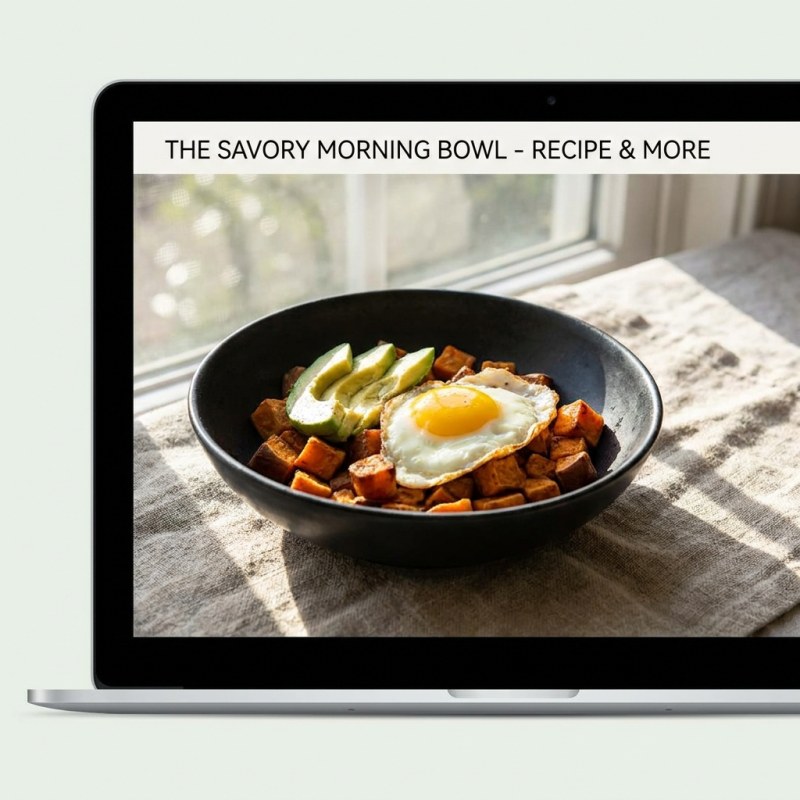
Breakfast bowls solve a problem that neither overnight oats nor scrambled eggs fully address: staying power. Oats and eggs are both relatively low-calorie, and by 10:30am most people are hungry again. A proper breakfast bowl — built on a grain or starch base, layered with real protein, and finished with roasted vegetables or healthy fat — runs 450 to 550 calories and genuinely holds you until lunch, which is the entire point of a heartier breakfast format.

The format also solves the variety problem. Once you have a base layering structure that works, swapping the grain, the protein, and the seasoning profile gives you what feels like a completely different breakfast each day, built from the same five or six prepped components. Here's the layering method that prevents sogginess, eight combinations that actually work, and the exact storage windows for each component.
The Layering Order That Prevents a Soggy Bowl
Breakfast bowls fail the same way salads do: wet ingredients sitting against absorbent ones for days turn everything mushy. The fix is the same principle, adapted for a hot or warm breakfast format rather than a cold salad jar.
- Grain or starch base, fully cooled before portioning. Quinoa, brown rice, farro, or roasted sweet potato cubes. This goes in first and forms the foundation.
- Protein layer, kept separate where possible. Scrambled eggs, baked tofu, turkey sausage, or black beans. If your protein has any sauce or moisture (like seasoned black beans), keep it in its own small container rather than layered directly onto the grain — this is the single biggest sogginess-prevention move.
- Roasted vegetables, added on top. Bell peppers, mushrooms, zucchini, or roasted tomatoes. These hold their texture well and don't transfer much moisture if they're properly roasted (not steamed) beforehand.
- Fresh or delicate toppings, added at serving time only. Avocado, fresh herbs, a fried egg, hot sauce. Never pre-add these — they're the ingredients most likely to degrade and the easiest to add fresh in 10 seconds each morning.
8 Breakfast Bowl Combinations Worth Making
| Bowl | Base | Protein | Protein (g) | Storage |
|---|---|---|---|---|
| Southwest Egg & Black Bean | Brown rice | Scrambled eggs + black beans | 26g | 4 days |
| Mediterranean Quinoa | Quinoa | Baked tofu + chickpeas | 24g | 5 days |
| Turkey Sausage & Sweet Potato | Roasted sweet potato | Turkey breakfast sausage | 28g | 4 days |
| Greek Yogurt Power Bowl | None — yogurt is the base | Greek yogurt + nuts + granola | 22g | 3 days (assemble morning-of) |
| Tofu Scramble Farro Bowl | Farro | Tofu scramble + nutritional yeast | 20g | 5 days, vegan |
| Bacon & Roasted Veg Quinoa | Quinoa | Bacon + scrambled eggs | 30g | 4 days |
| Chicken Sausage & Brown Rice | Brown rice | Chicken sausage + spinach | 27g | 4 days |
| Cottage Cheese Veggie Bowl | None — cottage cheese is the base | Cottage cheese + roasted veg + everything bagel seasoning | 24g | 4 days |
The grain-and-cooked-protein bowls (the first three and the last three) hold the longest because both components are stable, dry-ish solids that don't release much moisture during storage. The two cottage cheese and yogurt-based bowls have shorter practical windows — not because the dairy spoils faster, but because the texture and flavor are noticeably better assembled closer to serving time rather than sitting fully combined for days.
The Component Batching Strategy
The most efficient way to build 8 different combinations isn't cooking 8 separate meals — it's batching 5 or 6 components once and recombining them differently across the week. One batch of quinoa, one batch of brown rice, one batch of roasted sweet potato. One batch of scrambled eggs, one batch of baked tofu, one batch of breakfast sausage (turkey or chicken). One tray of mixed roasted vegetables. From there, you mix and match — Monday gets quinoa + tofu + vegetables, Tuesday gets brown rice + eggs + black beans, and so on, without needing to cook anything twice.
This component approach takes roughly 45 to 60 minutes of active Sunday cooking and gives you the raw material for 5 to 8 distinctly different bowls across the week, which is a far better time investment than cooking each bowl combination separately from scratch.
Storage and Food Safety by Component

Cost Breakdown
Building 5 bowls from batched components runs $9 to $14 total depending on which proteins you choose — turkey sausage and chicken sausage run slightly higher than tofu or eggs, while black beans and chickpeas are the cheapest protein options in the lineup. That works out to roughly $1.80 to $2.80 per breakfast, well under what a comparable breakfast bowl costs at a fast-casual breakfast spot, which frequently runs $9 to $13 for a similar combination of grain, protein, and vegetables.

Frequently Asked Questions
How long do meal prepped breakfast bowls last in the fridge?
Grain-and-protein bowls (quinoa, rice, or farro with eggs, tofu, or sausage) last 4 to 5 days refrigerated at 40°F (4°C) or below. Yogurt or cottage cheese-based bowls are best eaten within 3 days for optimal texture, even though the base dairy ingredient may have a longer standalone shelf life. Always store any fresh toppings like avocado or fresh herbs separately and add them at serving time rather than pre-mixing.
Can I reheat a breakfast bowl with avocado already in it?
No — avocado should never be added before storage or reheating. It browns within hours even with lemon juice added, and microwaving it produces an unpleasant bitter, overcooked texture. Always slice and add fresh avocado at the moment you're about to eat, after any reheating is already done.
What's the best grain base for breakfast bowl meal prep?
Quinoa and brown rice are the most reliable options — both hold their texture well through 4 to 5 days of storage and reheat evenly without becoming mushy or dried out, as long as you add a small splash of water before microwaving. Farro offers a chewier texture some people prefer, though it takes slightly longer to cook initially (35 to 40 minutes versus 15 to 20 for quinoa or rice).
Are breakfast bowls a good option for weight loss?
They can be, depending on portion sizing and ingredient choices. A breakfast bowl built on a moderate grain portion (roughly ½ cup cooked), a lean protein source, and roasted non-starchy vegetables typically runs 400 to 500 calories with 25 to 30g protein, which supports satiety through a long morning without excess calories. The format becomes less weight-loss-friendly if you're heavy-handed with added fats like extra cheese, large amounts of nut butter, or oil-heavy roasted vegetables — moderate portions of these are fine, but they're easy to overdo since they're flavorful and easy to add more of.
Eight combinations from a handful of batched components, all built to survive 4 to 5 days without turning into a soggy mess. The layering order and component-batching strategy are what make breakfast bowls genuinely viable for a full week, rather than something you only manage to make fresh once before giving up.