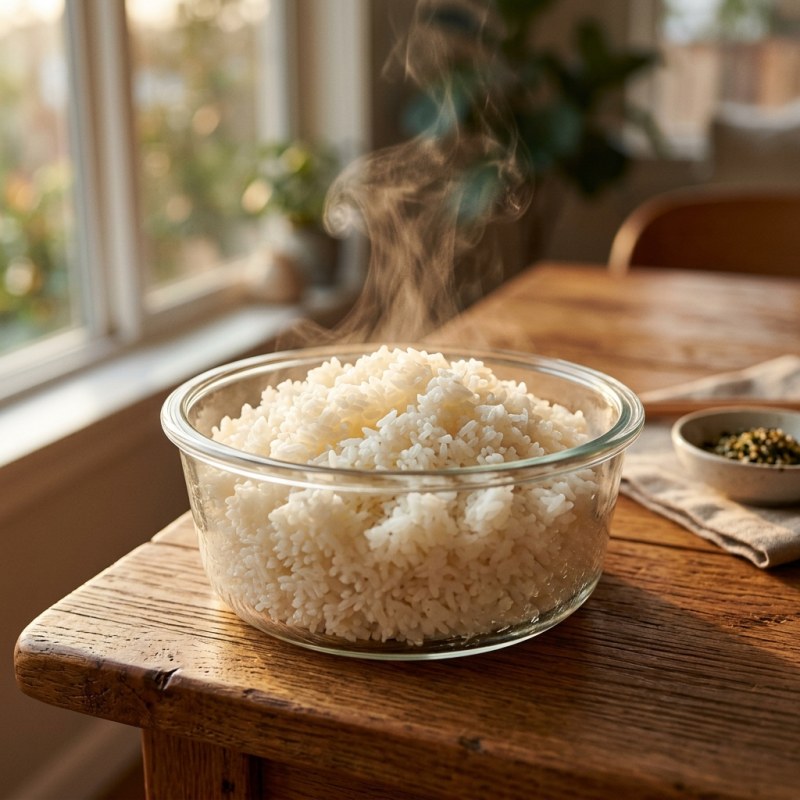
Yes — you can meal prep rice, and it stays genuinely fluffy for 5 days if you handle two specific steps most people skip: cooling it properly before storage, and reheating it with added moisture rather than dry heat. That's the direct answer to can you meal prep rice fluffy guide, and the rest of this comes down to execution details.
This guide covers exactly why rice turns hard or gummy in storage, the cooling and reheating technique that prevents it, how the three most common rice types compare, and a full week of meals built around one batch of properly-stored rice.
This is a question-format search for a reason — a lot of people have been burned by bad meal-prepped rice before and are genuinely unsure whether it's worth trying again. The short version is that the failures almost always trace back to one of two specific, fixable mistakes, not some inherent flaw in storing rice at all.

Why Does Meal Prepped Rice Sometimes Turn Hard or Gummy?
Rice's texture problems in storage come down to starch behavior. As cooked rice cools, its starches recrystallize in a process called retrogradation — this is what makes rice feel hard or dry after a day or two in the fridge. Reheating without adding moisture back doesn't reverse this process fully, which is why microwaved leftover rice often comes out either still hard in spots or gummy where it did rehydrate unevenly. This same retrogradation process is actually well studied in food science, and it's the reason virtually every "how do I fix leftover rice" complaint traces back to the same root cause rather than dozens of unrelated problems.
The first time I meal prepped a big batch of rice, I sealed it in containers while it was still steaming hot, assuming that would keep it fresher. Instead, the trapped steam condensed and made the top layer soggy while the rest dried out unevenly. Cooling rice properly before sealing solves both problems at once.
The Two-Step Fix: Proper Cooling, Then Proper Reheating
Spread cooked rice out on a sheet pan for 10-15 minutes to cool quickly and evenly before portioning into containers — this single step prevents the condensation problem that ruins texture in sealed, still-warm containers. When reheating, add a splash of water (about a tablespoon per cup of rice) before microwaving, and cover loosely so steam can redistribute moisture through the grains rather than escaping immediately. This two-part fix alone resolves the vast majority of rice-texture complaints without requiring any special equipment or ingredients.

How Do the Three Main Rice Types Compare for Meal Prep?
- White rice — Cooks fastest (15-18 minutes), holds 4-6 days, most prone to gumminess if overcooked initially.
- Brown rice — Takes longer (40-45 minutes), holds 4-6 days, generally more forgiving of reheating since its bran layer retains structure better.
- Jasmine or basmati — Cooks in 15-18 minutes like white rice, holds 4-5 days, aromatic varieties can lose some fragrance after a few days of storage even when texture holds up fine.
If you're already comfortable with best rice for meal prep compared, the cooling and reheating technique here applies identically regardless of which specific type or method you're using.
The Rice Storage Comparison Table
| Rice Type | Cook Time | Storage Life | Best Reheat Method |
|---|---|---|---|
| White rice | 15-18 min | 4-6 days | Microwave with splash of water, covered |
| Brown rice | 40-45 min | 4-6 days | Microwave with splash of water, covered |
| Jasmine/Basmati | 15-18 min | 4-5 days | Steam briefly or microwave with water |
How I Build a Week of Meal Prepped Rice in One Sunday
- Rinse rice under cold water until the water runs mostly clear, removing excess surface starch that contributes to gumminess.
- Cook using your preferred method — stovetop, rice cooker, or Instant Pot all work, following standard water ratios for your specific rice type.
- Spread cooked rice on a sheet pan to cool for 10-15 minutes rather than leaving it in the pot.
- Portion into containers once cooled to close to room temperature, not while still warm.
- Refrigerate within 2 hours of cooking to stay within the safe food-handling window.
- Reheat with added moisture each time you eat, rather than microwaving dry.

What Does a Week of Rice-Based Meal Prep Actually Cost?
- 3 cups dry rice (any type) @ $1.20-1.79/lb = $2.50
- Protein, vegetables, and sauces varied across 5 days = $22.00
Total: roughly $24.50 for 5 servings = about $4.90 per serving — the rice itself is genuinely one of the cheapest components in any meal prep plan, at well under $0.20 per serving on its own. Almost all of that weekly total goes toward the protein and vegetables that round rice out into a full meal, which is worth keeping in mind if you're trying to identify where a meal prep budget is actually being spent.
How Long Does Meal Prepped Rice Actually Stay Safe to Eat?
Per USDA FoodKeeper guidance, cooked rice holds safely for 4-6 days refrigerated at 40°F (4°C) or below, and up to 6 months in the freezer if you want to extend that further. The bigger risk with rice specifically isn't the standard refrigeration window — it's the room-temperature window before refrigeration, since Bacillus cereus spores can survive cooking and multiply if rice sits out too long before being cooled and stored properly.
The Biggest Mistake I Made Meal Prepping Rice
I used to reheat rice completely dry, assuming the microwave's own moisture would be enough to restore texture. It never was — the rice consistently came out either still firm in the center or dried out at the edges. Adding that simple tablespoon of water per cup before reheating, every single time, fixed a problem I'd assumed was just an unavoidable downside of meal-prepped rice.
If you're building this into a broader rice meal prep plan 5 days 4 cuisines rotation, this same cooling-and-reheating technique applies no matter which cuisine or seasoning direction you're taking the rice in that day.
The second mistake, smaller but still worth naming: I used to reheat the entire week's batch at once "to save time," rather than reheating just the portion I was about to eat. This meant repeatedly cooling and reheating rice that wasn't being eaten yet, which both degrades texture faster and isn't ideal from a food safety standpoint. Reheating only what you're actually eating in that sitting is a small habit change that meaningfully improves how the rest of the week's batch holds up.

Does the Cooking Method (Stovetop vs. Rice Cooker vs. Instant Pot) Change Storage Results?
Not meaningfully, as long as the rice isn't overcooked to begin with. A rice cooker and Instant Pot both tend to produce slightly more consistent results than stovetop cooking, since they regulate temperature and timing automatically, which matters more for avoiding an initially-gummy batch than for how well it stores afterward. Whichever method you use, the cooling-before-storage step matters equally — a perfectly cooked batch from any of the three methods can still turn hard or unevenly textured if sealed while hot.
Is Day-Old Rice Actually Better for Certain Dishes?
Genuinely, yes — for fried rice specifically. Freshly cooked rice is too moist and clumps together when stir-fried, while rice that's been refrigerated for a day has lost enough surface moisture through the retrogradation process to fry up with distinct, separate grains instead of a sticky mass. This is actually a case where the "problem" this guide addresses becomes a feature: if fried rice is on your meal prep rotation, deliberately using rice that's sat in the fridge overnight (properly stored, following the same cooling rules) produces a better result than trying to use same-day rice.

Microwave vs. Stovetop vs. Steamer — Does Reheating Method Matter?
For convenience, microwaving with added water and a loose cover works well for most situations and is what most people default to. Stovetop reheating in a covered pan with a splash of water gives slightly more even results, since you can stir and check texture as you go rather than guessing at microwave timing. A steamer basket is the gentlest method and produces the most evenly rehydrated texture of the three, though it's the least practical for a quick weekday lunch given the extra setup time involved.
Can You Freeze Meal Prepped Rice, and Does It Reheat Well?
Yes, and it's genuinely one of the better freezer-friendly components in any meal prep rotation. Cooked rice holds for up to 6 months frozen at 0°F (-18°C) or below, well beyond its 4-6 day refrigerated window. The same cooling-before-storage rule applies before freezing, and portioning into flat, individual-serving bags rather than one large block makes both freezing and thawing far more even. Thawed rice reheats using the same added-moisture technique as refrigerated rice, though it typically needs slightly more water since freezing draws out additional moisture during the thaw.
Frequently Asked Questions
Can you meal prep rice for the week?
Yes, cooked rice holds safely for 4-6 days refrigerated when properly cooled before storage and reheated with added moisture. The key steps are cooling it quickly on a sheet pan rather than sealing it while hot, and adding a splash of water when reheating to restore texture.
How do you keep meal prepped rice from getting hard?
Cool the rice quickly and evenly before sealing it in containers, then reheat with a small amount of added water, covered, so steam can redistribute moisture through the grains. Reheating dry rice without added moisture is the most common cause of hard or unevenly textured rice.
Is it safe to reheat rice multiple times?
Reheating rice once is generally fine as long as it was cooled and stored properly the first time. Repeatedly reheating and re-cooling the same batch increases food safety risk, particularly from Bacillus cereus, so it's better to only reheat the individual portion you're about to eat rather than cycling the whole batch multiple times.
Why does my meal prepped rice smell or taste off after a few days?
This can indicate the rice sat at room temperature too long before refrigeration, or that it's simply past its safe storage window. If rice has an off smell, unusual texture, or was left out longer than 2 hours after cooking, it's safer to discard it than to risk it.
Does brown rice or white rice last longer in meal prep?
Both typically hold for 4-6 days when stored properly, though brown rice tends to be slightly more forgiving during reheating due to its intact bran layer. The bigger factor in either case is proper cooling before storage, not which specific type you choose.
At under $0.20 a serving for the rice itself and two simple technique fixes, meal prepped rice doesn't have to be the sad, dry component of an otherwise good meal. Cool it properly, reheat it with moisture, and it holds up as well on day 5 as it did on day 1.