Why Chicken Is the Default Meal Prep Protein
Chicken is the most meal-prepped protein in the world for three straightforward reasons: it is cheap, it is high in protein, and it is versatile enough to appear in every cuisine without tasting out of place. A pound of boneless skinless chicken breast costs $3–$5 and provides approximately 100 grams of complete protein. A pound of bone-in chicken thighs costs $1.50–$2.50 and provides 80–90 grams of protein. Either way, chicken delivers more protein per dollar than virtually any other animal food outside of eggs.
The challenge with chicken meal prep is that chicken breast — the most popular choice — becomes dry and stringy when reheated improperly. This is the reason many people try chicken meal prep once, find the reheated result unpleasant, and conclude that meal prep does not work. The problem is technique, not the ingredient. This guide covers exactly how to cook, season, store, and reheat chicken so that it remains genuinely enjoyable on day 4.
Chicken Breast vs Chicken Thighs for Meal Prep: The Real Answer
This question has a definitive answer that most meal prep guides avoid giving: for meal prep, chicken thighs are better than chicken breast. This is not a matter of taste preference — it is a matter of how both cuts behave across 4 days of refrigeration and multiple reheating cycles.
Chicken breast has almost no intramuscular fat. Fat is what keeps meat moist during cooking and reheating. Cook chicken breast to the safe internal temperature of 165°F, and the moisture is already at its minimum. Refrigerate for 2 days and reheat, and that moisture reduces further. By day 3 or 4, reheated chicken breast is reliably dry unless it was cooked and stored in liquid.
Chicken thighs have significantly higher intramuscular fat content. This fat acts as a buffer against moisture loss during both cooking and reheating. Chicken thighs cooked to their optimal temperature of 175°F — higher than breast because the fat needs to render fully — remain moist through 4 days of refrigeration and repeated reheating. The flavor is also more pronounced, which means thighs are more forgiving of simple seasoning.
When to use chicken breast: Cold applications (salads, wraps, cold grain bowls), dishes with a sauce that keeps moisture in (curries, soups, braised dishes), or when caloric content is the priority (breast is approximately 165 calories per 100g versus 220 calories for thighs).
When to use chicken thighs: Everything else — roasted bowls, stir-fries, any application where the chicken will be reheated dry. Thighs at $1.50–$2.50 per pound versus $3–$5 for breast also represent a 40–60% cost saving with better meal prep performance.
How Long Does Cooked Chicken Last for Meal Prep?
According to USDA food safety guidelines, cooked chicken stored in the refrigerator at or below 40°F (4°C) is safe to eat for 3 to 4 days. This is the official guideline and represents the maximum safe window, not an estimate.
In practical terms for meal prep:
- Day 1–2: Optimal quality. Texture and flavor are closest to fresh-cooked.
- Day 3: Still excellent. Flavors have often deepened slightly from marination in their own juices.
- Day 4: Safe and acceptable, though some moisture loss is noticeable. Add a tablespoon of water or sauce before reheating.
- Day 5+: Outside the USDA safe window. Discard regardless of smell or appearance — not all bacterial growth produces detectable sensory changes.
For a 5-day work week, this creates a practical constraint: either eat chicken-based meals on Monday through Thursday only, cook a second small batch mid-week (Wednesday evening takes 25 minutes for chicken thighs), or freeze the 5th day portion when you prep it on Sunday.
Frozen cooked chicken maintains quality for up to 3 months. Freeze in individual portions in zip-lock bags with air pressed out, label with the date, and thaw overnight in the refrigerator the night before you plan to eat it.
The Key to Moist Reheated Chicken: Storage Method
The single factor that most affects reheated chicken quality is how it is stored, not how it was cooked. Here are the storage approaches ranked by reheated quality:
Best: Store in cooking liquid or marinade. If you roast chicken thighs, pour the pan drippings over them in the storage container before refrigerating. If you poach chicken breast in broth, store it submerged in the poaching liquid. The chicken absorbs moisture back from the liquid during storage, which reverses some of the moisture lost during cooking.
Good: Store whole, slice before serving. Slicing chicken before storage increases the surface area exposed to air, accelerating moisture loss. Store thighs or breasts whole and slice or shred them immediately before eating.
Acceptable: Store dry in airtight container. Works adequately for chicken thighs. For breast, add a splash of water to the container before refrigerating — it creates a small humidity reservoir that slows moisture loss.
When reheating from the refrigerator: add 1–2 tablespoons of water to the container, cover loosely (not airtight — you want steam to escape, not accumulate), and microwave at 70% power for 90–120 seconds. High power reheating strips remaining moisture rapidly.
6 Seasoning Approaches for a Full Month of Variety
One batch of chicken per week using the same seasoning every week produces flavor fatigue within a month. Rotating through these six approaches produces a different flavor profile each week while requiring minimal seasoning effort:
1. Garlic-Smoked Paprika (the workhorse): Olive oil, garlic powder, smoked paprika, onion powder, salt, pepper. Works with everything — bowls, wraps, salads, soups. The baseline chicken meal prep seasoning that every other approach is a departure from.
2. Lemon-Herb: Olive oil, lemon zest, lemon juice, dried oregano, dried thyme, garlic, salt. Bright and fresh. Best suited for cold applications — salads, wraps, grain bowls with Mediterranean accompaniments (feta, cucumber, olives).
3. Soy-Ginger: Soy sauce, fresh ginger (or ground), sesame oil, garlic, a teaspoon of honey. Marinate for at least 30 minutes before cooking. Produces chicken that works in Asian-inspired bowls, stir-fries, and fried rice.
4. Tex-Mex: Cumin, chili powder, garlic powder, onion powder, smoked paprika, oregano, salt, a pinch of cayenne. Used for taco bowls, burritos, fajita-style wraps, and any Latin-inspired combination. One of the most broadly useful flavor profiles for chicken meal prep.
5. Curry: Curry powder, turmeric, cumin, coriander, garlic, ginger, salt, coconut oil. The resulting chicken works in curry sauces, grain bowls with mango chutney, and flatbreads. Heavier flavor that is best when you want something warming and substantial.
6. Italian: Olive oil, Italian seasoning, garlic powder, lemon juice, salt, pepper. Works in pasta dishes, on top of salads with balsamic dressing, in grain bowls with roasted tomatoes and mozzarella, or in wraps with pesto.
The Sunday Chicken Meal Prep System
Here is the exact process for a reliable chicken meal prep session that covers 4–5 days:
Quantities for 1 person, 4 days of lunches and dinners: 4–6 bone-in chicken thighs, or 3–4 boneless chicken breasts (approximately 600–700g raw).
Quantities for 2 people, 4 days: 8–10 chicken thighs or 6–8 breasts (1.2–1.4kg raw).
The method (roasting — most reliable for meal prep):
- Preheat oven to 425°F (220°C). Line a sheet pan with foil for easy cleanup.
- Pat chicken completely dry with paper towels. Dry surface browns; wet surface steams.
- Coat with olive oil and your chosen seasoning. Rub under the skin for bone-in pieces.
- Place skin-side up (for thighs) or flat (for breast) on the sheet pan without crowding.
- Roast: thighs 35–40 minutes until 175°F internal; breast 22–26 minutes until 165°F internal.
- Rest on a cutting board for 10 minutes before storing — resting allows juices to redistribute.
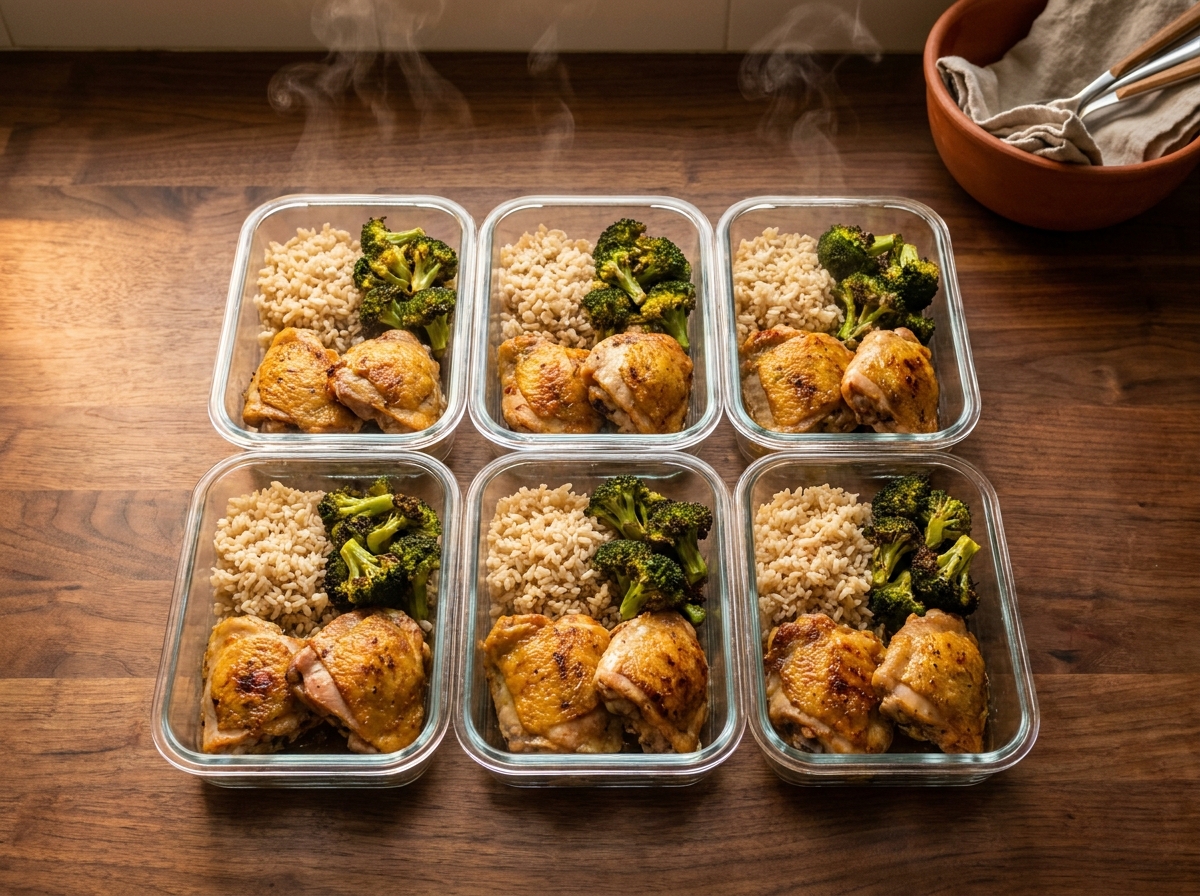
- Store whole in airtight containers with any pan drippings poured over. Label with date.
Alternative method: poaching (best for chicken breast): Place breasts in a pot, cover with cold water or chicken broth, add aromatics (bay leaf, garlic, peppercorns). Bring to a gentle simmer — never a full boil — and cook for 15–18 minutes until 165°F. Store submerged in the poaching liquid. This method produces the moistest reheated chicken breast possible and is used by most professional meal prep services.
A Full Week from One Chicken Batch
Using 6 roasted chicken thighs seasoned with garlic-smoked paprika, here is how a full work week builds out with completely different meals each day:
Monday lunch: Chicken thigh over brown rice with roasted broccoli and tahini sauce. Pull the meat from the bone, slice thickly, reheat with a tablespoon of water.
Monday dinner: Chicken and vegetable soup. Shred one thigh into simmering broth with whatever vegetables need using up. Ready in 10 minutes.
Tuesday lunch: Chicken wrap. Shred one thigh into a large flour tortilla with Greek yogurt, lettuce, tomato, and hot sauce.
Tuesday dinner: Chicken fried rice. Dice one thigh and stir-fry with day-old rice, scrambled eggs, frozen peas, soy sauce. 8 minutes.
Wednesday lunch: Chicken grain bowl with quinoa, roasted sweet potato, cabbage slaw, and soy-ginger dressing.
Wednesday dinner: Chicken pasta. Slice one thigh thin and toss with pasta, pesto, cherry tomatoes, and parmesan.
Six meals from one batch of six chicken thighs. Every meal tastes different because the surrounding ingredients and sauces change, not the chicken itself. This is the core principle of chicken meal prep done correctly.

Frequently Asked Questions
Q: Can I meal prep raw marinated chicken and just cook it when needed?
Yes. Raw chicken marinating in the refrigerator is safe for up to 2 days. This approach gives you fresh-cooked quality every time but requires 35–40 minutes of oven time on the day you eat it. Many meal preppers do this for the second half of the week — cook Sunday's batch for days 1–3, marinate a second batch on Tuesday to cook Wednesday for days 4–5.
Q: Why does my meal-prepped chicken taste rubbery?
Two causes: overcooking (chicken breast above 165°F, thighs above 180°F lose moisture rapidly), and high-power microwave reheating. Cook to exact temperatures with a thermometer, and reheat at 60–70% microwave power rather than full power.
Q: Is it safe to reheat chicken more than once?
Technically safe if each reheating reaches 165°F, but each reheating cycle removes more moisture and degrades texture. Best practice: reheat only the portion you plan to eat in that sitting, not the entire batch.
Q: Can I freeze raw chicken and meal prep after thawing?
Yes. Raw chicken can be frozen for up to 9 months. Thaw in the refrigerator overnight (never at room temperature), and cook within 1–2 days of thawing. Do not refreeze thawed raw chicken without cooking it first.