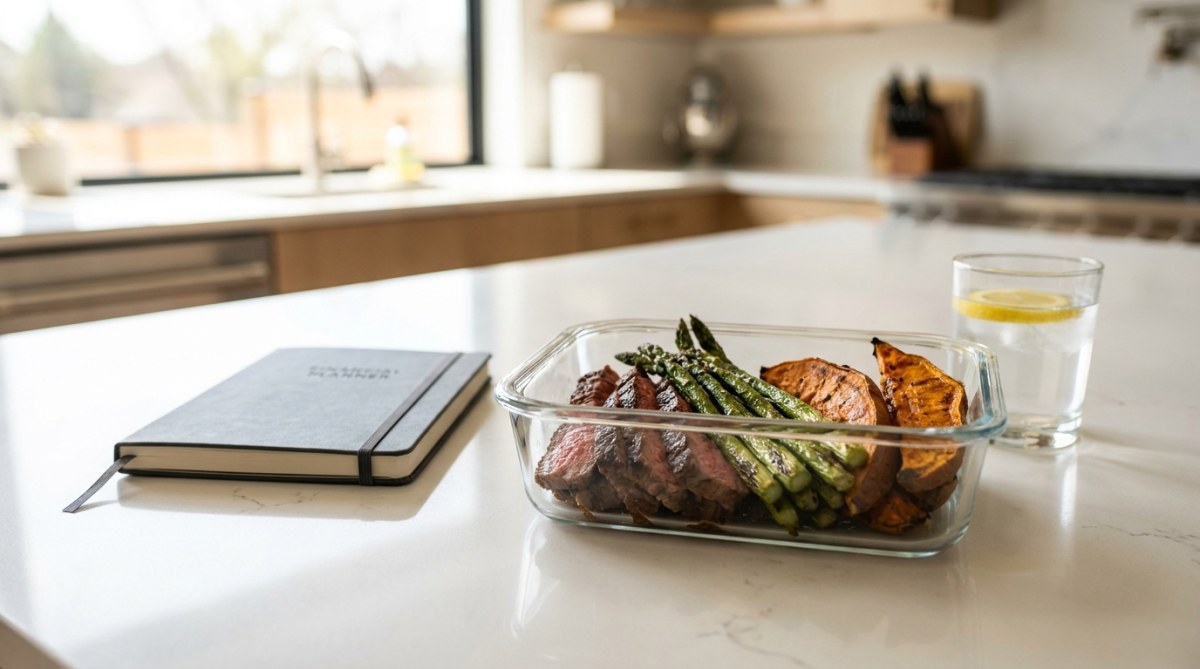
Let's skip the generic financial advice that tells you to stop buying cold brew coffee and cancel your streaming services. If you live and work in Los Angeles, San Diego, Orange County, or the Inland Empire, your single biggest discretionary expense outside of rent or a mortgage is almost certainly food. The problem is not necessarily a lack of personal discipline; rather, it is a structural time and inflation trap peculiar to the Southern California economic ecosystem.

When you are balancing a grueling professional schedule, sitting in gridlocked traffic on the 405 or the 5 freeway, and attempting to preserve an hour for weight training, you inevitably run out of cognitive bandwidth. The idealized vision of Sunday meal prep falls by the wayside. You pull out your smartphone, open a food delivery app, and suddenly a single casual dinner bowl costs you upwards of $32 after service fees, dynamic delivery pricing, state-mandated driver benefit fees, and tips. By the end of the month, your bank statement is a horror show of small, high-frequency transactions that completely derail your financial planning and your physique goals.
But is a dedicated, specialized meal delivery service actually cheaper, or is it just another luxury subscription layered onto an already expensive lifestyle? To find the truth, we have to strip away the marketing and break down the actual hard data on what it costs to eat in Southern California in 2026. We will compare the traditional DIY grocery shopping route, the food app dependency trap, and a localized regional fitness system like Meal Prep Sunday.
The True Math of the Southern California Grocery Run
Most fitness enthusiasts calculate their weekly grocery budget using a highly idealized, fictionalized version of reality. They look at the receipt from a single Sunday morning run to Ralphs, Vons, or Whole Foods and mistakenly assume that number covers their entire weekly sustenance. It never does. There are massive hidden leaks in the DIY cooking model that standard online macro calculators completely ignore.
1. The Food Waste Factor (The 'Crisper Drawer' Tax)
According to data from the USDA and local municipal waste studies in California, the average urban consumer discards roughly 25% to 30% of the fresh food they purchase. When you buy raw ingredients to cook healthy, macro-balanced meals, you are forced to buy in retail volumes designed for large families, not for single-serving precision.
You buy a full bundle of organic cilantro because you need exactly two tablespoons for a specific chicken dish. You buy a massive bag of spinach because it was on sale, but you only need a handful for your morning scramble. The remaining 80% rots in your crisper drawer, eventually turning into green sludge that you throw in the trash on Thursday night. When you calculate your true cost per meal, you cannot just look at the price of the food you actually ingested; you must amortize the cost of the food you threw away. If your weekly grocery bill is $150, but you throw away 25% of the perishable items, your actual utilized food cost is significantly higher, effectively adding a $37 "spoilage tax" to your weekly budget.
2. The Southern California Utility Inflation
Cooking at home requires heavy utility usage. In 2026, Southern California residents face some of the highest tier-based electricity and natural gas rates in the entire country. Running an electric oven at 400 degrees for two hours to batch-roast chicken and vegetables, operating a dishwasher on heavy-duty cycles multiple times a week to clean the grease off your meal prep containers, and running high-wattage blenders and food processors all add hidden costs to your monthly baseline. While it might only add a few dollars per cooking session, over a month of dedicated meal prep, you are adding $30 to $50 in pure utility costs just to facilitate your DIY food production.


3. The Opportunity Cost of Time
Time is a strictly finite resource, and in Southern California, time is exceptionally expensive. A legitimate, clean, accurate meal prep routine for a full week requires a massive temporal investment. Let's look at the actual Sunday workflow of a dedicated fitness enthusiast:
- Planning and Commuting (1.5 Hours): Researching recipes that fit your macros, writing the list, driving to the store, and battling crowded parking lots in West LA, Irvine, or Mission Valley.
- The Retail Maze (1 Hour): Navigating the aisles, waiting in checkout lines, and loading the car.
- Cooking and Portioning (3 Hours): Slicing raw proteins, standing over a hot stove, tracking exact gram weights on a digital kitchen scale, and batch-cooking multiple variations so you don't go insane from boredom by Wednesday.
- Sanitation (1.5 Hours): Scrubbing grease-slicked sheet pans, washing cutting boards, sanitizing counters after handling raw chicken, and loading the dishwasher.
That is seven hours of your weekend gone. If your internal professional billable rate, overtime value, or even freelance side-hustle value is a conservative $40 per hour, you are burning $280 worth of personal equity every single week just to manage your refrigerator's plastic containers. Over a month, that is over $1,100 in lost time that could have been spent resting, training, or generating actual income.
The Brutal Reality of the App Delivery Trap
When the DIY method inevitably fails because you are too exhausted on Wednesday night to eat another container of dry chicken breast, you turn to the apps. DoorDash, UberEats, and Postmates have engineered their interfaces to make ordering frictionless, but the financial mechanics operating behind the screen are punishing.
Let's look at the actual breakdown of ordering a "healthy" macro bowl from a local fast-casual spot in Los Angeles:
- Menu Price: $16.50 (Often marked up 15% from the in-store price to cover platform margins).
- Service Fee: $3.50 (Variable based on order size and time of day).
- Delivery Fee: $2.99 (Even with premium subscription models, certain distances trigger fees).
- California Driver Benefits Surcharge: $2.00 (Prop 22 related fees).
- Tip (20%): $5.00 (Calculated on the post-tax subtotal).
Your $16.50 lunch just cost you $29.99. If you rely on this convenience just five times a week (lunch at the office, dinner when you work late), you are bleeding $150 a week, or over $600 a month, purely on logistical markups for food that often arrives cold, tossed around in a paper bag, with macros that are completely unverifiable.
The Breakdown: Hard Numbers Across Three Models
To establish absolute clarity, let's contrast the realistic expenditures of an individual tracking a strict, fitness-focused diet (roughly 2,200 calories/day, high-protein, clean whole ingredients) across a standard 30-day period in Southern California. We will ignore the sunk cost of time and look purely at cash leaving your bank account.
| Expense Pillar | The App Dependent (Takeout) | The Purist (DIY Grocery) | The Managed Plan (Meal Prep Sunday) |
|---|---|---|---|
| Raw Food Cost | $850 (Relying on daily app orders) | $520 (High-quality organic whole foods) | $384 (Blended base subscription volume) |
| Hidden Fees / App Margins | $320 (Service charges, driver fees, tips) | $0 | $0 (Free regional delivery) |
| Food Waste Cost | $0 | $130 (Spoiled items, unconsumed extras) | $0 (Zero surplus waste) |
| Fuel / Travel Cost | $0 | $45 (Multiple grocery runs in SoCal traffic) | $0 (Direct doorstep delivery) |
| Utility Surcharge | $0 | $35 (Oven, dishwasher, electric usage) | $0 (Zero cooking required) |
| Total Monthly Cash Outlay | $1,170 | $730 | $384 - $515 (Depending on plan scale) |
Why Localized Meal Services Deflate the Cost Curve
The numbers above frequently surprise people because the general public views pre-packaged meal delivery as an expensive, elite premium product. In reality, a regional system like Meal Prep Sunday completely bypasses the retail inflation trap. They operate on a wholesale commercial level. They purchase organic produce and clean proteins directly from regional California agricultural distributors by the ton, acquiring ingredients at a mere fraction of the cost you pay at a retail grocery store counter.
Furthermore, because they operate their own dedicated delivery infrastructure restricted explicitly to the Southern California counties (spanning Los Angeles, San Diego, Orange County, Riverside, and the Inland Empire), they skip the third-party gig economy logistics platforms completely. They do not have to artificially inflate their food prices to pay a middleman tech company a 30% platform tax. They absorb their own transit costs and pass that massive logistical efficiency down to the consumer in the form of completely free doorstep delivery.
If you are looking to test the economic viability of outsourcing your diet without taking a massive financial risk, the entry barrier is engineered to be a non-issue. New client acquisitions trigger promotional tiers that drop the baseline pricing to as low as $3.26 per meal. That is significantly cheaper than purchasing a generic processed protein bar and a premium black coffee at a drive-thru, yet you are receiving a chef-prepared, expert-calibrated, macro-precise whole food meal.
The Macro Consistency Dividend
Beyond the raw dollars, there is a severe psychological cost to food management that directly impacts your overall efficiency. When you are forced to make decisions about what to eat multiple times a day while in a state of caloric deficit, your decision-making capacity naturally degrades. This phenomenon is known as decision fatigue. By 6:00 PM, your willpower is depleted, and this is exactly when impulse purchases and diet breaks happen.
By shifting to an automated, pre-portioned delivery system, you remove the choice architecture entirely. Your meals are already perfectly calculated, vacuum-sealed using Modified Atmosphere Packaging (MAP) to guarantee crispness, and stacked neatly in your refrigerator. You don't have to think, weigh, measure, or negotiate with yourself. You just open the fridge, grab the container, heat it for two minutes, and eat.
That level of friction-less consistency has a massive downstream impact on your physical progress. Every missed macro target, every skipped meal, or every cheat meal driven by sheer exhaustion is a waste of your hard-earned gym investments. You pay for your gym membership, you pay for your supplements, and you pay in sweat. Ruining those investments because you didn't have time to cook is the worst financial calculation of all.
Conclusion: Making the Rational Shift
If you treat your fitness progress and your personal finances with analytical precision, the DIY cooking model or the food delivery app cycle simply do not hold up to scrutiny in Southern California's high-overhead economic ecosystem. Outsourcing the logistics of your fat loss phase to a localized specialist isn't an indulgence—it is a highly calculated, defensive play to protect both your time and your bank account. You buy back your Sunday, you eliminate food waste, and you guarantee your fitness results.
Stop overpaying for inefficient logistics and wasted produce. Run your zip code through the service checker and claim your introductory $3.26/meal pricing framework with zero delivery costs.

Frequently Asked Questions About Meal Prep Costs
Is meal delivery actually cheaper than grocery shopping in California?
Yes, when you factor in the 25% average food waste of DIY grocery shopping, the cost of utilities, and the opportunity cost of your time. While the raw ingredients at a grocery store might appear cheaper on the receipt, the final utilized cost per meal heavily favors a wholesale-sourced local delivery service, especially when delivery fees are zero.
Why is Meal Prep Sunday cheaper than national competitors?
National competitors must factor in the massive cost of cross-country shipping via FedEx or UPS, along with the heavy cardboard boxes and dry ice required to keep food safe. Meal Prep Sunday operates entirely within Southern California using their own fleet of vans, eliminating third-party shipping costs and passing those savings to the consumer.
How do delivery apps inflate the cost of eating healthy?
Delivery apps utilize a compounding fee structure. They mark up the menu price by 15-30%, add a service fee, add a variable delivery fee, add state-mandated Prop 22 driver benefit fees, and require a tip. A meal that costs $15 in-store easily exceeds $30 when delivered via an app.
Do I have to sign a long-term contract to get the $3.26 introductory rate?
No. The introductory rate is designed to let you test the system without financial risk. The service operates on a week-to-week basis. You can pause, skip a week if you are traveling out of Los Angeles or San Diego, or cancel entirely through their portal without hidden fees.
How much time does the average person spend on Sunday meal prep?
Including planning, commuting to the grocery store, navigating the aisles, cooking, portioning, and washing dishes, the average fitness enthusiast spends between 5 to 7 hours a week managing their food logistics. Outsourcing this reclaims nearly a full working day of time every month.