Roughly 1 in 133 Americans has celiac disease according to the Celiac Disease Foundation, and the broader population managing non-celiac gluten sensitivity is estimated to be several times larger still. For anyone in either group, gluten free meal prep isn't really about finding gluten-free recipes — recipes are the easy part. The actual challenge is cross-contamination in a kitchen that wasn't built exclusively gluten-free, and that's the part most guides skip entirely.
This guide covers both halves properly: the safety framework that prevents cross-contamination during meal prep, and the naturally gluten-free foods that make this style of cooking genuinely easier than people expect once the kitchen setup is right. If you have celiac disease specifically, the safety section isn't optional reading — even trace amounts of gluten can trigger an immune response and intestinal damage in celiac patients, distinct from the discomfort non-celiac sensitivity typically causes.

The Cross-Contamination Problem Nobody Talks About
Most gluten-free content online is just a list of gluten-free recipes, which misses the actual point of risk. If you're cooking gluten-free food on the same cutting board you used for regular bread an hour earlier, or using the same strainer you drain regular pasta in, you've introduced gluten regardless of how carefully you chose your ingredients. For someone with celiac disease, this matters enormously — the threshold for triggering an immune response is measured in parts per million, not grams.
| Kitchen Tool | Cross-Contamination Risk | Fix |
|---|---|---|
| Cutting boards (wood or heavily scored plastic) | High — gluten particles lodge in scratches and grooves | Dedicate one board exclusively to gluten-free prep, ideally a different color |
| Toasters | Very high — crumbs from regular bread contaminate every use | Use a dedicated gluten-free toaster, or toaster bags as a cheaper fix |
| Strainers and colanders | High — mesh traps pasta starch and gluten residue | Dedicate one strainer, or wash thoroughly with hot soapy water and inspect closely |
| Wooden spoons and utensils | Moderate to high — porous wood absorbs gluten over repeated use | Switch to dedicated silicone or metal utensils for GF cooking |
| Shared condiments (butter, peanut butter, jam) | Moderate — crumbs from a knife dipped after touching bread | Use squeeze bottles, or designate one jar gluten-free-only with a clear label |
| Deep fryers | Very high — shared oil with breaded/battered foods contaminates everything | Use a dedicated fryer or oil batch, never share with breaded items |
| Stand mixers and food processors | Moderate — flour dust settles into seals and crevices | Disassemble and wash thoroughly, including seals, after any gluten-containing use |
None of this requires buying an entirely separate kitchen — it requires a handful of dedicated, clearly labeled tools and a habit of cleaning shared surfaces thoroughly before gluten-free prep begins. For a household where only one person needs to eat gluten-free, dedicating a few specific items (cutting board, toaster, strainer) solves the vast majority of the real risk.
Hidden Gluten Sources in Meal Prep
This is where most people get caught off guard — not from obvious sources like bread or pasta, but from ingredients that don't sound like they'd contain gluten at all.
Soy sauce: Standard soy sauce contains wheat as a primary ingredient. Use tamari (check the label — most but not all tamari is gluten-free) or a certified gluten-free soy sauce instead. Spice blends: Some pre-mixed spice blends use wheat flour as an anti-caking agent. Check labels, or build your own blends from single-ingredient spices, which are almost always inherently gluten-free. Oats: Oats are naturally gluten-free, but cross-contamination during farming and processing is extremely common — always buy oats specifically labeled "certified gluten-free." Broths and stocks: Some commercial broths use wheat-based thickeners or flavor enhancers. Check labels or make your own. Salad dressings and marinades: Many contain soy sauce, malt vinegar, or wheat-based thickeners. Deli meats: Some processed deli meats use gluten-containing fillers or are processed on shared equipment with breaded products.
The pattern across nearly all of these: gluten sneaks in as a thickener, anti-caking agent, or flavor carrier in processed and pre-made products, not as a recognizable ingredient. Reading labels on anything that isn't a single whole-food ingredient is the single most effective habit for avoiding hidden gluten.

Naturally Gluten-Free Meal Prep Winners
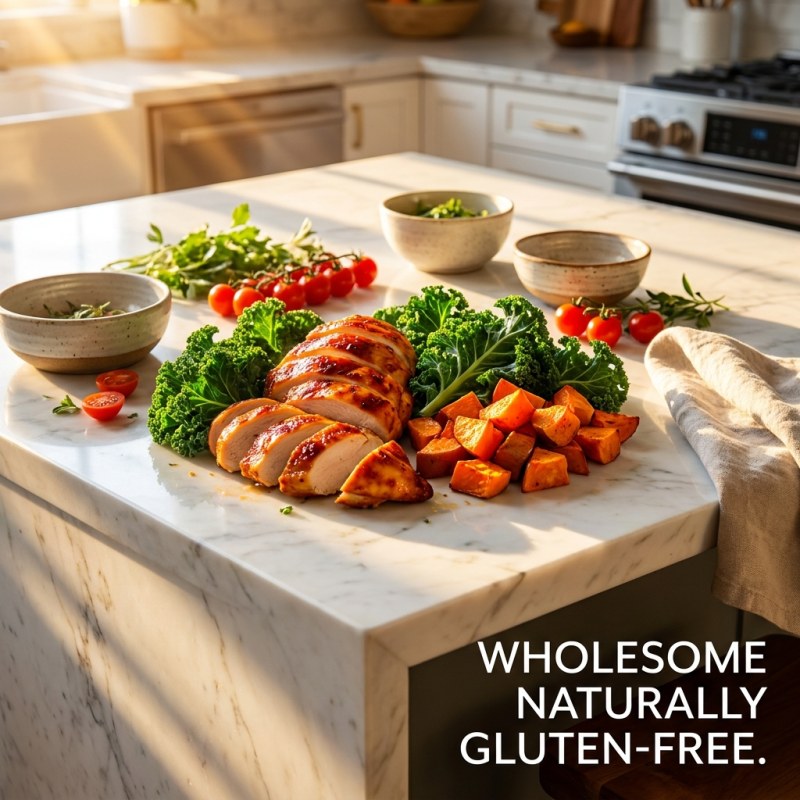
The encouraging part of gluten-free meal prep is that an enormous range of meal prep staples are naturally, inherently gluten-free — no substitution or special shopping required. This is the category most gluten-free content underemphasizes, focusing instead on gluten-free versions of bread and pasta, when the simpler approach is often just building meals around foods that were never going to contain gluten in the first place.
| Category | Naturally GF Options |
|---|---|
| Grains and starches | Rice (all varieties), quinoa, potatoes, sweet potatoes, certified GF oats, corn |
| Proteins | All fresh meats, poultry, fish, eggs, plain legumes (beans, lentils, chickpeas) |
| Vegetables | All fresh vegetables, fresh or frozen with no added sauce |
| Dairy | Plain milk, plain yogurt, most cheeses (check processed/flavored varieties) |
| Fats and oils | Olive oil, avocado oil, butter, ghee — all naturally GF |
A meal prep week built almost entirely around rice, quinoa, fresh proteins, and vegetables sidesteps the majority of gluten risk simply by never introducing wheat-based ingredients in the first place, rather than relying on gluten-free substitute products (which can be expensive and sometimes have a noticeably different texture than their wheat-based counterparts).
The Full 5-Day Safe Meal Framework
This structure builds an entire week around naturally gluten-free ingredients, minimizing both cross-contamination risk and reliance on specialty GF products.
| Day | Base | Protein | Vegetables |
|---|---|---|---|
| Monday | Brown rice | Baked chicken thighs | Roasted broccoli |
| Tuesday | Quinoa | Ground turkey + tamari | Bell peppers, zucchini |
| Wednesday | Sweet potato | Baked salmon | Asparagus |
| Thursday | White rice | Carnitas (slow-cooked pork) | Roasted cauliflower |
| Friday | Quinoa | Chickpeas + roasted vegetables | Mixed roasted vegetables |
Every single ingredient in this table is naturally gluten-free in its raw form — the only place gluten could enter is through a sauce, marinade, or seasoning blend, which is exactly why checking those specific components (and using tamari instead of regular soy sauce, building seasoning blends from individual spices) closes the loop on safety.
Cost Considerations
Building a gluten-free meal prep week around naturally GF whole foods (rice, fresh meat, vegetables) costs roughly the same as a standard meal prep week — often less, since you're not paying the premium that specialty gluten-free bread, pasta, and baked goods typically carry. A loaf of certified gluten-free bread frequently costs $5 to $7 versus $2 to $3 for standard bread; building your week around rice and quinoa instead of bread-based meals sidesteps that price gap almost entirely.

Frequently Asked Questions
What foods should I avoid for gluten free meal prep?
Avoid wheat, barley, rye, and any product containing them as a primary or hidden ingredient — this includes regular soy sauce, most beer, regular pasta and bread, and many pre-made sauces and dressings that use wheat-based thickeners. Always check labels on processed foods rather than assuming based on the main ingredient; gluten frequently appears as a secondary thickening or anti-caking agent in products that don't obviously seem wheat-related.
How do I prevent cross-contamination when meal prepping for a mixed gluten-free and regular household?
Dedicate specific tools exclusively to gluten-free prep: a cutting board (ideally a different color for easy identification), a toaster or toaster bags, a strainer, and if possible a separate set of wooden or silicone utensils, since porous materials absorb gluten over repeated use in ways that are difficult to fully clean. Prep gluten-free components first, before any gluten-containing food touches the kitchen surfaces, to minimize the risk of accidental contact.
Are oats gluten-free?
Oats are naturally gluten-free as a grain, but cross-contamination during farming, transport, and processing is extremely common since oats are frequently grown in rotation with wheat or processed on shared equipment. For anyone with celiac disease or significant gluten sensitivity, only oats specifically labeled "certified gluten-free" should be considered safe — regular oats from a standard bag, even if the ingredient list shows only "oats," carry meaningful cross-contamination risk.
Is gluten-free meal prep more expensive than regular meal prep?
Not necessarily, and it can actually be cheaper. The expense in gluten-free eating typically comes from buying specialty substitute products — gluten-free bread, pasta, and baked goods, which often cost 2 to 3 times more than their standard counterparts. Building a meal prep week around naturally gluten-free whole foods like rice, quinoa, fresh meat, and vegetables avoids that premium entirely, since none of those ingredients ever needed reformulating to be gluten-free in the first place.
A genuinely safe gluten-free meal prep week comes down to two things working together: a kitchen setup that prevents cross-contamination, and a meal structure built primarily around naturally gluten-free whole foods rather than gluten-free substitute products. Get both right and the rest of meal prep — the batching, the storage, the variety — works exactly the same way it does for anyone else.