How Much Protein Do You Actually Need?
The official minimum recommended intake for protein is 0.8 grams per kilogram of body weight per day. That number was established to prevent deficiency in sedentary adults — it was never intended as a target for active people, weight loss, or muscle building. Sports nutrition researchers now consistently recommend 1.6 to 2.2 grams per kilogram for adults engaged in regular exercise.
For a 150-pound (68kg) person trying to lose fat while preserving muscle, that translates to approximately 109–150 grams of protein per day. For the same person trying to build muscle, the upper end of that range — 150g or above — is appropriate. For a 180-pound person, 150g daily represents roughly 1.8g per kilogram, which is well within the research-supported range for body recomposition.
150 grams of protein per day has become a widely used target because it works reliably for most active adults regardless of their specific body weight, produces measurable improvements in satiety and body composition, and is achievable from whole food without protein powder dependence. This guide is built around that number.

The Best High Protein Foods for Meal Prep — Ranked
Not all protein sources are equal for meal prep. The ideal high protein meal prep food has high protein per gram, reheats well over 4–5 days, is affordable, and can be used in multiple different meal combinations. Here are the top options ranked by practical meal prep value:
1. Chicken breast — 31g protein per 100g cooked, $3–5/lb. The meal prep protein standard. It is lean (165 calories per 100g), versatile across every cuisine, and works in bowls, wraps, salads, soups, and stir-fries. The key to chicken breast that does not dry out when reheated: cook to exactly 160°F internal temperature and store in any pan juices or marinade. Slightly undercooked chicken finishes during reheating; overcooked chicken becomes cardboard by day 3.
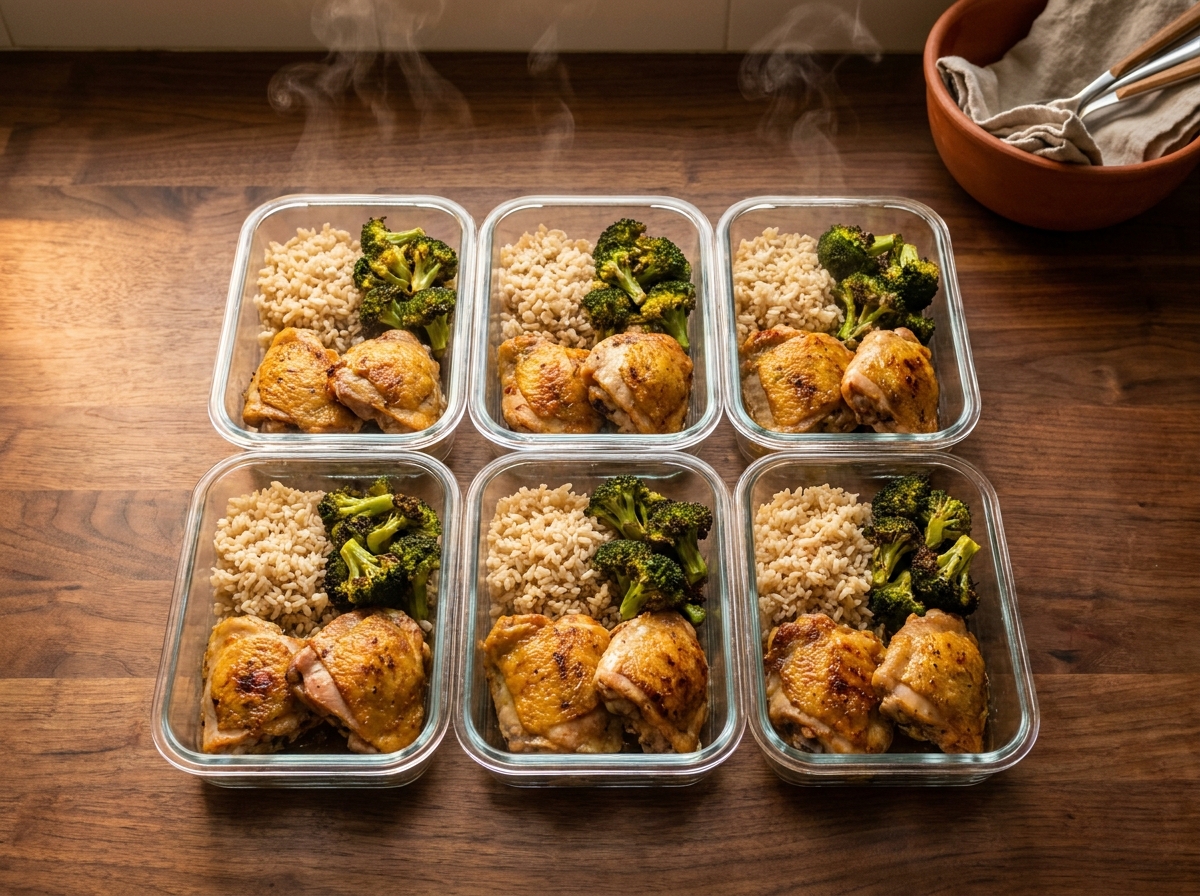
2. Chicken thighs — 26g protein per 100g cooked, $1.50–2.50/lb. Higher fat content (220 calories per 100g) but significantly more forgiving in meal prep. Chicken thighs can be cooked to 175°F, stored dry, and reheated multiple times without losing moisture. For high protein meal prep on a budget, bone-in chicken thighs are the best overall value.
3. Plain Greek yogurt — 17g protein per 6oz serving, $0.50–1.00/serving. The most underused high protein meal prep ingredient. Greek yogurt works as a breakfast (overnight oats base, yogurt bowl), as a sauce (tzatziki, ranch substitute), as a dip, and as a sour cream replacement. A 32oz container of 0% plain Greek yogurt provides 8–10 servings and costs $4–$6.
4. Eggs — 6g protein per egg, $0.20–0.35/egg. The most flexible high protein meal prep food. Hard-boiled eggs last 5 days refrigerated and add 6g of protein anywhere. Baked egg muffins provide 12–15g per two muffins and reheat in 60 seconds. Scrambled eggs do not reheat well, but egg-based casseroles and frittatas do.
5. Canned tuna and salmon — 25–30g protein per can, $1.50–3.50/can. No-cook protein that requires zero prep. A can of chunk light tuna in water provides 25g of lean protein. Canned salmon provides 25–28g plus omega-3 fatty acids. Mix with Greek yogurt, mustard, and diced celery for a high-protein protein salad that works on crackers, in wraps, or over greens. Rotate to avoid mercury accumulation — limit tuna to 3 servings per week.
6. Ground turkey (93% lean) — 22g protein per 100g cooked, $3–5/lb. Cooked ground turkey stores for 4 days, reheats without becoming rubbery (unlike ground beef), and absorbs flavor from any sauce or seasoning. Use as taco filling, pasta sauce protein, rice bowl topping, or stuffed pepper filling. A pound of cooked ground turkey covers 4 meal-sized portions at roughly 25g protein each.
7. Cottage cheese — 14g protein per half cup, $0.50–0.80/serving. Cottage cheese is having a major resurgence in 2026 among fitness communities. It works in sweet contexts (blended smooth as a yogurt alternative, mixed with protein powder and berries) and savory ones (as a ricotta substitute in pasta, mixed into scrambled eggs). Low-fat cottage cheese provides about 14g protein per half-cup at around 80 calories.
8. Lentils — 18g protein per cup cooked, $0.15–0.25/serving. The highest protein legume for meal prep. Red lentils cook in 15 minutes, green lentils in 30. Both store for 5 full days. Per dollar, lentils provide more protein than any other meal prep ingredient. They work as a meat substitute in tacos, as a soup base, as a grain bowl protein, or mixed with rice.
9. Edamame — 18g protein per cup, $0.50–0.80/serving. Frozen shelled edamame takes 5 minutes to microwave and adds 18g of complete plant protein. It works as a snack, salad addition, grain bowl component, or stir-fry protein. Edamame is one of the few plant proteins that contains all essential amino acids in adequate quantities.
How to Structure 150g of Protein Across the Day
Your body can optimally utilize approximately 30–40 grams of protein per eating occasion for muscle protein synthesis. This means that trying to consume all 150 grams in one meal is both unpleasant and inefficient — the excess protein beyond what your body can process gets converted to energy or stored. Distribute protein across 3 meals and 2 snacks to maximize utilization:
- Breakfast — 35–40g: High-protein overnight oats (Greek yogurt base + protein powder + chia seeds = 30–35g) or 3-egg baked muffins with cottage cheese + a Greek yogurt = 38–42g.
- Lunch — 35–40g: 5oz cooked chicken breast + 1 cup cooked quinoa + roasted vegetables = 45–50g protein. Or a large grain bowl with ground turkey (100g) + Greek yogurt dressing + legumes = 40g.
- Dinner — 35–40g: 6oz salmon fillet + 1 cup edamame = 43g. Or 150g ground turkey over lentil pasta = 38g.
- Snack 1 — 15–20g: 2 hard-boiled eggs + 1 cup cottage cheese = 26g. Or a Greek yogurt with chia seeds = 19g.
- Snack 2 — 10–15g: Can of tuna with crackers = 25g. Or a quarter cup of edamame = 9g.
Total: 130–175g depending on exact portion sizes, reliably hitting 150g with modest adjustments.
The Sunday High Protein Meal Prep System
Hitting 150g of protein per day consistently requires that high-protein food is ready to grab without cooking. The Sunday system is what makes this achievable on busy weekdays.
What to prep every Sunday:
Proteins (2–2.5 hours total, mostly passive): Roast 6–8 chicken breasts or thighs seasoned simply with olive oil, garlic powder, paprika, salt. They need 25–35 minutes in a 425°F oven with no attention. While they roast, brown 1 pound of ground turkey on the stovetop. Hard-boil 8 eggs. These three preparations cover the protein component of most weekday meals.
Grains and bases (runs concurrently): While proteins cook, start brown rice (45 minutes) or quinoa (15 minutes) on the stove. Cook a large batch — 3 cups dry produces roughly 9 cups cooked, enough for 5 days of grain bowls.
Vegetables (20–25 minutes): Once proteins come out of the oven, use the same temperature to roast two sheet pans of vegetables. Broccoli, bell peppers, zucchini, cherry tomatoes, and red onion all roast at 425°F in 20–22 minutes.
Breakfast prep (10 minutes): Assemble 5 overnight oat jars using the high-protein formula: ½ cup oats + ½ cup Greek yogurt + ½ cup milk + 1 tablespoon chia seeds + ½ scoop protein powder. Seal and refrigerate. Each jar delivers 30–35g of protein with zero morning effort.
Snacks (5 minutes): Divide cottage cheese into individual portions. Set aside a container of edamame. These require no preparation beyond measuring.
A 5-Day High Protein Meal Plan (150g Daily)
Here is a complete 5-day plan built from a single Sunday prep session. All proteins, grains, and vegetables are prepped on Sunday; each day requires only assembly and reheating.
Day 1 — Monday:
Breakfast: Overnight oat jar with protein powder and chia (32g protein)
Lunch: 5oz chicken breast over brown rice with roasted broccoli, Greek yogurt dressing (45g protein)
Snack: 2 hard-boiled eggs + cottage cheese (26g protein)
Dinner: Ground turkey taco bowl over rice with black beans and Greek yogurt salsa (42g protein)
Daily total: approximately 145g protein
Day 2 — Tuesday:
Breakfast: 3 baked egg muffins + Greek yogurt with berries (38g protein)
Lunch: Ground turkey grain bowl with quinoa, roasted vegetables, tahini sauce (40g protein)
Snack: Tuna with cucumber and crackers (25g protein)
Dinner: Chicken breast over roasted vegetables with cottage cheese herb dip (48g protein)
Daily total: approximately 151g protein
Day 3 — Wednesday:
Breakfast: Overnight oat jar (32g protein)
Lunch: Chicken and quinoa bowl with edamame and soy-ginger dressing (50g protein)
Snack: 2 hard-boiled eggs + edamame (25g protein)
Dinner: Ground turkey lettuce wraps with hoisin sauce and brown rice (38g protein)
Daily total: approximately 145g protein
Day 4 — Thursday:
Breakfast: High protein overnight oats (32g protein)
Lunch: Tuna salad (tuna + Greek yogurt + mustard + celery) over roasted sweet potato (40g protein)
Snack: Cottage cheese with fruit (14g protein)
Dinner: Chicken breast stir-fry with broccoli, bell peppers, brown rice, and teriyaki sauce (48g protein)
Daily total: approximately 134g protein
Day 5 — Friday:
Breakfast: Egg muffins + Greek yogurt (38g protein)
Lunch: Grain bowl with chicken, roasted vegetables, tahini, and lentils (52g protein)
Snack: Hard-boiled egg + edamame (15g protein)
Dinner: Ground turkey tomato sauce over lentil pasta with cottage cheese mixed in (45g protein)
Daily total: approximately 150g protein
Common High Protein Meal Prep Mistakes
Mistake 1: Over-relying on protein powder. Protein powder is a convenient supplement for hitting targets on days when whole food intake falls short. It should not be the primary protein strategy. Whole food proteins provide complete amino acid profiles along with micronutrients, healthy fats, and satiety signals that isolated protein powder does not replicate. Use protein powder to supplement a food-first approach, not as a shortcut to avoid cooking.
Mistake 2: Eating the same protein every day. Chicken breast, chicken breast, chicken breast. This approach leads to flavor fatigue within 2–3 weeks and is one of the primary reasons people abandon high protein meal prep. Rotating between chicken, turkey, eggs, tuna, salmon, cottage cheese, and lentils across the week prevents monotony while also providing more diverse micronutrients.
Mistake 3: Not tracking protein intake for at least one week. Most people significantly underestimate how much protein they are actually eating. One week of accurate tracking — using an app like Cronometer or MyFitnessPal — builds intuition about what 30g, 40g, and 50g of protein actually looks like in a meal. This intuition makes hitting 150g daily much easier without ongoing tracking.
Mistake 4: Undercooking or overcooking proteins. Chicken breast cooked to 165°F and stored dry becomes dry and stringy when reheated. Chicken thighs cooked to 175°F and stored in their cooking juices remain moist. The difference in reheated quality is dramatic. Invest in a meat thermometer — they cost $8–$15 and fundamentally improve meal prep quality.

Frequently Asked Questions
Q: Can I hit 150g of protein daily without supplements?
Yes. Whole foods can reliably cover 150g of daily protein without any powder or bars. A day of Greek yogurt overnight oats (32g), a chicken grain bowl (45g), cottage cheese snack (14g), tuna at another snack (25g), and a ground turkey dinner (38g) adds up to 154g entirely from whole food.
Q: Is 150g of protein per day too much?
For most adults with normal kidney function, 150g daily is well within safe ranges. Concerns about high protein intake and kidney damage apply primarily to people with pre-existing kidney disease. Research in healthy adults shows no adverse effects at 2–3 grams per kilogram of body weight. If you have kidney disease or concerns, discuss protein targets with your physician before increasing intake significantly.
Q: What is the highest protein meal prep meal per serving?
A serving of 6oz salmon with a cup of cooked edamame provides approximately 55–60g of protein. A Greek yogurt-based overnight oat jar with protein powder reaches 35–40g. For a lunch or dinner, a large grain bowl combining chicken breast, quinoa, and Greek yogurt dressing can reach 50–55g in a single meal.
Q: Does meal prepped protein lose nutritional value in the fridge?
No meaningful loss occurs within 5 days for properly stored cooked proteins. Protein content is stable. Some water-soluble vitamins in vegetables decline slightly over storage, but the effect on overall nutritional quality is minimal. The convenience of having protein pre-cooked far outweighs any marginal micronutrient differences versus fresh-cooked meals.