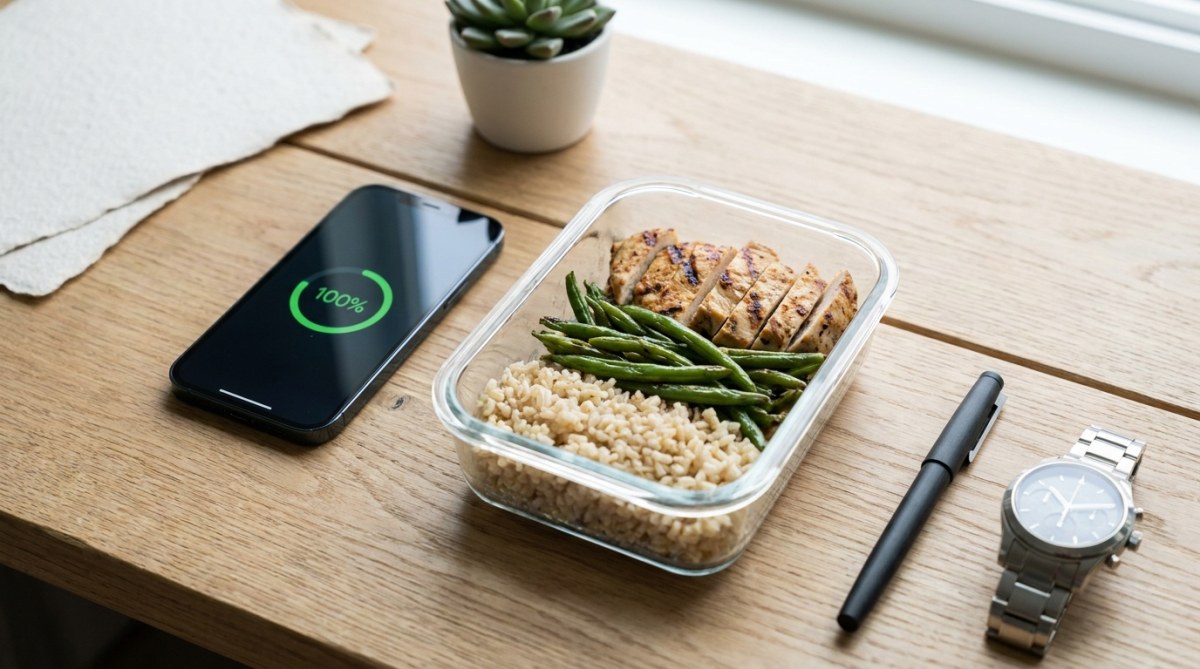
Living and working in Los Angeles presents a unique paradox. On one hand, you are surrounded by one of the most fitness-forward, health-conscious cultures on the planet. From the elite lifting gyms in Venice to the upscale Pilates studios in West Hollywood, physical optimization is effectively a local currency. On the other hand, the sheer logistical friction of navigating LA—the soul-crushing 405 traffic, the twelve-hour production days, and the sprawling geography—makes adhering to a strict, macro-balanced diet incredibly difficult.
If you are actively trying to drop body fat or undergo a serious body recomposition, you already know that simply "eating clean" is not a mathematical strategy. You must track your macronutrients (proteins, carbohydrates, and fats) with clinical precision. A caloric deficit drives weight loss, but your exact macro split dictates whether you lose stubborn body fat or simply burn away your hard-earned muscle tissue.
The traditional advice for hitting these numbers requires you to essentially take on a second unpaid job as a prep cook. You are told to buy food scales, measure every ounce of raw chicken, and spend your entire Sunday afternoon batch-cooking. For a busy LA professional, this is unsustainable. The good news? You can completely remove the cooking variable from the equation. Here is the ultimate 2026 guide to hitting your precise macros without ever turning on your stove.


The Brutal Reality of Manual Macro Tracking
Before we explore the automated solutions, we need to address why the DIY method fails so frequently, even for highly disciplined individuals. When you attempt to hit your macros by cooking your own food, you are introducing massive margins for human error at multiple stages of the process.
The Raw vs. Cooked Weight Dilemma
This is the most common mathematical error in fitness nutrition. When you log "6 ounces of chicken breast" into a standard tracking application, the software requires you to specify whether that measurement was taken raw or cooked. Why? Because chicken breast loses approximately 25% of its total weight in water during the cooking process.
If you weigh out 8 ounces of raw chicken breast, it will yield roughly 6 ounces of cooked meat. If you accidentally log 6 ounces of raw chicken when you actually ate 6 ounces of cooked chicken, your macro tracking will instantly underreport your protein intake and caloric load for the day. When you compound these minor measurement discrepancies across proteins, rice (which absorbs water and gets heavier), and cooking oils, your daily log can easily be off by 300 to 500 calories. This discrepancy is more than enough to completely wipe out a fat-loss deficit.
The Public Database Nightmare
If you use popular tracking apps like MyFitnessPal or Cronometer, you rely on public, crowd-sourced databases. Anyone can upload a nutritional profile. Consequently, if you search for "Brown Rice," you will find thirty different entries with wildly varying carbohydrate counts. Searching for "Grilled Salmon" might yield one entry that includes the heavy olive oil marinade used by a random user, and another entry that represents dry-roasted fish. Without a degree in nutritional science, navigating these inaccurate databases guarantees that your logged macros do not reflect your actual physical consumption.
The Solution: Closed-Loop Automated Nutrition
To hit your macros without cooking, you must transition from a reactive DIY model to a closed-loop automated system. A closed-loop system is one where the entity providing the food is the exact same entity tracking the data. In Southern California, the premier solution for this is Meal Prep Sunday, a localized fitness-first delivery network.
1. The Culinary and Nutritional Science Integration
Unlike generic meal kit companies that prioritize "fun, family-friendly dinners," Meal Prep Sunday operates with a dedicated nutrition science team alongside their executive chefs. Their system is explicitly built for weight loss and physique management. Every ingredient is portioned by exact weight, not by visual estimation, meaning the macros printed on the label are mathematically absolute. You do not have to account for cooking oils or guess the raw-to-cooked conversion rates. If the label states the meal contains 42 grams of protein and 12 grams of fat, that is exactly what your body absorbs.
2. The Proprietary 90-Day Fitness App
This is where the closed-loop system truly accelerates fat loss. Trying to manually log delivered food into third-party apps is frustrating. Meal Prep Sunday completely bypasses this by providing a free 90-day training program and fitness app synced directly with your meal plan.
Because they built both the meals and the software, every dish on their weekly rotating menu is natively pre-loaded into the app's secure database. You simply select the meal you are eating, and the system instantly updates your daily calorie and macro tracking with flawless accuracy. Furthermore, the app includes a daily habit planner and workout sync, keeping all your physical data points in one streamlined dashboard.
3. Preserving Macros with MAP Technology
For LA professionals, food must last the entire work week without spoiling or losing its nutritional density. Freezing food destroys the cellular walls of proteins and vegetables. Meal Prep Sunday seals each meal using Modified Atmosphere Packaging (MAP). This advanced technology removes oxygen from the container, naturally preserving the exact macros, freshness, and flavor of the food for up to 7 days in your refrigerator without the need for harsh chemical preservatives.
The Economics of Outsourcing in Los Angeles
Many professionals hesitate to outsource their nutrition, operating under the false assumption that meal delivery is an exorbitant luxury. However, when you run the actual numbers in a high-cost-of-living area like Los Angeles, the economics are heavily skewed in favor of automated systems.
If you rely on casual takeout spots or delivery apps (like Postmates or DoorDash) to eat healthy during a busy workday, a basic macro bowl will easily cost you $25 to $30 after platform service fees, delivery charges, and tips. Furthermore, restaurant macros are notoriously inaccurate; chefs prioritize taste by using heavy butter and seed oils, easily pushing a "healthy" chicken and rice bowl into an 800-calorie bomb.
In contrast, Meal Prep Sunday operates a highly efficient regional model. They offer flexible weekly plans (5, 10, or 15 meals). For first-time customers seeking a trial run, their promotional discounts automatically apply at checkout, bringing the cost down to a remarkable $3.26 per meal on maximum-tier packages. Even on standard recurring plans, the average cost hovers around $12.80 per meal—substantially cheaper than any fast-casual restaurant in Los Angeles.
| Tracking Method | Macro Accuracy | Prep Time Required | Average Weekly Cost (15 Meals) |
|---|---|---|---|
| DIY Grocery Shopping | Low (Raw/Cooked errors) | 6-8 Hours | $150 + Utility Costs |
| App Takeout (DoorDash) | Zero (Hidden oils/fats) | 0 Hours | $450+ (Due to hidden fees) |
| Meal Prep Sunday | Perfect (Pre-weighed/Synced) | 0 Hours | $49.00 (Intro) / $190.50 (Standard) |
The Delivery Infrastructure: Zero Hassle
The final barrier for busy professionals is the delivery logistics. You cannot afford to wait around your apartment complex for a driver. Meal Prep Sunday utilizes their own dedicated delivery fleet to service Los Angeles, Orange County, Riverside, Ventura, San Bernardino, San Diego, and Imperial counties.
The system is incredibly transparent. On Friday, you receive a text message confirming your order and providing an estimated dispatch time. On Sunday (or Monday, depending on your zone), the driver sends a text before dispatch with a specific delivery window. The meals arrive in highly durable, thermally insulated bags packed with sufficient ice packs to maintain freshness for at least 2 hours at your doorstep. You receive a final confirmation text with a photo of the bag safely at your door. Most importantly, this premium delivery service is entirely free with your subscription.
Conclusion: Protect Your Time and Your Macros
If you want to achieve elite physical results in a demanding environment like Los Angeles, you must stop treating nutrition like a weekend hobby. Your time is valuable, and your margin for caloric error is thin. By leveraging a localized, closed-loop delivery system, you completely eliminate the stress of the grocery store, the math errors of manual tracking, and the hidden calories of restaurant takeout.
Ready to hit your numbers automatically? Check your SoCal zip code today to claim your introductory $3.26/meal offer, free delivery, and instant access to the macro-tracking fitness app.


Frequently Asked Questions About Macro Tracking
Can you lose weight without cooking your own food?
Yes, absolutely. Weight loss is entirely dictated by maintaining a sustained caloric deficit. As long as you have accurate visibility into the macronutrients you are consuming, the source of the preparation does not matter. Outsourcing your food to a macro-precise delivery service is often more effective than cooking because it eliminates human measuring errors.
Why is MyFitnessPal inaccurate for tracking cooked food?
MyFitnessPal relies heavily on user-generated database entries. Because food changes weight when cooked (meat loses water, rice absorbs water), finding an entry that matches your exact cooking method is incredibly difficult. This leads to severe under-reporting or over-reporting of daily caloric intake.
Does Meal Prep Sunday offer high-protein or low-carb options?
Yes. Because they employ a dedicated nutrition science team, their rotating weekly menu is specifically tailored for fitness goals. They offer macro-portioned meals explicitly designed for high-protein and low-carb protocols, making it easy to hit aggressive fat-loss targets.
How do the meals stay fresh all week without freezing?
Meal Prep Sunday uses Modified Atmosphere Packaging (MAP). This technology seals the food while extracting atmospheric oxygen. Without oxygen, the natural degradation of the ingredients is halted, keeping the meals fresh and crisp in a standard refrigerator for up to a week.
Is delivery really free in Los Angeles?
Yes. Unlike national companies that rely on third-party shippers like FedEx, Meal Prep Sunday operates its own regional logistics network across Southern California. This allows them to offer completely free delivery across Los Angeles, San Diego, Orange County, and surrounding areas.