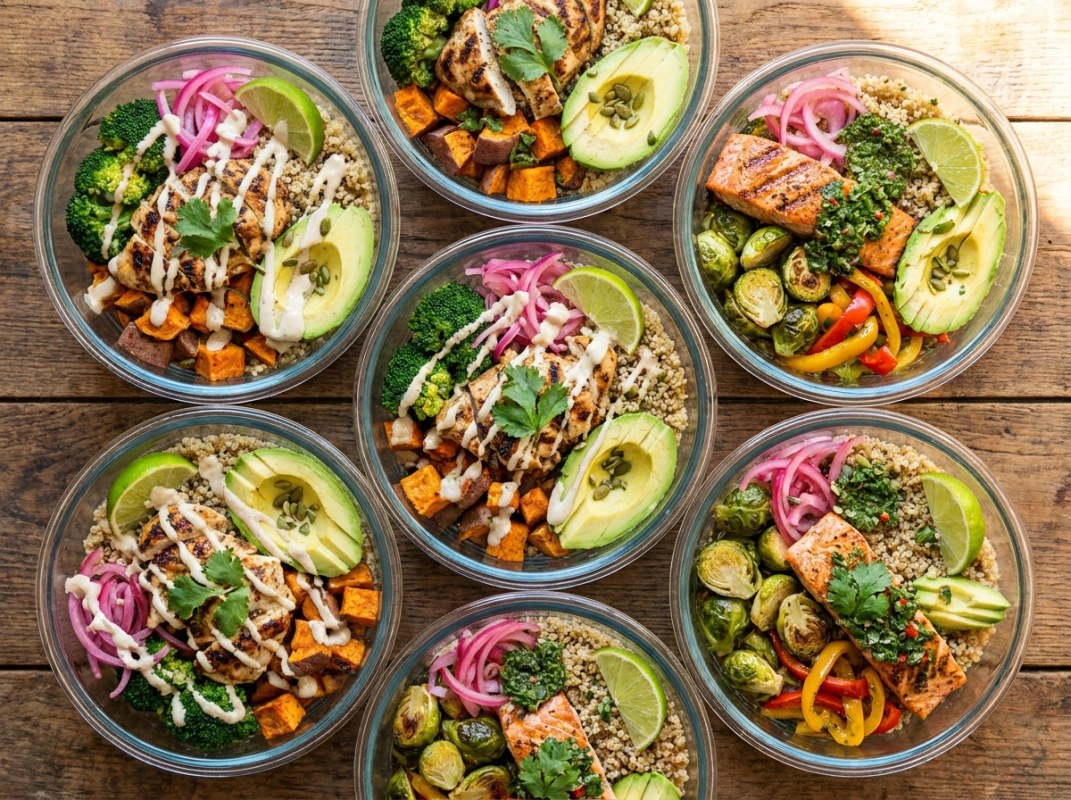
The Universal Grain Bowl Formula
Behind every good meal prep bowl is the same simple structure: grain base + protein + roasted or raw vegetable + sauce + optional toppings. Mastering this formula means you never need to follow a strict recipe again — you can improvise from whatever you have, in whatever combination you like, and the result will always work.
Layer 1: The Grain Base (¾ to 1 cup cooked)
The grain base provides the caloric foundation and texture anchor. Best options ranked by versatility:
- Brown rice: most neutral, pairs with anything, cheap
- White rice: slightly better texture after reheating, faster cooking
- Quinoa: adds 8g complete protein per cup, nuttier flavor
- Farro: chewy, earthy, excellent with Mediterranean flavors
- Cauliflower rice: low-carb substitute, microwave from frozen in 4 minutes
Alternatively: grain-free bases work well — chopped romaine, massaged kale, shredded cabbage.
Layer 2: Protein (3–5oz cooked)
The protein is what makes the bowl a meal rather than a salad. Target 25–40g protein per bowl:
- Sliced chicken thigh or breast (shredded works beautifully)
- Ground turkey or chicken (taco-seasoned or plain)
- Baked salmon fillet (3–4oz)
- Hard-boiled eggs (2–3 per bowl)
- Chickpeas, lentils, or black beans (1 cup) — vegan option
- Tofu or tempeh (marinated and baked)
Layer 3: Vegetable (1–2 cups)
The vegetable adds nutrition, volume, color, and fiber. Rule of thumb: if it holds up to refrigeration and reheating, it belongs in a meal prep bowl.
- Roasted: broccoli, sweet potato, cauliflower, Brussels sprouts, zucchini
- Raw/fresh (added at serving): cucumber, shredded carrot, shredded cabbage, cherry tomatoes
- Pickled (for brightness): pickled red onion, kimchi, quick-pickled cucumber
Layer 4: The Sauce (2–3 tablespoons)
The sauce is the most important element for palatability. The same bowl with different sauces tastes like completely different meals. Keep at least 2 sauces on hand:
- Teriyaki: soy sauce + honey + garlic + ginger (Asian, sweet-savory)
- Tahini lemon: tahini + lemon + garlic + water (Mediterranean, nutty)
- Peanut sauce: peanut butter + soy sauce + lime + sriracha (Thai-inspired)
- Chipotle lime: Greek yogurt + lime + chipotle powder (Mexican)
- Green goddess: Greek yogurt + herbs + lemon (fresh, versatile)
Our Top Container Pick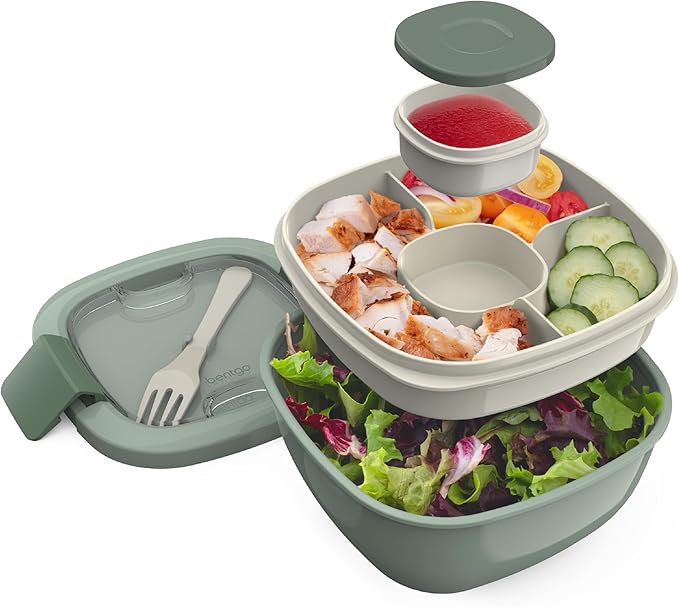 Bentgo Salad Container - 54 oz Bowl with 4-Compartment Toppings Tray, Leak-Proof Dressing Container, Reusable Fork, BPA- View on Amazon
Layer 5: Toppings (Optional, Added at Serving)
Bentgo Salad Container - 54 oz Bowl with 4-Compartment Toppings Tray, Leak-Proof Dressing Container, Reusable Fork, BPA- View on Amazon
Layer 5: Toppings (Optional, Added at Serving)
Toppings are applied at eating time to maintain freshness and textural contrast:
- Toasted sesame seeds or hemp seeds
- Sliced green onions or fresh cilantro
- Sliced avocado (adds healthy fat)
- Chili flakes or furikake
- A squeeze of lemon or lime
- Crunchy elements: tortilla strips, pumpkin seeds, chopped nuts
Five Proven Bowl Combinations
Classic Teriyaki Bowl
Brown rice + baked chicken thigh + roasted broccoli + teriyaki sauce + sesame seeds and green onion
Mediterranean Bowl
Farro + lemon herb chicken + roasted zucchini + chickpeas + tahini lemon dressing + fresh cucumber
Southwest Bowl
Brown rice + ground turkey taco meat + roasted bell peppers + black beans + chipotle lime sauce + avocado
Buddha Bowl (Vegan)
Quinoa + chickpeas + sweet potato + raw spinach + tahini sauce + pumpkin seeds
Asian Peanut Bowl
White rice + shredded chicken + shredded purple cabbage + edamame + peanut sauce + sesame seeds
Frequently Asked Questions
Can I meal prep the sauce in the container with the bowl?
Not recommended. Sauces, especially acid-based dressings, break down grain and vegetable textures over 3–4 days. Store sauce in a separate small container and add at serving time. This also gives you sauce flexibility — same bowl, different sauce, different day.
What's the right order to layer a grain bowl for meal prep storage?
Grain at the bottom (handles weight), protein next, then vegetables. Never layer watery vegetables directly on grain — put a protein "wall" between them. Sauce always stored separately.
How do I make my meal prep bowls look as good as they do in photos?
Color variety: aim for at least 3 colors in every bowl. Add fresh green elements (herbs, scallions, avocado) at serving time — they don't survive 4 days. Use a slightly contrasting grain to protein (white rice under dark teriyaki chicken pops visually; brown rice under salmon doesn't).
Can I eat meal prep bowls cold?
Yes. Grain bowls work beautifully cold — this is how they're eaten at restaurants like Sweetgreen and Chipotle. For cold bowls, lean toward tahini-based or vinaigrette sauces (which taste better cold than warm) and skip reheating entirely. Cold grain bowls with protein and fresh vegetables require no microwave, making them ideal for desk lunches.
Is the bowl format better than other meal prep formats?
For most people, yes — for two reasons. First, you can see the components, which feels less processed than a casserole or stew where everything is mixed. Second, the separable components allow substitution and variation at serving time. But casseroles and stews are equally valid and often easier to assemble.