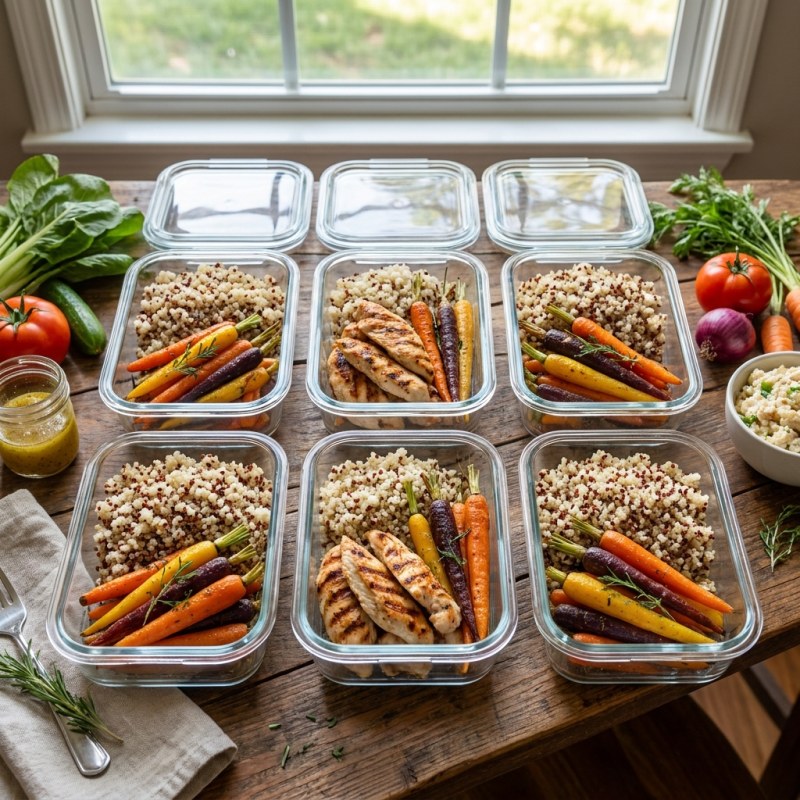
How This Plan Works
Every single ingredient in this plan is naturally gluten-free in its raw, unprocessed form — rice, fresh meat and fish, vegetables, and plain dairy. The only places gluten could realistically enter are sauces and seasoning blends, both of which are addressed directly below with safe substitutions (tamari instead of regular soy sauce, single-ingredient spices instead of pre-mixed blends). This approach sidesteps the higher cost and sometimes inconsistent texture of gluten-free substitute products like GF bread or pasta, while also minimizing cross-contamination risk since you're not introducing wheat-based products into the kitchen at all during this week.

Pre-Prep: Kitchen Safety Checklist
Before cooking, if you share a kitchen with anyone eating gluten, take 5 minutes to set up safely: designate one cutting board for this week's gluten-free prep (a different color if you have one), wash your primary cooking pot and any strainers thoroughly with hot soapy water, and clear counter space of any flour dust or bread crumbs. This isn't necessary every single time you cook gluten-free if you already maintain dedicated tools, but it's worth doing once at the start of a meal prep week if your kitchen is shared.
Weekly Shopping List
Grains: 1.5 cups brown rice ($1.49), 1 cup white rice ($0.99), 2 cups dry quinoa ($3.99), 2 medium sweet potatoes ($1.99)
Proteins: 2 lbs chicken thighs ($4.99), 1 lb ground turkey ($4.49), 1.5 lbs salmon fillets ($9.99), 1.5 lbs pork shoulder for carnitas ($5.99), 1 can chickpeas ($1.29)
Vegetables: broccoli ($2.49), bell peppers and zucchini ($3.99), asparagus ($2.99), cauliflower ($2.49), mixed roasting vegetables ($3.99)
Sauces and seasonings: tamari (certified GF, $3.99 bottle — lasts weeks), individual spices (cumin, paprika, garlic powder, chili powder — already on hand or under $5 combined), olive oil
Total: approximately $42.06 for 5 full dinners (extendable to lunches by doubling portions). Cost per meal: $4.20 for dinner-sized portions, or $2.10 per serving if doubling the batch for both lunch and dinner.
Sunday Prep Sequence (75 minutes)
0:00 — Start the carnitas (slow cooker or oven, mostly unattended): Season pork shoulder with cumin, chili powder, garlic powder, salt. Slow cook 6-8 hours on low, or oven-braise at 300°F (149°C) for 3 hours. This can also be done the day before if your Sunday is tight on time.
0:00 — Cook rice and quinoa in separate, dedicated pots (20-40 min depending on grain): Both run mostly unattended once boiling.
0:20 — Roast vegetables in batches (20 min per batch, 2 batches): Broccoli and cauliflower in one batch, asparagus and mixed roasting vegetables in another, both at 425°F (218°C).
0:40 — Cook chicken thighs (Monday's protein) and ground turkey (Tuesday's protein) on the stovetop, about 20 min combined.
1:00 — Bake salmon (Wednesday's protein), 12-15 min at 400°F (204°C).
1:15 — Cool everything, portion into 5 sets of containers.

Daily Meal Breakdown
Monday — Chicken, Brown Rice, Broccoli: Baked chicken thighs + ½ cup brown rice + roasted broccoli. 32g protein. $4.10/serving.
Tuesday — Turkey, Quinoa, Bell Pepper & Zucchini: Ground turkey seasoned with tamari and garlic + ½ cup quinoa + roasted bell pepper and zucchini. 28g protein. $3.80/serving.
Wednesday — Salmon, Sweet Potato, Asparagus: Baked salmon + roasted sweet potato cubes + roasted asparagus. 34g protein. $5.20/serving — the highest-cost day due to salmon, but worth it for the omega-3 content and variety.
Thursday — Carnitas, White Rice, Cauliflower: Slow-cooked pork carnitas + ½ cup white rice + roasted cauliflower. 30g protein. $4.50/serving.
Friday — Chickpeas, Quinoa, Mixed Roasted Vegetables: Roasted chickpeas (tossed in cumin and paprika, roasted until crisp) + ½ cup quinoa + mixed roasted vegetables. 18g protein from chickpeas alone — add any remaining protein from earlier in the week to boost this. $2.90/serving.
Storage Rules
Cooked chicken, turkey, salmon, and pork: 3 to 4 days refrigerated at 40°F (4°C) or below per USDA FoodKeeper (foodkeeper.usda.gov). Cooked rice and quinoa: 4 to 6 days. Roasted vegetables: 4 to 5 days. If managing a shared kitchen, store gluten-free components in clearly labeled containers separate from any gluten-containing leftovers to avoid accidental mix-ups during the week.


Frequently Asked Questions
Is regular soy sauce really a problem, or is this overly cautious?
For anyone with celiac disease, yes, it's a genuine concern — standard soy sauce contains wheat as one of its primary ingredients, not a trace contaminant. For non-celiac gluten sensitivity, the response varies by individual, but tamari is widely available, tastes nearly identical, and costs only slightly more, so there's little reason not to make the swap regardless of how sensitive you are.
Can I substitute any protein in this plan with a vegetarian option?
Yes — chickpeas, lentils, and tofu are all naturally gluten-free and can directly replace any of the meat or fish proteins in this plan. Swap in roughly 1.5 cups cooked legumes or 14oz baked tofu per protein swap to maintain similar protein levels across the week.
Do I need to buy "gluten-free" labeled rice and quinoa, or is regular rice already safe?
Plain, unflavored rice and quinoa are naturally gluten-free without needing a specific certification, since neither grain contains gluten and cross-contamination during processing is far less common for these than it is for oats. The main exception is flavored or seasoned rice and quinoa mixes, which sometimes include wheat-based flavoring agents — always check the ingredient list on any pre-seasoned product.