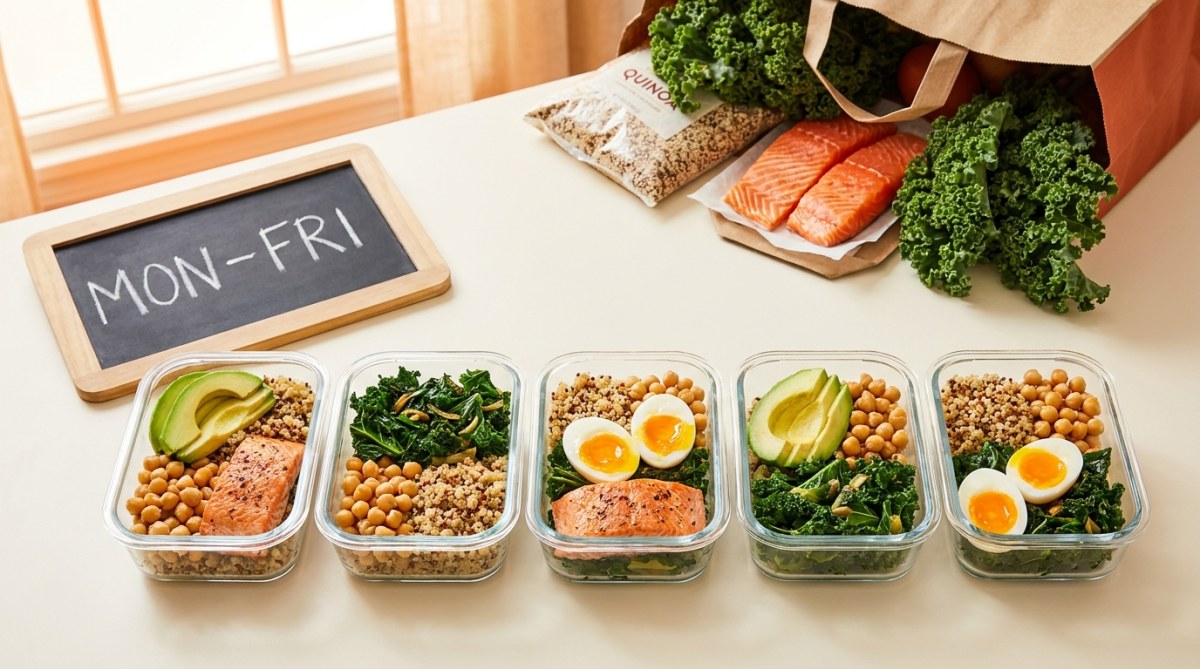
This 5-day plan is built entirely around the low-GI, anti-inflammatory approach in our pcos meal prep complete guide — every carb source sits below GI 55, every dinner pairs protein with fiber, and nothing here requires ingredients you can't find at a regular grocery store. I ran this exact plan for six straight weeks while dialing in the insulin resistance side of my own PCOS management, and it's the version that actually survived busy weekdays without falling apart by Wednesday.

The 5-Day Breakdown
Day 1 (Monday): PCOS-Friendly Salmon and Quinoa Bowl — 4oz roasted salmon, 3/4 cup quinoa, 1/2 cup roasted chickpeas, spinach, olive oil-lemon dressing. 410 calories, 32g protein.
Day 2 (Tuesday): Same bowl, dressing swapped to a tahini-lemon blend for variety. Add a quarter avocado if you want extra healthy fat.
Day 3 (Wednesday): Roasted chickpea and quinoa bowl with an extra egg on top instead of salmon — a good midweek break from fish that keeps the GI profile identical.
Day 4 (Thursday): Back to the salmon and quinoa bowl. By this point the quinoa has gone through a full reheat-cool cycle, which slightly lowers its glycemic index further through starch retrogradation.
Day 5 (Friday): Final bowl, greens swapped to kale for a texture change, dressing back to the original olive oil and lemon.

Weekly Shopping List and Real Cost
- 2 lbs salmon fillets — $17.98
- 1 cup dry quinoa — $3.00
- 2 cans chickpeas — $2.58
- 2 bunches spinach or kale — $4.98
- Olive oil, lemon, cumin, smoked paprika (partial from pantry) — $1.50
Total: $30.04 for the week, or $6.01 per serving. Swap two of the five salmon portions for canned wild salmon and the weekly total drops to roughly $23, or $4.60 per serving, without losing the omega-3 benefit that makes this plan anti-inflammatory in the first place.
Daily Nutrition Targets
Each day of this plan lands around 1,850 calories and 118g of protein when you include a standard breakfast (2 eggs plus berries) and a light snack (a handful of almonds) alongside the main bowl. That protein target matters here specifically because adequate protein intake helps blunt the blood sugar response even when a meal does include higher-GI ingredients elsewhere in the day.
Storage Notes for the Full Week
Per USDA FoodKeeper guidance, keep all five containers refrigerated at 40°F (4°C) or below. Salmon and chickpeas are good through day 4; quinoa holds through day 5. If you're prepping on Sunday for a full Monday-Friday week, freeze the Friday portion of salmon on Sunday night and thaw it in the fridge Thursday evening rather than pushing the fresh-storage window to its absolute limit.

This plan works because it removes the daily decision-making that usually leads back to high-glycemic convenience food by Wednesday afternoon. If meal prep for one is new territory for you, start with just three days instead of five, get comfortable with the process, and add the remaining two days once the Sunday routine feels automatic rather than like a chore.
Adjusting the Plan for Weight Loss or Muscle Building Goals
The 1,850 calorie, 118g protein target is written for maintenance, but this plan flexes in both directions without changing the core low-GI structure. For a moderate calorie deficit aimed at weight loss, drop the breakfast eggs to one instead of two and skip the almond snack — that brings the daily total down to roughly 1,600 calories while keeping the anti-inflammatory dinner bowl completely untouched. For a muscle-building focus, add a second 4oz portion of salmon or a scoop of plain Greek yogurt as an evening snack, which pushes protein up toward 140g daily without introducing any high-glycemic carbs into the mix.

What to Do If You Don't Like Fish Every Day
Five days of salmon in a row isn't realistic for everyone, and it doesn't need to be. Day 3 already swaps in an egg-based bowl instead of salmon, and you can extend that same swap to a second day if needed — replacing salmon with two hard-boiled eggs plus a tablespoon of olive oil keeps the fat and protein profile close enough that the rest of the plan's math still holds up. Chicken thighs are another solid substitution on days you want a break from fish entirely; they roast at the same 400°F temperature as the salmon, so you're not adding any extra kitchen steps.

Why This Plan Skips Snacking Between Meals
One deliberate choice in this plan: it's built around three solid meals plus one small snack, not constant grazing. Frequent small snacks, even "healthy" ones, keep insulin elevated more consistently throughout the day than three well-spaced meals with adequate protein and fiber. If you do need something between lunch and dinner, a small handful of almonds or a few baby carrots with hummus fits the low-GI framework far better than crackers or a granola bar, even one labeled as diet-friendly.