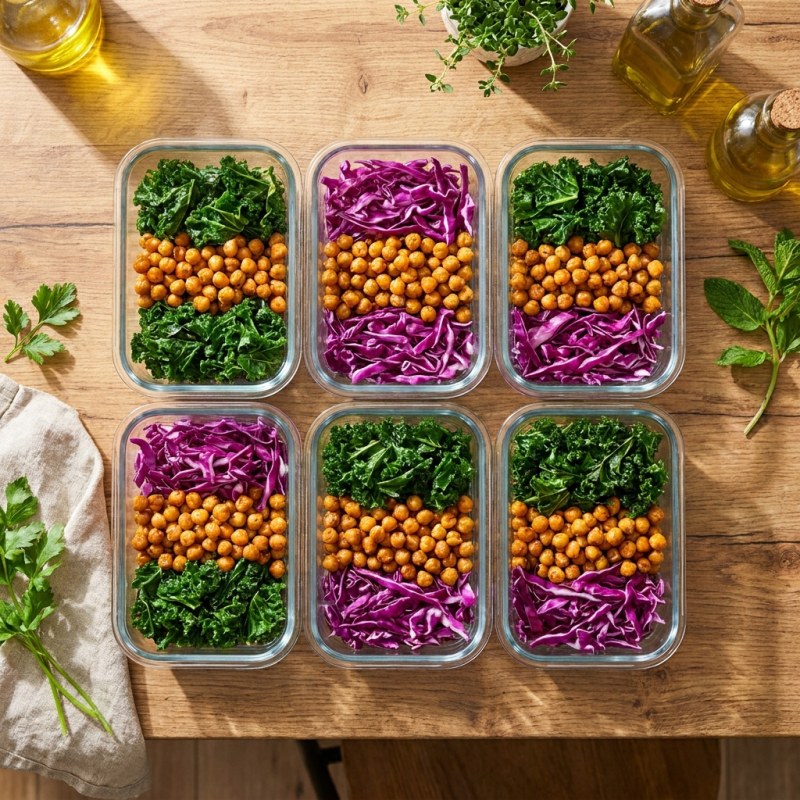
This 5-day plan targets 1,400 calories daily using the volume-first strategy — heavy on vegetables and greens, measured portions of oil and grains, and a genuine focus on staying full rather than just hitting a number. I built this exact structure after realizing most low-calorie plans I'd tried before failed from hunger, not lack of willpower, and fixing the volume problem fixed the whole plan.

Quick reminder: 1,400 calories is a general reference point that works for many adults, but individual needs vary by activity level, height, age, and other factors. This is general information, not personalized advice — check with a doctor or registered dietitian for a target suited to your specific situation.
The 5-Day Breakdown
Day 1 (Monday): Weight Loss Vegan Bowl — lentils, quinoa, roasted broccoli and zucchini, fresh greens, measured dressing. 380 calories, 22g protein.
Day 2 (Tuesday): Same bowl, reheated, with fresh greens added new.
Day 3 (Wednesday): Black bean and roasted vegetable bowl over a smaller portion of rice, with a large side salad.
Day 4 (Thursday): Same black bean bowl, reheated.
Day 5 (Friday): Lentil soup with a large side of roasted vegetables, a lighter but still filling end to the week.
Weekly Shopping List and Real Cost
- 3 cups dry lentils (across multiple dishes) — $4.03
- 2 cans black beans — $2.58
- 1.5 cups dry rice/quinoa combined — $3.00
- Large volume of mixed vegetables and greens — $16.00
- Olive oil, seasonings, lemon (partial cost) — $3.50
Total: $29.11 for the week, or about $5.82 per day.
Daily Nutrition Targets
Each day of this plan lands around 1,400 calories with 70-85g of protein, split across three meals plus a snack (typically fruit or roasted chickpeas). Protein is prioritized even within the calorie deficit, since adequate protein supports satiety and helps preserve muscle mass during weight loss.

Storage Notes for the Full Week
Per USDA FoodKeeper guidance, keep all containers refrigerated at 40°F (4°C) or below. Cooked lentils, beans, and grains hold for 4-6 days, and roasted vegetables hold for 4-5 days. Fresh greens are best added just before eating rather than mixed in during storage, since they wilt faster once combined with warm food.
This plan works because it treats vegetables and greens as the primary volume source rather than an afterthought, which is the core difference between a calorie-restricted plan that leaves you hungry and one that doesn't.
Adjusting the Plan for Different Activity Levels
If you're more active, particularly doing regular strength training, 1,400 calories may not be enough to support your activity level sustainably — consider a higher target and prioritize even more protein to help preserve muscle during a deficit. For a more sedentary schedule, this plan as written is a reasonable starting point, though individual results and needs vary enough that checking in with a professional periodically is worth doing regardless of activity level.

What to Do If You're Hungry Between Meals
Reach for more of the low-calorie-density foods this plan is built around — a large portion of raw vegetables, a cup of roasted chickpeas, or a bowl of berries — rather than skipping the snack entirely or reaching for something calorie-dense out of urgency. Consistent, planned snacking on high-volume foods tends to prevent the kind of intense hunger that leads to derailing an otherwise well-structured day. If hunger between meals is a persistent, ongoing issue rather than an occasional day, that's worth mentioning to a doctor or dietitian too, since it may be a sign the calorie target itself needs adjusting rather than something to push through indefinitely. Consistency over a full week matters more than any single day going perfectly, so treat one off day as information rather than a reason to abandon the plan entirely.
