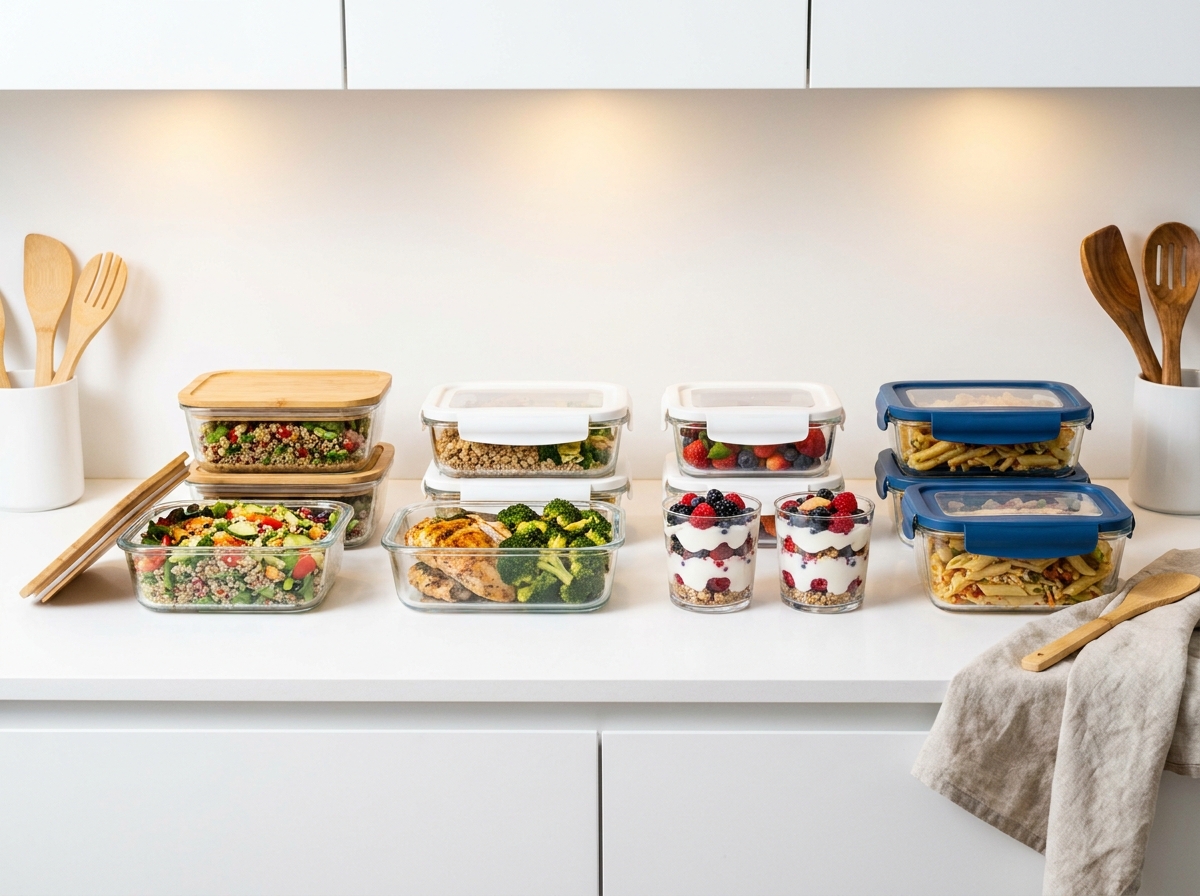
Why Your Container Choice Matters More Than You Think
Flimsy containers that warp in the microwave, lids that don't seal, stacks that collapse in the fridge — bad containers make meal prep miserable. Good containers make it easy, safe, and sustainable. This guide covers every container type with honest tradeoffs.
Glass vs Plastic vs Stainless Steel: The Definitive Comparison
Glass Containers
Best for: Safety-conscious preppers, microwave users, people who cook acidic foods (tomato sauces, citrus marinades)
- Pros: No chemical leaching, microwave safe, doesn't absorb odors or stains, lasts years, dishwasher safe, oven safe (without lid)
- Cons: Heavy, breakable if dropped, more expensive ($3–8 per container), freezer-to-microwave transitions can crack cheaper glass
- Best picks: Pyrex, OXO, Rubbermaid Brilliance glass
BPA-Free Plastic Containers
Best for: Budget preppers, commuters, anyone carrying food to work
- Pros: Lightweight, inexpensive ($1–3 each), variety of sizes, many are stackable, good for freezing
- Cons: Can absorb odors over time, some plastics degrade with repeated microwave use, not oven-safe, replace every 12–18 months
- Best picks: Rubbermaid Takealongs, Prep Naturals, DuraHome
Stainless Steel Containers
Best for

- Pros: Extremely durable, no leaching, keeps food cold well, doesn't absorb odors
- Cons: Not microwave safe, more expensive than plastic, lids vary widely in quality
- Best picks: LunchBots, U-Konserve, ECOlunchbox
Sizes You Actually Need
Most meal preppers over-buy container sizes they never use. Here's what actually covers the full use case:
- 2-cup (16oz): snacks, dips, sauces, overnight oats
- 3-cup (24oz): lunch or dinner with protein + veg (no grain)
- 4-cup (32oz): full meals with protein + grain + veg
- 6-cup (48oz): large salads, soups, stews
Start with 5 of the 4-cup size and 5 of the 2-cup size. That's your full week of meals + snacks with one set.
Leak-Proof Testing: What to Look For
Fill a container with water, snap the lid, and hold it upside down for 30 seconds over the sink before trusting it in your bag. A truly leak-proof container will hold. Features that increase leak resistance:
- Silicone gasket around the lid perimeter
- Locking tabs on all 4 sides (not just 2)
- Tight-fitting lid without any flex or play
Container Organization in Your Fridge
Store containers in serving order: Monday's meal in front, Friday's in back. This removes the daily search and keeps you on track. Use one shelf exclusively for meal prep containers so they're never buried behind leftovers.
Frequently Asked Questions
Are glass containers really worth the extra cost?
For people who microwave their food at work, yes — glass is meaningfully better than plastic for reheating because there's no risk of chemicals leaching into hot food. For cold storage only, BPA-free plastic works fine. Glass lasts 5–10 years; plastic needs replacement every 1–2 years, so the lifetime cost difference is smaller than it appears.
How many containers do I need to start meal prepping?
Ten containers covers a week of full meal prep for one person: five for lunches, five for dinners. If you also prep breakfast, add five 2-cup containers for overnight oats or egg muffin cups. Start with these and add as your prep complexity grows.
Can I put glass containers straight from the freezer into the microwave?
Not immediately — thermal shock can crack glass. Move frozen containers to the fridge the night before, or let them sit at room temperature for 15–20 minutes before microwaving. Tempered glass (Pyrex) handles temperature changes better than standard glass.
What's the best way to remove food odors from plastic containers?
Pack containers with crumpled newspaper overnight, then wash. Or soak in a baking soda and water solution for a few hours. For stubborn odors (garlic, fish), the newspaper method works better. If odors persist after multiple cleaning cycles, replace the container.
Do I need divider containers or are single-compartment fine?
Divider containers are great for meals where you don't want components to mix (salads, dips, foods with different textures). For grain bowls and stews where mixing is fine, single-compartment containers are simpler and easier to wash. Most meal preppers use a mix of both.