Pregnant women are roughly 10 times more likely to get a listeria infection than the general population, and that single fact should shape every decision in a meal prep for pregnant women guide plan — not just which foods you buy, but how you cook them, how long you store them, and how hot you reheat them. This isn't about fear; it's about knowing the handful of specific rules that make batch cooking during pregnancy genuinely safe instead of a source of constant second-guessing.
This guide is for anyone who's pregnant and still wants the time savings of a Sunday meal prep session without wondering whether every container in the fridge is a risk. By the end you'll know exactly which foods to avoid and why, which ones to prioritize for iron and folate, a real food-safety comparison table, the 5-day process I'd actually use, and a full cost breakdown.

What Foods Should You Avoid During Pregnancy Meal Prep (And Why)?
Four categories cause the vast majority of pregnancy food-safety concerns, and all four are things a Sunday meal prep habit can actually control better than eating out can:
- Deli meats and hot dogs — Safe only if heated to steaming hot, 165°F (74°C) internally, right before eating. Cold deli meat carries real listeria risk.
- Raw or undercooked fish — Sushi, raw oysters, and undercooked fish all carry listeria and other bacterial risks that are significantly more dangerous during pregnancy.
- Unpasteurized soft cheeses — Brie, feta, and queso fresco made with unpasteurized milk are common listeria sources. Check the label for "pasteurized" every time.
- Raw sprouts — Alfalfa, clover, and bean sprouts can harbor bacteria that even a thorough rinse doesn't remove, since it gets inside the seed during growth.
The first time I was cooking for a pregnant friend, I almost served cold turkey deli slices on a salad without thinking twice — it took her mentioning the 165°F rule for me to realize how many "healthy" lunch options are actually off-limits during pregnancy. That's really the core challenge here: none of these foods look dangerous. A deli sandwich, a soft cheese on a cheese board, a sprout garnish on a salad — they all read as normal, even healthy, choices in any other context. Pregnancy is really the only time these specific foods carry meaningfully elevated risk, which is exactly why so many people are caught off guard by the list.


Which Foods Should You Prioritize for Iron and Folate?
Iron and folate needs both increase substantially during pregnancy, and meal prep is genuinely one of the easiest ways to hit those targets consistently instead of hoping a prenatal vitamin covers the gap alone:
- Lentils — About 358mcg of folate per cooked cup, one of the highest plant-based sources available.
- Spinach — Roughly 263mcg of folate per cooked cup, plus a meaningful iron contribution.
- Fortified grains — Many breads, pastas, and cereals are fortified specifically with folic acid; check the nutrition label for the percentage.
- Lean red meat — A strong iron source, and pairing it with a vitamin C food (bell pepper, citrus, tomatoes) significantly improves how much iron your body actually absorbs.
- Well-cooked chicken and eggs — Safe, reliable protein staples as long as chicken hits 165°F (74°C) and eggs are cooked until both the white and yolk are firm.
If you're already comfortable with chicken meal prep, most of your existing routine transfers directly — you're mainly adjusting internal temperatures and adding a folate-rich side rather than overhauling the whole approach.
The Food Safety Comparison Table Every Pregnant Meal Prepper Needs
This table covers the categories that trip people up most:
| Food | Pregnancy Safety | Meal Prep Note |
|---|---|---|
| Shark, swordfish, king mackerel | Avoid | Mercury levels too high for pregnancy |
| Canned light tuna | Limit to 2 servings/week | Lower mercury than albacore, still capped |
| Salmon | Safe, 2-3 servings/week | Low mercury, high in omega-3s — a strong meal prep protein |
| Deli meat, cold | Avoid | Reheat to 165°F (74°C) if using at all |
| Hard cheeses (cheddar, parmesan) | Safe | No pasteurization concern unlike soft cheeses |
| Well-cooked chicken thighs | Safe | Confirm 165°F (74°C) internal temp every time |
Salmon lands in an interesting spot here — genuinely one of the best proteins for pregnancy meal prep, as long as you stay within the weekly serving guidance.
How I'd Build a Pregnancy-Safe 5-Day Meal Prep in One Sunday
This is the process a lot of registered dietitians recommend for pregnancy meal prep specifically, adjusted for a real Sunday timeline:
- Preheat the oven to 400°F (204°C) and use a meat thermometer for every single protein — pregnancy is not the time to eyeball doneness.
- Rinse 1 cup dry lentils and pick through for any small stones, which occasionally show up in bulk-bin lentils.
- Simmer lentils in 2.5 cups water or broth for 20-25 minutes until tender but not mushy.
- Season chicken thighs and roast for 25-30 minutes, confirming 165°F (74°C) internal temperature with a thermometer before removing from the oven.
- Wash spinach thoroughly under running water, even if the bag says pre-washed — an extra rinse is cheap insurance against any residual bacteria.
- Sauté spinach briefly, about 2-3 minutes, just until wilted — this isn't strictly required for safety, but it makes a large volume of spinach much easier to portion and eat consistently.
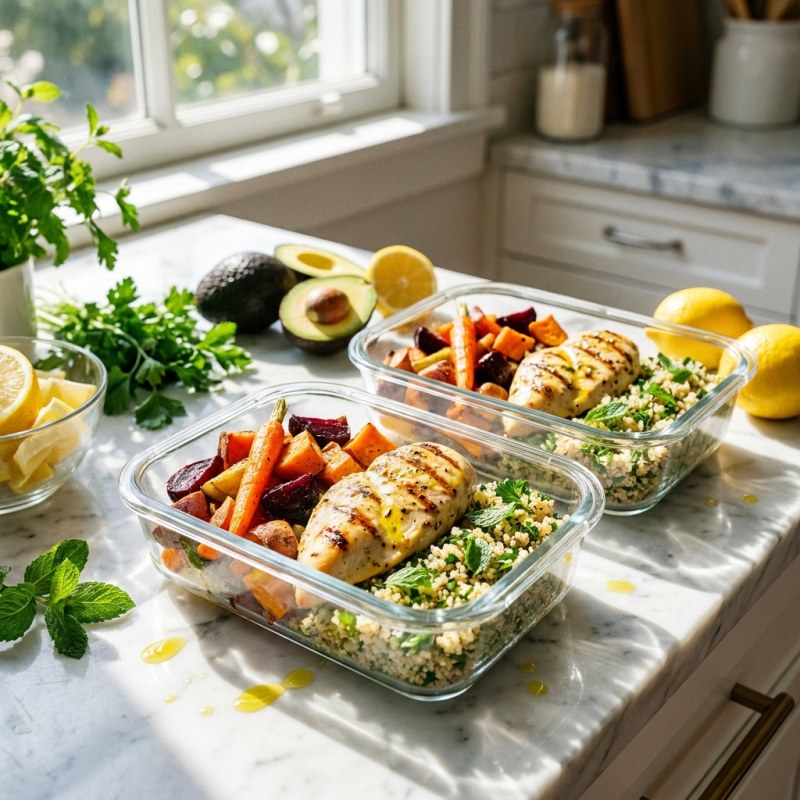
- Portion everything into 5 containers: roughly 3/4 cup lentils, 4-5oz chicken, a generous handful of sautéed spinach, and a side of citrus or bell pepper for vitamin C.
- Reheat every container to steaming hot before eating, not just warm — this matters more during pregnancy than in almost any other meal prep context.
What Does Pregnancy Meal Prep Cost Per Week?
Real math, not a vague estimate:
- 2 lbs chicken thighs @ $2.49/lb = $4.98
- 1 cup dry lentils @ ~$1.79/lb (about 2 cups per lb) = $0.90
- 2 bunches spinach @ $2.49 each = $4.98
- 3 bell peppers or citrus for vitamin C pairing = $3.00
- Pantry seasonings (partial cost) = $1.00
Total: $14.86 for 5 servings = $2.97 per serving — a genuinely affordable plan, since lentils and chicken thighs are both budget-friendly staples that happen to also be strong iron and folate sources.
If $2.97 a serving is still more than your budget allows some weeks, canned lentils (already cooked, just drain and rinse) run about $1.29 per 15oz can and skip the 20-25 minute simmer time entirely, trading a small amount of texture for real time and cost savings. Ground beef can also stand in for chicken thighs at a similar price point while adding a stronger iron contribution, which matters more during pregnancy than in most other meal prep contexts.
How Long Does Pregnancy-Safe Meal Prep Actually Stay Safe in the Fridge?
Per USDA FoodKeeper guidance, cooked chicken and cooked lentils both hold safely for 3-4 days refrigerated at 40°F (4°C) or below — the same general window as any other meal prep. The difference during pregnancy isn't the storage window itself, it's the reheating step: always bring leftovers to steaming hot (an internal temp of 165°F/74°C) rather than eating them lukewarm straight from the fridge, since that kills any listeria that may have developed during storage.
How Should Meal Prep Change Across the Three Trimesters?
First trimester nausea is real, and if smells from batch cooking make you queasy, cooking smaller portions more often or leaning on a partner or family member to handle the Sunday session is a completely reasonable adjustment — this isn't a "push through it" situation. By the second trimester, appetite and energy for cooking often improve, which is usually the easiest window to build a consistent iron-and-folate-focused routine. Third trimester often brings less oven-standing stamina, so batch cooking in shorter, seated-prep sessions (like assembling lentils and pre-cooked proteins rather than starting from raw every time) tends to work better than a long Sunday marathon.
If you're coming from a meal prep for beginners background, pregnancy is honestly a reasonable time to simplify rather than get more ambitious — fewer components, more repetition, and a thermometer on the counter at all times.
Should You Freezer-Prep for After the Baby Arrives Too?
This is a detail most pregnancy meal prep guides skip entirely, and it's genuinely one of the most useful things you can do while you still have the energy for it. Doubling a batch of chicken and lentils in the second trimester and freezing half specifically for the first few postpartum weeks means you're not starting from zero on a night when cooking is the last thing you have capacity for. Cooked chicken freezes well for up to 4 months and cooked lentils hold up nearly as long, so a few extra containers now genuinely pay off later.
Skip this section if freezer space is tight — but if you have room, even 5-6 extra freezer meals made during a lower-energy-demand week of pregnancy is a real gift to your postpartum self. This ties in naturally with a broader freezer meal prep approach if you want to build out a bigger stockpile before the due date. Label these with both the date and "postpartum" clearly on the lid, since it's easy to accidentally eat through your future stash during a regular busy week if it's not visually distinct from everything else in the freezer.
How Do You Handle Cravings and Aversions Without Derailing the Plan?
Food aversions during pregnancy are real and can flip overnight — a protein you loved in week 10 might be genuinely unappetizing by week 16. Build flexibility into your meal prep rather than treating any single recipe as fixed: keep the base structure (a protein, a folate-rich side, a vitamin C pairing) but swap the specific ingredients within that structure when something stops sounding appealing. If chicken becomes unappealing for a stretch, well-cooked ground beef or eggs can slot into the same role without losing the iron and protein targets.
Honestly, the plan that survives pregnancy best isn't the most nutritionally perfect one on paper — it's the one flexible enough that you'll actually eat it consistently, even when your appetite is unpredictable.
What About Hydration and Fiber Alongside Meal Prep?
Meal prep tends to focus heavily on protein and micronutrients, but fiber and fluids matter just as much during pregnancy, particularly since iron supplementation (common in prenatal vitamins) can contribute to constipation. Lentils and spinach both help on the fiber side, but pairing your prepped meals with consistent water intake throughout the day — not just at meals — makes a meaningful difference. Keeping a large water bottle next to your meal prep containers in the fridge is a small visual reminder that's worked well for a lot of people I know who struggled to hit their fluid targets otherwise.
Should a Partner or Family Member Take Over Parts of the Process?
Yes, and this is worth saying directly: meal prep during pregnancy doesn't have to be a solo project, and treating it as one adds unnecessary strain during a period when energy is already limited. If you have a partner, roommate, or family member available, splitting the roasting and chopping from the portioning and labeling is a reasonable division that still lets you stay involved in decisions about what's actually going into the food. This works well as a version of family meal prep, just with pregnancy-specific food safety rules layered on top — the thermometer checks and 165°F confirmations matter regardless of who's doing the cooking.
I've seen this work best when the pregnant partner handles the planning and portioning (lower physical demand, still keeps control over what's eaten) while someone else handles the standing-at-the-stove parts, especially in the first trimester when nausea from cooking smells is at its worst or the third trimester when standing for long stretches gets uncomfortable.


Frequently Asked Questions
What foods should pregnant women avoid in meal prep?
Avoid cold deli meats and hot dogs unless reheated to 165°F, raw or undercooked fish, unpasteurized soft cheeses like brie and feta, raw sprouts, and high-mercury fish such as shark, swordfish, and king mackerel. These foods carry a meaningfully higher listeria or mercury risk that matters more during pregnancy than at other times.
Is canned tuna safe during pregnancy meal prep?
Yes, in moderation. Canned light tuna is lower in mercury than albacore and is generally considered safe up to about 2 servings per week during pregnancy. Sticking to that weekly cap while still getting the omega-3 benefit is the standard guidance most OB-GYNs and dietitians recommend.
How long can pregnant women store meal prep in the fridge?
The standard storage window of 3-4 days at 40°F (4°C) or below still applies during pregnancy, but reheating matters more than usual. Always bring meal-prepped food to steaming hot, an internal temperature of 165°F (74°C), rather than eating it cold or lukewarm straight from the container.
What foods are highest in folate for pregnancy meal prep?
Lentils are one of the richest sources at about 358mcg of folate per cooked cup, followed by spinach at roughly 263mcg per cooked cup. Fortified grains like certain breads and cereals also contribute meaningfully, which is why checking nutrition labels for folic acid content is worth doing during a grocery run.
Can you eat chicken thighs during pregnancy meal prep?
Yes, well-cooked chicken thighs are a safe and reliable protein during pregnancy as long as they reach an internal temperature of 165°F (74°C), confirmed with a meat thermometer rather than judged by appearance alone. Chicken thighs are also a practical iron source, especially when paired with a vitamin C food to improve absorption.
At $2.97 a serving and a Sunday session built around a meat thermometer and clearly labeled containers, you now have a real framework for pregnancy-safe meal prep. Talk to your OB-GYN or a registered dietitian about your specific needs, then use this plan as the starting structure for your first week.