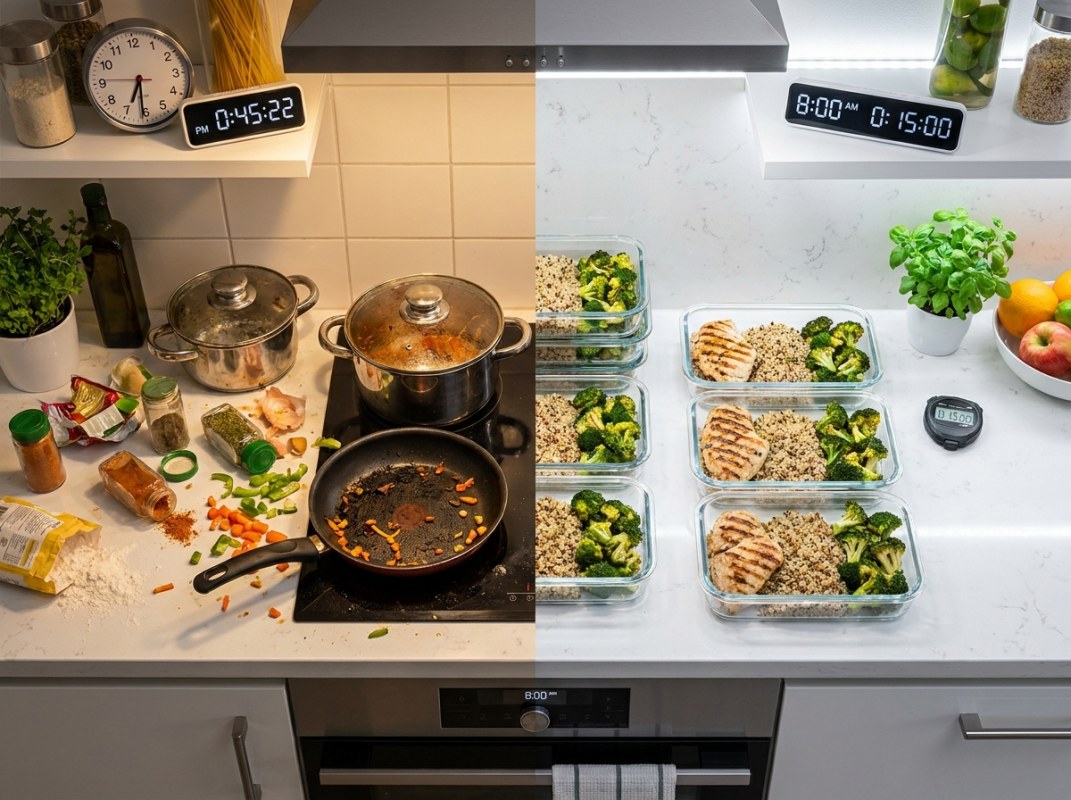
Meal Prep vs Cooking Every Day — The Honest Comparison
One of the most common questions from people considering meal prep: does it actually save time, or does a two-hour Sunday session just feel efficient while adding up to more total hours than daily cooking? This guide runs the real numbers for meal prep vs cooking every day across different lifestyles and meal types.
The Time Math — Weekly Totals
Daily cooking approach:
- Planning what to eat: 5 minutes × 7 days = 35 minutes
- Grocery shopping: 45 minutes × 2 trips = 90 minutes
- Active cooking: 25 minutes × 7 dinners = 175 minutes
- Kitchen cleanup: 15 minutes × 7 sessions = 105 minutes
- Total: 405 minutes (6 hours 45 minutes) per week
Meal prep approach:
- Planning the week: 10 minutes (done once)
- Grocery shopping: 45 minutes (one focused trip)
- Prep session: 90 minutes including cleanup
- Daily reheating and assembly: 5 minutes × 5 days = 25 minutes
- Total: 170 minutes (2 hours 50 minutes) per week
Time saved by meal prepping: 235 minutes (3 hours 55 minutes) per week — nearly 4 hours returned to your schedule every week, or roughly 200 hours per year.
When Daily Cooking Beats Meal Prep
Meal prep isn't universally better. Daily cooking wins in specific scenarios:
- You cook for pleasure: If cooking is how you decompress, a Sunday batch session doesn't replicate the daily satisfaction of creating a fresh meal.
- Your schedule is unpredictable: If you regularly miss meals or eat out unexpectedly, meal-prepped food goes to waste. Flexible shoppers who buy 2–3 days ahead waste less than those who prep a full week.
- You prioritise freshness above all: Freshly cooked proteins and vegetables taste better than 4-day-old refrigerated versions. If texture and flavour are paramount, daily cooking delivers a better sensory experience.
- You have a household chef: If someone else cooks for you, daily cooking costs you nothing in personal time.
The Cost Comparison
Beyond time, meal prep typically reduces food costs by 15–25% compared to daily cooking because:
- Bulk buying reduces per-unit cost
- One focused shopping trip reduces impulse purchases
- Prepped food visible in the fridge reduces takeaway orders
- Ingredients are fully utilised across planned meals rather than partial use creating waste
The average household that switches to meal prep reports saving $80–120 per month on food costs, combining reduced grocery spend with fewer takeaway and restaurant meals driven by "I don't know what to cook tonight""decisions.
The Mental Load Factor
Time math alone understates meal prep's value. The daily question "what should I make for dinner tonight?""is a cognitive drain that accumulates across the week. Research on decision fatigue shows that people who make more decisions throughout the day have reduced willpower and satisfaction with later decisions. Meal prep eliminates 5–7 daily food decisions and replaces them with one weekly planning session.

Frequently Asked Questions
- Does meal prep actually save time for single people?
- Meal prep saves proportionally more time for single people than for families. Cooking for one from scratch every night requires the same setup, cleanup, and decision time as cooking for four — but produces far fewer portions. A single person who meal preps replaces 5 daily cooking sessions with one 60-minute Sunday session, saving approximately 3–4 hours per week consistently.
- Is meal prepped food as nutritious as freshly cooked?
- For most nutrients, yes. Proteins, fats, complex carbohydrates, and minerals are fully stable through 4–5 days of refrigeration. The primary nutrient loss in refrigerated food is vitamin C, which degrades by approximately 10–15% over 4 days. This is nutritionally insignificant when vegetables are consumed in reasonable quantities. The practical nutritional difference between fresh and 3-day-old meal prep is minimal.
- What are the downsides of meal prepping?
- The main downsides are reduced meal variety (eating similar food repeatedly), slight quality degradation in texture and freshness by day four, the upfront time commitment of the Sunday session, and the need for adequate refrigerator space. These are real trade-offs, but for most busy people the time and cost savings significantly outweigh them.
- How do I know if meal prep is right for my lifestyle?
- Meal prep is most valuable for people who: have a consistent weekly schedule, value convenience over maximum freshness, want to control food costs, and have limited decision-making energy on weekday evenings. It's less valuable for irregular schedules, people who cook for enjoyment, or households where someone already manages daily cooking efficiently.
- Can you combine meal prep with some daily cooking?
- Absolutely — a hybrid approach works well for many people. Prep the components that take the most time (grains, roasted proteins, chopped vegetables) on Sunday, then do 5–10 minutes of fresh assembly each evening: quick-fry an egg to add to your prepped rice, toss fresh greens with prepped chicken, or heat a sauce to drizzle over prepped components. This gets most of the time savings while preserving more of the freshness of daily cooking.