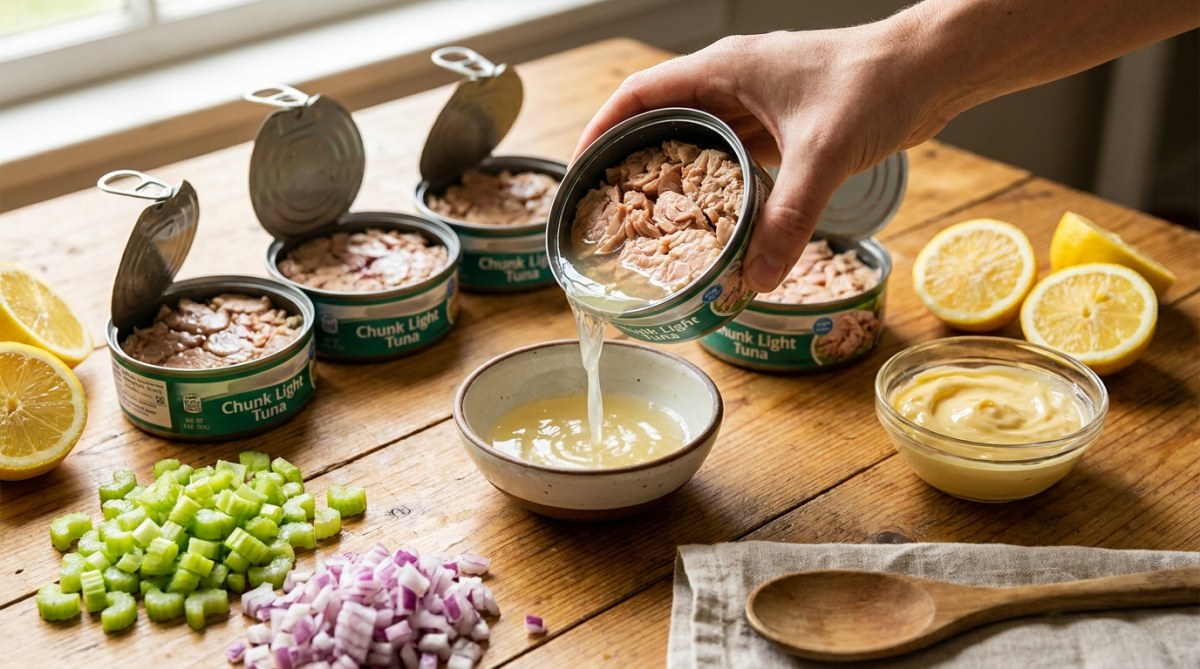
Canned tuna runs about $0.80 to $1.10 per serving depending on brand and pack size, which puts it below almost every other meal prep protein I track — cheaper than a chicken thigh, cheaper than eggs some weeks, and dramatically cheaper than the salmon or shrimp plans I've built out for this site. I put off writing about tuna meal prep for a long time because I assumed readers already knew everything there was to know about a can of fish. I was wrong. The mercury guidance alone trips up more people than any other food safety question I get, and the texture problems (dry, flaky, "tastes like cat food" complaints) almost always trace back to one or two fixable mistakes in how it's stored or dressed.

This guide covers what actually matters for meal prepping with tuna: which type to buy, how to keep it from drying out over five days, the real mercury limits by variety, storage windows straight from USDA guidance, and four ways to build a lunch around it that doesn't feel like the same sad tuna sandwich on repeat.
Why Tuna Belongs In Your Meal Prep Rotation
A standard 5-ounce can of tuna packed in water delivers around 30 grams of protein for roughly 130 calories and less than 2 grams of fat. That protein-to-calorie ratio is hard to beat — it's leaner than a chicken breast by weight and requires zero cooking, which matters more than people give it credit for. On a Sunday when I'm already three proteins into a batch cook, tuna is the one I can prep in the time it takes to drain a can and stir a dressing.
It's also shelf-stable until you open it, which means you can buy in bulk when it's on sale and keep a pantry backup for weeks you're behind on prep. I keep a shelf of it specifically for that reason — when a Sunday prep session runs long or gets skipped, tuna salad is the fallback that doesn't require a grocery run.
Chunk Light vs. Albacore: Which One to Buy
This is the first decision, and it affects both your grocery bill and your mercury exposure. Chunk light tuna comes primarily from skipjack, a smaller species that accumulates far less mercury over its shorter lifespan. Albacore ("white tuna" on the label) comes from a larger, longer-lived species and carries roughly three times the mercury of chunk light per serving.

For meal prep specifically, where you're eating tuna multiple times in a week, I default to chunk light. It's cheaper, it has a milder flavor that takes on dressings better, and the lower mercury load gives you more room to eat it more often without hitting weekly limits. Albacore has a firmer texture and stronger flavor that some people prefer for a plain tuna salad, but I save it for occasional use rather than a five-day rotation.
| Type | Mercury Level | Best For | Avg. Price/Can |
|---|---|---|---|
| Chunk Light (skipjack) | Lower — ~0.126 ppm avg | Frequent meal prep, mild flavor | $1.00–$1.60 |
| Albacore (white tuna) | Higher — ~0.35 ppm avg | Occasional use, firmer texture | $1.80–$2.20 |
| Skipjack (pouch) | Lower, similar to chunk light | No-drain convenience, higher cost | $1.50–$2.00 |
Mercury Guidance: How Much Is Actually Safe
FDA and EPA joint guidance places chunk light tuna in the "best choices" category, recommending up to 2–3 servings per week for most adults. Albacore falls into the "good choices" category with a lower recommended frequency, generally capped around 1 serving per week. Pregnant women, breastfeeding mothers, and young children should stick closer to the lower end of these ranges and lean toward chunk light over albacore specifically because of the mercury difference.
I build my own tuna weeks around this limit deliberately — three days of tuna-based lunches, then rotate to something else for the remaining two. It keeps the grocery bill low without pushing past what's recommended.
How Long Does Tuna Salad Actually Last?
This is where most of the "went bad on day 4" complaints come from. According to USDA FoodKeeper guidance, tuna salad made with mayonnaise or a similar dressing is safe for 3 to 5 days when kept consistently at or below 40°F (4°C). That's a narrower window than a lot of other meal prep proteins, and it's the reason I don't recommend tuna salad as a full five-day, make-once plan the way I would with a baked chicken thigh.
The practical fix is the component method: keep the tuna and dressing base prepped separately from anything highly perishable, and mix fresh portions every 2–3 days instead of dressing the entire batch on day one. If you do mix the full batch upfront, plan to eat it within the first 3–4 days and treat day 5 as a stretch, not a guarantee.
| Form | Fridge Storage | Freezer Storage |
|---|---|---|
| Unopened canned tuna | N/A (shelf-stable, check "best by") | Not recommended |
| Opened, plain (no dressing) | 3–4 days at ≤40°F / 4°C | Not recommended — texture breaks down |
| Tuna salad (with mayo/dressing) | 3–5 days at ≤40°F / 4°C | Not recommended |
The Dry, Flaky Texture Problem — And How to Fix It
The most common complaint I hear is that meal-prepped tuna salad turns dry and crumbly by day three, even when it tasted fine on day one. This almost always comes down to under-dressing at the start. Canned tuna continues to absorb moisture from its dressing as it sits, so a mix that looks perfectly creamy on day one can taste noticeably drier by day three simply because the tuna has pulled moisture out of the mayo or yogurt base.

My fix is to over-dress slightly on day one — about 10-15% more binder than looks necessary — and to hold back a small reserve of dressing in a separate container to stir in on day three or four. It takes thirty seconds and solves the problem completely. I also drain the can thoroughly before mixing; leftover liquid in the tuna dilutes the dressing and speeds up the dry-out.
Four Ways to Build a Tuna Meal Prep Lunch
Plain tuna salad on bread gets old fast over a five-day stretch, so I rotate between a few formats to keep the week interesting without adding real prep time.
1. Classic Mayo-Based Salad
The standard: drained tuna, mayonnaise (or a mayo/Greek yogurt blend for less fat), diced celery, red onion, a squeeze of lemon, salt and pepper. Keeps 3-5 days per the guidance above. Serve over greens or in a wrap made fresh each day rather than pre-assembled, since bread and wraps get soggy fast against a wet salad.
2. No-Mayo Olive Oil and Lemon Version
For a lighter option or if you're not comfortable with the shorter mayo-based storage window, swap in olive oil, lemon juice, capers, and diced cucumber. This version skips the dairy/egg-based binder entirely and holds up slightly better texture-wise over the same 3-5 day window, though it's still a perishable mixed dish and follows the same storage rules.
3. Tuna Pasta Salad
Cooked, cooled pasta mixed with tuna, a light dressing, and chopped vegetables turns this into a heartier, more filling lunch. I've built a full no-cook-required version of this as a standalone recipe — it stretches five cans of tuna into five substantial portions for under a dollar each.
4. Tuna Melt Components (Assemble Fresh)
Prep the tuna salad base and keep sliced cheese and bread separate. Assemble and broil for 3-4 minutes each morning rather than prepping the melt fully assembled — this avoids soggy bread and gives you a hot lunch option without extra daily cooking beyond a few minutes under the broiler.
Building a Full 5-Day Tuna Meal Prep Plan
For a complete week, I don't run all five days on straight tuna salad — partly for the mercury limit above, partly because the palate fatigue is real. My typical structure runs three days of tuna-based lunches (rotating between the salad and pasta versions) and fills the remaining two days with a different protein, which also solves the shorter storage window since you're not relying on a single batch to survive the full work week.
I've laid out a complete version of this rotation, with a shopping list and day-by-day breakdown, in the tuna meal prep plan linked below.
Cost Breakdown: What a Tuna Week Actually Costs
Running the numbers on a typical 5-portion batch: five 5-ounce cans of chunk light tuna at an average of $1.20 each comes to $6.00. Add mayonnaise, celery, onion, and lemon for roughly $2.50 across the batch, and you land around $8.50 total, or about $1.70 per serving including sides. Compare that to the $2.40-$2.80 per serving I've calculated for shrimp or baked cod in other guides on this site, and tuna is consistently one of the cheapest complete-protein lunches you can build.
Pouch vs. Can: Is the Convenience Worth the Price
Foil pouch tuna has grown a lot in the last few years, and I get asked about it often enough that it's worth addressing directly. The pouch format skips the draining step entirely and tends to have a slightly less "canned" taste since it's not sitting in liquid the same way. For meal prep specifically, that convenience comes at a real cost — pouches typically run $0.30-0.50 more per serving than an equivalent can, which adds up fast if you're prepping tuna 2-3 times a week.
I stick with cans for the cost savings and don't find the draining step (30 seconds with a strainer) enough of a hassle to justify the premium. If you're prepping tuna once a week or you specifically dislike handling the drained liquid, the pouch format is a reasonable trade to make. Either way, check the label — pouches are available in both chunk light and albacore, so the mercury guidance above still applies regardless of packaging format.
What to Look For on the Label
Beyond chunk light versus albacore, a few label details matter for meal prep specifically. Tuna packed in water rather than oil keeps the calorie and fat count in line with the numbers I referenced earlier — oil-packed tuna runs noticeably higher in both, which matters less for a single serving but adds up across a full week of lunches. I also check the sodium content across brands, since it varies more than you'd expect; some chunk light cans run over 300mg per serving while others sit closer to 200mg, which is worth comparing if you're tracking sodium intake alongside protein.
"Wild caught" and "sustainably sourced" labels (often tied to Marine Stewardship Council certification) don't affect mercury content or storage life, but they're worth knowing about if sourcing matters to your buying decisions — they typically add a small premium, usually $0.10-0.20 per can, without changing anything about how you'd prep or store it.
Comparing Tuna to Other Cheap Meal Prep Proteins
I've built cost breakdowns for most of the common meal prep proteins on this site, and tuna consistently comes out near the bottom of the price range. Ground turkey runs about $1.70-1.90 per serving in the versions I've tested. Chicken thighs land around $1.20-1.50 depending on the recipe. Eggs are the closest competitor on price, often coming in slightly under tuna per gram of protein, but they require actual cooking time that canned tuna skips entirely.
Where tuna underperforms is variety and satiety — a plain tuna salad doesn't fill you up the way a rice-and-protein bowl does, which is exactly why I lean on the pasta salad version or pair tuna with a starchy side rather than eating it on its own. The cost advantage is real, but it works best as part of a rotation rather than the only protein in your week.
Frequently Asked Questions
Can you meal prep tuna salad for a full week?
Not safely as a single batch. USDA guidance puts mayo-based tuna salad at 3-5 days refrigerated at or below 40°F (4°C). For a full 5-day week, either mix a fresh half-batch midweek or rotate tuna with a different protein for 2 of the 5 days.
Is canned tuna safe to eat every day?
Not recommended for chunk light beyond 2-3 servings weekly per FDA/EPA guidance, and even less frequently for albacore due to its higher mercury content. Rotating proteins through the week keeps you within safe limits.
Why does my tuna salad taste dry after a few days in the fridge?
Canned tuna continues absorbing moisture from its dressing over time. Over-dress by about 10-15% on day one, drain the can thoroughly first, and hold back a small reserve of dressing to stir in around day three.
Can you freeze tuna salad?
No. Mayonnaise-based dressings separate and turn watery when thawed, and the tuna's texture goes mushy. Freezing plain canned tuna (undressed) isn't recommended either — buy shelf-stable cans as needed instead.
Is chunk light or albacore better for meal prep?
Chunk light, for two reasons: it's cheaper per serving and carries roughly a third of the mercury load of albacore, which matters more when you're eating it multiple times across a single week rather than once.
Common Mistakes I See With Tuna Meal Prep
A few patterns show up repeatedly when I hear from readers about tuna meal prep going wrong, and most of them trace back to skipping one of the small steps above rather than anything fundamentally difficult about the process.
The biggest one is not draining thoroughly before mixing. Even a small amount of leftover liquid dilutes the dressing and speeds up the watery, separated texture that makes people give up on meal-prepped tuna salad after one bad batch. The second is treating a single Sunday batch as safe for a full five-day week — as covered above, USDA guidance caps mayo-based tuna salad at 3-5 days, and stretching it to day 5 or 6 "because it still smells fine" is exactly the kind of guess I'd avoid making with any mixed dish sitting in dairy or egg-based dressing.
The third mistake is buying albacore out of habit because it's the more familiar "white tuna" option, without realizing chunk light is both cheaper and lower in mercury for the exact same meal prep use case. Unless you specifically prefer albacore's firmer texture, there's no real downside to defaulting to chunk light for a weekly rotation.
A Simple System That Actually Works
Tuna earns its spot in a meal prep rotation on cost and protein density alone, but the real key to making it work across a full week is respecting its shorter storage window and building in variety rather than treating it like a five-day, set-it-and-forget-it protein the way you might with baked chicken. Keep it to chunk light for the mercury math, over-dress slightly for texture, and rotate it against something else for two days out of five. I've linked the full recipe and weekly plan below if you want the exact breakdown I use.