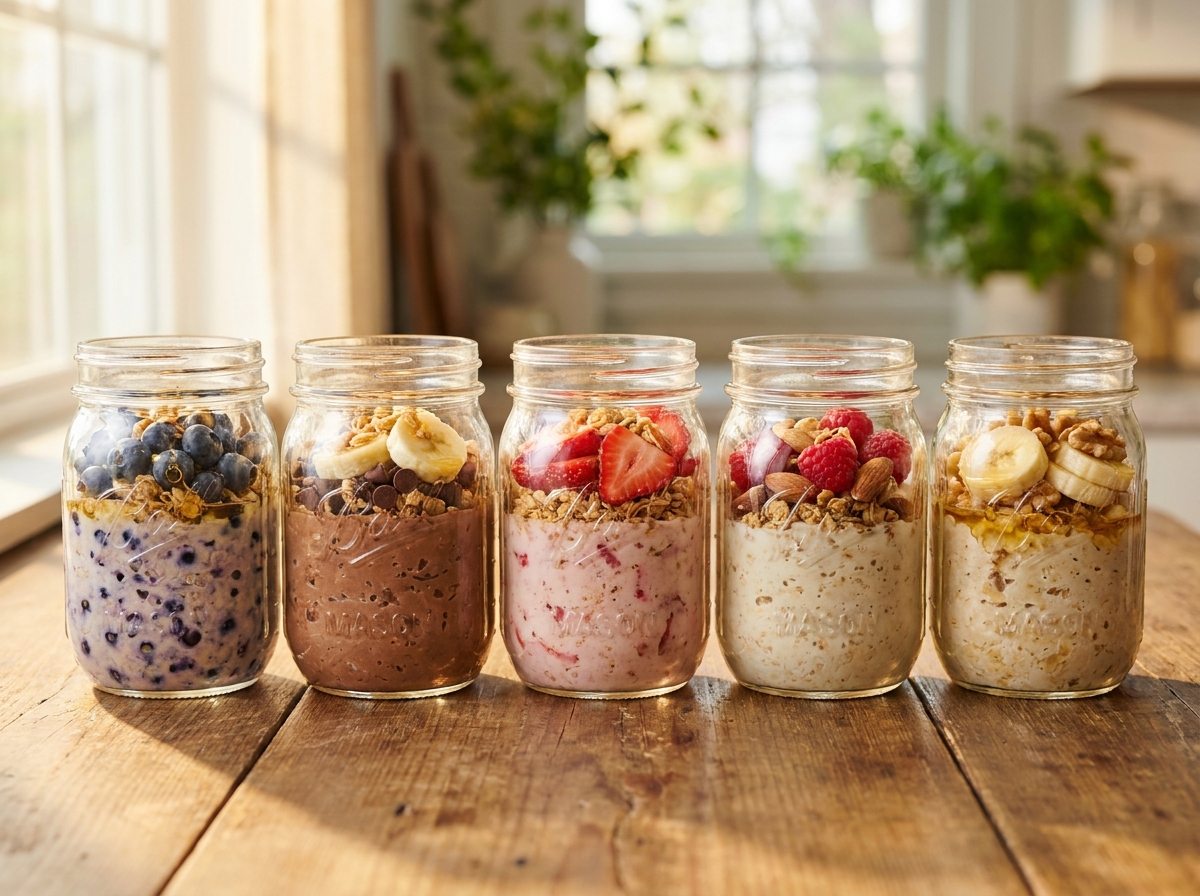
What Makes Overnight Oats the Best Meal Prep Breakfast?
Overnight oats meal prep is the practice of soaking raw rolled oats in liquid overnight so they soften and become a creamy, ready-to-eat breakfast with zero morning cooking. You assemble them the night before, refrigerate them, and grab them on the way out the door. A batch of five jars takes under 10 minutes on Sunday and covers your breakfasts through Friday.
The reason overnight oats dominate meal prep communities in 2026 is simple: they solve three problems at once. They eliminate morning decision fatigue, they cost under $1.50 per serving, and they are genuinely filling. A basic jar made with rolled oats, Greek yogurt, chia seeds, and milk delivers around 15–30 grams of protein and 8–10 grams of fiber — enough to keep most people satisfied until lunch without a mid-morning snack.
Nutritionists and registered dietitians consistently recommend overnight oats for people building sustainable breakfast habits, not because oats are a superfood, but because they are a reliable, low-effort vehicle for protein, fiber, and complex carbohydrates. When paired correctly, they keep blood glucose stable through the morning — something a banana or piece of toast cannot achieve alone.
Which Type of Oats Should You Use for Meal Prep?
The oat type is the single most important decision you make when prepping overnight oats. Get it wrong and you end up with mush on day 3, or oats that are still crunchy on day 1.
Old-fashioned rolled oats are the correct choice for meal prep. They absorb liquid at a controlled rate, maintain a pleasantly chewy texture through day 4 or 5, and hold up to added ingredients like berries and nut butter without becoming waterlogged. Per 100g, old-fashioned oats provide approximately 13g of protein, 10g of fiber, and 66g of complex carbohydrates. They cost around $0.15–$0.25 per serving when bought in bulk.
Quick oats work in a pinch but they absorb liquid too fast. By day 2 they turn mushy and unappealing. They are fine if you are only prepping one day ahead, but for a 5-day batch they are not recommended.
Steel-cut oats need to be cooked or soaked for at least 12–16 hours to soften adequately. They hold their texture better than rolled oats, but they require significantly more liquid and the texture is denser. Some people prefer them — particularly those who want a thicker, more substantial jar — but they are harder to customize and the longer required soak makes them less reliable for weekday prep.
Instant oats should be avoided entirely for meal prep. They have been processed to absorb liquid almost instantly, which means by morning they have turned into a paste. They also have lower fiber content than rolled oats and often contain added sugar.
The Perfect Overnight Oats Ratio
The most important number in overnight oats preparation is the liquid-to-oats ratio. Standard guidance is 1:1.5 (oats to liquid), meaning for every half cup of oats you use three-quarters of a cup of liquid. This produces a creamy, spoonable texture by morning.
If you add Greek yogurt — which is strongly recommended for protein and creaminess — reduce the liquid slightly. A reliable base for a single 16oz jar is:
- ½ cup old-fashioned rolled oats
- ½ cup milk (dairy or plant-based)
- ¼ cup plain Greek yogurt
- 1 tablespoon chia seeds
- 1 teaspoon honey or maple syrup (optional)
- ¼ teaspoon vanilla extract
- Pinch of salt
This combination delivers approximately 280–320 calories, 18–22 grams of protein (with Greek yogurt), 8 grams of fiber, and costs roughly $0.90–$1.20 per jar depending on your yogurt brand.
If you want to push protein above 30 grams per jar — a common goal for people tracking macros or building muscle — add a half scoop of unflavored or vanilla protein powder. Whisk the protein powder with the milk before adding the oats and yogurt, otherwise it clumps. Some protein powders absorb liquid aggressively and will thicken the jar considerably by morning; add an extra tablespoon of milk if needed before eating.

How Long Do Overnight Oats Last in the Fridge?
This is the most frequently asked question about overnight oats meal prep, and the answer depends on what you put in them. Plain overnight oats — oats, milk, yogurt, chia seeds — last 5 days safely in the refrigerator when stored in airtight jars at or below 40°F (4°C).
Days 1–3 are ideal: the texture is creamy, the flavor is fresh, and the chia seeds have gelled perfectly. Days 4 and 5 are still safe and still good, but the oats continue absorbing liquid, so they will be slightly thicker. A splash of milk stirred in before eating restores the right consistency.
Fresh fruit changes the equation. Sliced bananas turn brown and mushy within 48 hours. Mango and pineapple contain enzymes that actively break down proteins in the oats, limiting safe storage to 2–3 days. If you want fruit in your jars, use frozen berries (they thaw into the oats without browning), or add fresh fruit on the morning of eating. Whole blueberries, raspberries, and blackberries are the most meal-prep-friendly fruits — they hold up to 4 days in the oat mixture without significant quality loss.
Temperature consistency is critical. A refrigerator thermometer is worth using — fridges that run warm (42°F or above instead of the USDA-recommended 40°F) can reduce safe storage by a full day. Keep your oat jars away from the door, where temperature fluctuates most.
8 Overnight Oat Flavor Combinations Worth Making
One of the biggest reasons people abandon overnight oats meal prep is flavor fatigue — eating the same jar five days in a row becomes monotonous quickly. The solution is to prep two or three different flavors per week using the same base formula. Here are eight flavor combinations that work specifically for 5-day meal prep (all safe to the 4th or 5th day):
1. Classic Peanut Butter and Banana — Add 1 tablespoon natural peanut butter and ½ a sliced banana (added day-of, not pre-mixed). Top with chopped peanuts. Provides roughly 26g protein with Greek yogurt base. A crowd favorite and the gateway overnight oat for skeptics.
2. Berry Chia Jam — Stir 2 tablespoons of frozen mixed berries into the base. They break down overnight into a natural jam that swirls through the oats. No added sugar needed. Add fresh berries on top in the morning. This is the highest-fiber combination on this list at approximately 12g per jar.
3. Chocolate Protein — Add 1 tablespoon of cocoa powder and half a scoop of chocolate protein powder to the base. Top with a small square of dark chocolate (70%+), chopped. Tastes like dessert, delivers 30+ grams of protein. Ideal for post-workout mornings.
4. Apple Cinnamon — Add ½ teaspoon cinnamon, ¼ teaspoon nutmeg, 1 teaspoon maple syrup, and ¼ cup grated apple (the apple softens and almost disappears overnight, leaving just flavor). Safe for 4 days. Add a sprinkle of granola on top for texture when serving.
5. Coffee and Cardamom — Replace half the milk with cold brew concentrate. Add ¼ teaspoon cardamom. The caffeine from the cold brew is a genuine morning advantage — approximately 60–80mg per jar. Safe for 5 days and intensifies in flavor from day 2 onward.
6. Lemon Coconut — Add 1 teaspoon lemon zest, ½ teaspoon lemon juice, and 2 tablespoons shredded unsweetened coconut. Bright, refreshing, and unexpectedly satisfying. Safe for 4 days (the lemon juice is mildly acidic and can slightly alter the chia gel over time).
7. Pumpkin Spice — Add 2 tablespoons of pure pumpkin puree and ½ teaspoon pumpkin spice blend. Use a tablespoon of maple syrup as sweetener. Pumpkin is high in beta-carotene and potassium, and it integrates perfectly into the oat mixture. Safe for 5 days.
8. Carrot Cake — Add 3 tablespoons grated carrot, ¼ teaspoon cinnamon, ¼ teaspoon ginger, a pinch of cloves, and 1 tablespoon chopped walnuts. Top with a small dollop of cream cheese. One of the most filling combinations on this list. Carrot holds up for the full 5 days without quality loss.
How to Hit 30 Grams of Protein Per Jar
Standard overnight oats with milk and Greek yogurt deliver 15–22 grams of protein. For people aiming at 30+ grams — common for muscle building, weight loss, and post-workout recovery — here is the specific combination that reliably crosses that threshold:
- ½ cup rolled oats — 6g protein
- ½ cup unsweetened soy milk (highest protein plant milk, 7g/cup) — 3.5g protein
- ⅓ cup 0% plain Greek yogurt (e.g., Chobani, Fage) — 9g protein
- ½ scoop vanilla protein powder (most brands: 12–14g per half scoop) — 12g protein
- 1 tablespoon chia seeds — 2g protein
Total: approximately 32–34 grams of protein per jar, at a cost of roughly $1.80–$2.20 per serving. This is nutritionally comparable to many protein shakes, but with 8+ grams of fiber, complex carbohydrates for sustained energy, and real food ingredients.
Important: whisk the protein powder into the soy milk completely before adding other ingredients. Undissolved protein powder creates chalky, unappealing clumps that ruin the texture.
The Sunday System: Prepping 5 Jars in 10 Minutes
The most efficient way to prep overnight oats for a full work week is an assembly-line approach. Here is the exact process:
Equipment needed: 5 mason jars (16oz wide-mouth works best), measuring cups, a fork or small whisk.
Step 1 — Line up all 5 jars. Add ½ cup of rolled oats to each.
Step 2 — Add 1 tablespoon of chia seeds to each jar.
Step 3 — Add any dry spices or protein powder at this stage, before liquid.
Step 4 — Add ¼ cup of Greek yogurt to each jar.
Step 5 — Pour ½ cup of milk into each jar. Stir each jar thoroughly, making sure the chia seeds and protein powder are fully incorporated and not clumping at the bottom.
Step 6 — Add flavor-specific ingredients (cocoa powder, pumpkin puree, grated carrot, etc.).
Step 7 — Add frozen fruit if using. Do not add fresh banana, fresh mango, or fresh pineapple at this stage.
Step 8 — Seal jars and refrigerate. Label each jar with a piece of masking tape showing the prep date and the flavor.
Total time from first jar to refrigerator: 8–12 minutes. The oats need a minimum of 4 hours to soften fully; overnight (8 hours) produces the best texture.
Common Overnight Oats Mistakes and How to Fix Them
Problem: Oats are too watery in the morning. Cause: Too much liquid, or yogurt was not included. Fix: Reduce milk by 2 tablespoons and ensure you are using 1 tablespoon of chia seeds — they absorb liquid and create the gel that holds the jar together. Also check that you are using rolled oats, not steel-cut, which release more liquid back over time.
Problem: Oats are too thick and pasty. Cause: Too little liquid, or too much protein powder. Fix: Add 2–3 tablespoons of milk in the morning and stir well before eating. For future batches, increase liquid slightly or use less powder.
Problem: Protein powder is clumping. Cause: Added dry powder directly to oats. Fix: Always whisk protein powder into the liquid first before adding oats or yogurt. If you are still getting clumps, shake the sealed jar after mixing and check again after 10 minutes.
Problem: Oats taste bland. Cause: No seasoning. Rolled oats have almost no natural sweetness or flavor. Fix: Always add at minimum a pinch of salt (this dramatically improves flavor), a touch of vanilla extract, and at least one sweetener or flavoring agent. Salt is the most overlooked ingredient in overnight oats.
Problem: Fresh fruit is brown and mushy by day 3. Cause: Fresh fruit oxidizes and releases moisture into the oats. Fix: Use frozen fruit mixed into the oats (it thaws beautifully without browning), and add fresh fruit only on the morning of eating.
Overnight Oats vs Hot Oatmeal — Which Is Better for Meal Prep?
Both are excellent, but they serve different purposes. Hot oatmeal requires cooking every morning and is best consumed immediately. Overnight oats are prepared once and consumed over multiple days with zero morning effort. For anyone with a busy workweek, overnight oats win on convenience alone.
Nutritionally, they are nearly identical. Some research suggests that the cold soaking process preserves more resistant starch in oats — a type of fiber that feeds beneficial gut bacteria — compared to heat cooking. Whether this makes a meaningful difference in practice for most people is debatable, but it is a genuine nutritional advantage. Either way, both forms of oats are nutritionally sound choices that support weight management, heart health, and sustained energy.
The real winner of overnight oats for meal prep is time. Once you establish the Sunday prep habit, breakfasts cease to be a daily decision. That 10 minutes on Sunday returns roughly 25–30 minutes across the week and eliminates the most common cause of poor breakfast choices: not having time to think in the morning.
Frequently Asked Questions
Q: Can overnight oats be eaten warm?
Yes. Microwave the jar (with lid removed) for 60–90 seconds, stirring halfway through. The texture changes slightly — it becomes more like cooked oatmeal — but it is perfectly safe and enjoyable, especially in winter.
Q: Do overnight oats need to be refrigerated?
Yes. Once liquid is added, the oats must be refrigerated. At room temperature, the mixture can develop harmful bacteria within a few hours, particularly with dairy milk or yogurt included.
Q: Can I freeze overnight oats?
You can freeze the dry components — oats, chia seeds, spices — in portioned bags for up to 3 months. Adding liquid and freezing the assembled oats is not recommended; the texture degrades significantly upon thawing. Frozen assembled oats become gummy and unpleasant.
Q: Are overnight oats good for weight loss?
They can be, when portioned correctly. The combination of fiber and protein promotes satiety, which reduces total calorie intake throughout the day. However, commercially flavored overnight oats (including many pre-made varieties) can contain 30–50g of added sugar per jar, which counteracts any weight loss benefit. Homemade oats with Greek yogurt, chia, and minimal sweetener are a genuinely useful tool for calorie-controlled eating.
Q: What containers are best for overnight oats?
Wide-mouth 16oz Mason jars are the classic choice — they are airtight, stackable, microwave-safe (without the lid), easy to clean, and cost around $1–2 each. They also double as a serving vessel. Reusable plastic meal prep containers work equally well but check that they are airtight, as loosely covered oats dry out at the edges overnight.