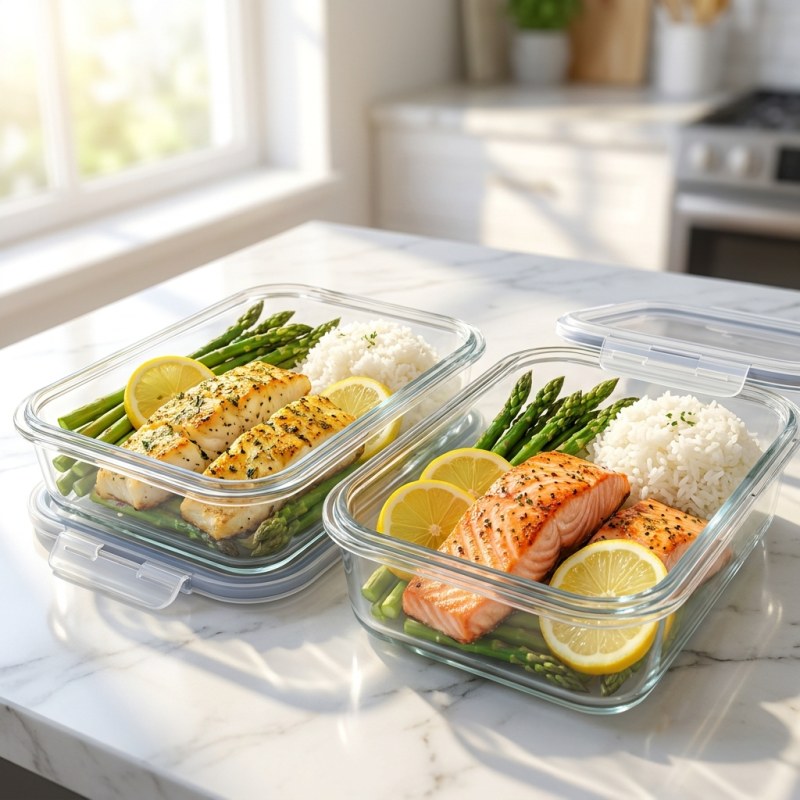
Ingredients
- 1.5 lbs cod fillets (4 portions, approximately 6oz each)
- 2 tbsp olive oil
- 2 lemons — 1 zested and juiced, 1 sliced for reheating
- 3 garlic cloves, minced
- 1 tsp dried thyme
- 1 tsp dried oregano
- 0.5 tsp smoked paprika
- 1 tsp salt
- 0.25 tsp black pepper
- 1.5 cups dry brown rice (for bowls)
- 2 cups broccoli florets or asparagus
- 2 tbsp capers (optional — adds Mediterranean character)
Instructions
- Preheat oven to 400°F (200°C). Start brown rice: 1.5 cups dry + 3.25 cups water, boil, cover, lowest heat, 40 minutes. Pat cod fillets completely dry with paper towels. Surface moisture creates steam during roasting and produces pale, soft fish rather than a properly cooked exterior.
- Mix the marinade: olive oil, lemon zest, lemon juice, minced garlic, thyme, oregano, smoked paprika, salt, and pepper. Brush both sides of each cod fillet. If time allows, marinate 15 minutes at room temperature — the acid begins flavour penetration. Do not marinate more than 30 minutes; longer acid exposure starts breaking down the protein and produces mushy fish.
- Place cod on a parchment-lined rimmed sheet pan. Space fillets at least 1 inch apart — crowding causes steaming rather than roasting. If using capers, scatter around the fish. Into the oven. Timer 14 minutes for 1-inch thick portions, 12 minutes for thinner fillets.
- Check doneness at 14 minutes: insert a thermometer into the thickest section. Target 145°F (63°C) — the USDA minimum for all fish. Visual check: the flesh turns from translucent to completely opaque and flakes cleanly when pressed with a fork. If translucent in the centre, return for 2 more minutes. Salmonella is the primary contamination risk in fresh fish; it is fully destroyed at 145°F.
- Remove from oven immediately at 145°F (63°C). Rest on the pan 3 minutes uncovered. The fish continues cooking slightly from residual heat — removing at 143°F and resting produces a better final texture than waiting until 145°F in the oven, which typically means 148–150°F after rest.
- Blanch vegetables: broccoli 2 minutes in boiling salted water, ice bath, dry thoroughly. Or roast asparagus alongside cod for last 8 minutes (asparagus at 400°F/200°C: 8 minutes for thin spears, 10 minutes for thick).
- Spread everything to cool on open surfaces for 15 minutes. Fish sealed hot concentrates volatile smell compounds in the container — a distinct problem with fish that doesn't apply the same way to chicken or beef. The 15-minute cool-down is especially important here.
- Portion into 4 containers: ¾ cup cooked brown rice, 1 cod fillet (approximately 6oz), vegetables alongside. Add 1 lemon slice per container — this is the smell-minimisation tool at reheating time. Store sauce (lemon-herb oil) in a small separate jar. Label with 'COD — [date]'. Refrigerate at 40°F (4°C). Per USDA FoodKeeper: cooked fish 3–4 days. Eat Monday through Wednesday. Freeze any portions beyond day 3 immediately.
Instructions
- Preheat oven to 400°F (200°C). Start brown rice: 1.5 cups dry + 3.25 cups water, boil, cover, lowest heat, 40 minutes. Pat cod fillets completely dry with paper towels. Surface moisture creates steam during roasting and produces pale, soft fish rather than a properly cooked exterior.
- Mix the marinade: olive oil, lemon zest, lemon juice, minced garlic, thyme, oregano, smoked paprika, salt, and pepper. Brush both sides of each cod fillet. If time allows, marinate 15 minutes at room temperature — the acid begins flavour penetration. Do not marinate more than 30 minutes; longer acid exposure starts breaking down the protein and produces mushy fish.
- Place cod on a parchment-lined rimmed sheet pan. Space fillets at least 1 inch apart — crowding causes steaming rather than roasting. If using capers, scatter around the fish. Into the oven. Timer 14 minutes for 1-inch thick portions, 12 minutes for thinner fillets.
- Check doneness at 14 minutes: insert a thermometer into the thickest section. Target 145°F (63°C) — the USDA minimum for all fish. Visual check: the flesh turns from translucent to completely opaque and flakes cleanly when pressed with a fork. If translucent in the centre, return for 2 more minutes. Salmonella is the primary contamination risk in fresh fish; it is fully destroyed at 145°F.
- Remove from oven immediately at 145°F (63°C). Rest on the pan 3 minutes uncovered. The fish continues cooking slightly from residual heat — removing at 143°F and resting produces a better final texture than waiting until 145°F in the oven, which typically means 148–150°F after rest.
- Blanch vegetables: broccoli 2 minutes in boiling salted water, ice bath, dry thoroughly. Or roast asparagus alongside cod for last 8 minutes (asparagus at 400°F/200°C: 8 minutes for thin spears, 10 minutes for thick).
- Spread everything to cool on open surfaces for 15 minutes. Fish sealed hot concentrates volatile smell compounds in the container — a distinct problem with fish that doesn't apply the same way to chicken or beef. The 15-minute cool-down is especially important here.
- Portion into 4 containers: ¾ cup cooked brown rice, 1 cod fillet (approximately 6oz), vegetables alongside. Add 1 lemon slice per container — this is the smell-minimisation tool at reheating time. Store sauce (lemon-herb oil) in a small separate jar. Label with 'COD — [date]'. Refrigerate at 40°F (4°C). Per USDA FoodKeeper: cooked fish 3–4 days. Eat Monday through Wednesday. Freeze any portions beyond day 3 immediately.
The Smell Chemistry — Why Lemon Works
The lemon slice in the container is not decorative. Trimethylamine (TMA) is the primary compound responsible for the fishy smell that intensifies during reheating. TMA is a volatile amine — it becomes a gas at relatively low temperatures. Lemon juice contains citric acid, which reacts with TMA to form a non-volatile salt compound (trimethylamine citrate). This salt does not volatilise at microwave temperatures, which is why adding lemon before reheating measurably reduces the smell released. The acid essentially traps the smell compound in a non-volatile form before it can become a gas.
The 50% microwave power instruction works by the same mechanism — lower peak temperature means less TMA volatilises. At full power, the fish surface can reach 175°F+ in 90 seconds, releasing a high concentration of volatile compounds. At 50% power, the same heating time produces a surface temperature of approximately 120–130°F — warm enough to eat, below the aggressive volatilisation threshold.
Variations on This Base
The lemon herb cod is intentionally neutral for variation. Monday: as cooked (lemon-herb oil drizzled at serving). Tuesday: add 1 tbsp white miso whisked with 1 tsp soy and 1 tsp honey to the container before reheating — the miso caramelises slightly and produces a completely different flavour. Wednesday: drizzle with 1 tbsp tahini + squeeze of lemon cold — Mediterranean cod tahini bowl, no reheating required. The fish itself is the same from Sunday's batch.

Storage Reference (USDA FoodKeeper)
Cooked cod and all cooked fish: 3–4 days at 40°F (4°C). Freeze within 48 hours of cooking for best quality. Frozen cooked fish: 3 months. Thaw overnight in refrigerator — never at room temperature. The bacteria risks with fish (Salmonella from cross-contamination during prep, Listeria in smoked products) make the storage window stricter than land proteins — respect the 3–4 day limit.
Fish Nutrition Comparison — Cod vs Salmon vs Tilapia
Per 3oz cooked portion: Cod delivers 20g protein, 90 calories, 0.2g omega-3, at .50–.50/lb — the leanest and cheapest of the three. Tilapia is similar at 21g protein, 110 calories, 0.1g omega-3, –/lb — marginally more fat but nearly identical nutrition. Farmed salmon offers 22g protein, 175 calories, 1.8g omega-3, at –/lb — the fat content is genuinely different (salmon has 9g fat per 3oz versus cod at 1g). For the omega-3 content specifically, that fat is the point: DHA and EPA are the bioavailable forms of omega-3 that support cardiovascular and cognitive function, and salmon is the most concentrated whole-food source available at a reasonable price.
The practical implication for meal prep: if protein per calorie is the priority, cod wins. If omega-3 intake is the goal, salmon twice per week delivers a meaningful dose. Many people run cod for Mon–Wed office lunches (lower cost, neutral smell) and salmon once per week at home for the omega-3 benefit — this is the hybrid approach used in the Day 32 meal plan.
Reheating Cod at Work — Step by Step
Remove the cod fillet from the container and place it on a microwave-safe plate. Lay one lemon slice directly on top of the fish. Cover loosely with a microwave-safe plate or vented plastic wrap — not sealed, not fully open. Set the microwave to 50% power. Heat 90 seconds. The fish should be warm throughout but not steaming aggressively. If the centre is still cold, add 30 more seconds at 50% power. Drizzle with lemon-herb oil from the jar. The smell produced by this method is approximately 30% of what full-power reheating produces — noticeable but not antisocial. Eating cold is still the most considerate option in very close quarters.


