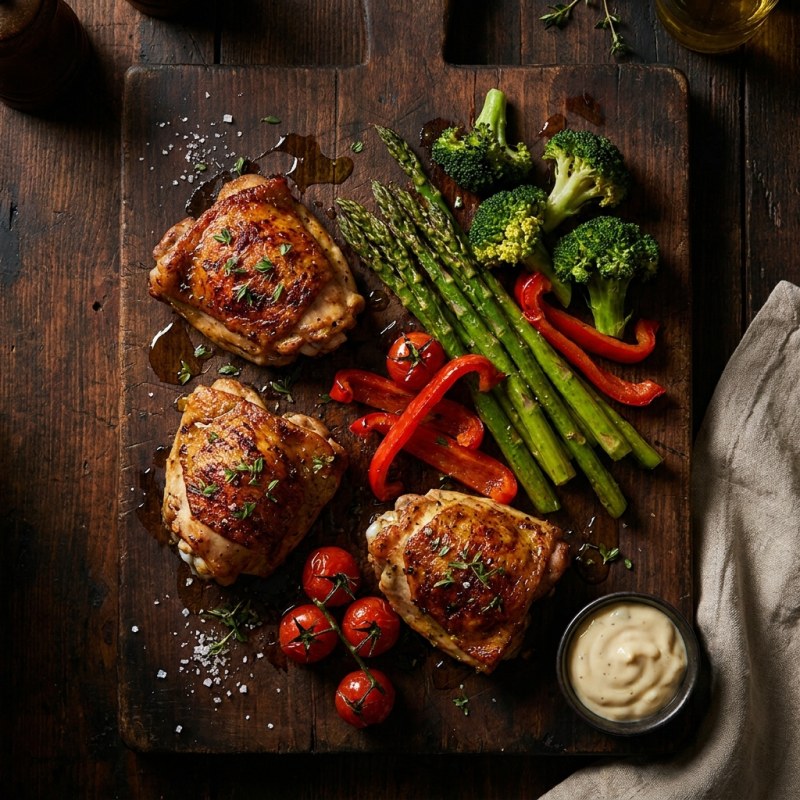
Ingredients
- 2 lbs bone-in chicken thighs
- 1 large head cauliflower, riced (or 16oz pre-riced frozen, squeezed dry)
- 2 cups broccoli florets
- 2 medium zucchini, sliced thick
- 2 red bell peppers, sliced
- 3 tbsp olive oil, divided
- 1.5 tsp smoked paprika
- 1 tsp garlic powder
- 1 tsp salt
- 2 tbsp pesto (store-bought, check carb count) OR tahini sauce
- ¼ cup shredded Parmesan or cheddar (optional — adds 110 cal, minimal carbs)
Instructions
- Preheat oven to 425°F (220°C). If using fresh cauliflower: rice it using a box grater or food processor. Spread on a clean kitchen towel and squeeze firmly twice over the sink until the towel is visibly wet. This step is non-negotiable — skipping it produces waterlogged containers by day 2.
- Pat chicken thighs completely dry with paper towels. Rub with 1.5 tbsp olive oil, smoked paprika, garlic powder, and salt. Place skin-side up on a large rimmed sheet pan. Into oven. Timer 35 minutes. Target internal temperature: 175°F (79°C) at the thickest part. Salmonella and Campylobacter are destroyed at 165°F (74°C) minimum; 175°F produces better texture from collagen conversion.
- Toss broccoli, zucchini, and bell peppers with remaining 1.5 tbsp olive oil and a pinch of salt. Spread on a second sheet pan — single layer, no overlapping. Into oven at the 16-minute mark. Timer 22 minutes.
- While the oven runs, cook cauliflower rice: heat a large skillet on medium-high. Add 1 tsp oil. Add squeezed cauliflower rice in an even layer. Cook without stirring 3 minutes until the bottom develops golden colour. Toss, cook 2 more minutes. Season with salt and garlic powder. The key is dry heat and no stirring — this removes remaining moisture and prevents sogginess.
- Vegetables out when caramelised. Chicken out when thermometer reads 175°F (79°C). Rest chicken 5 minutes before portioning — juices redistribute and the meat pulls more cleanly from the bone.
- Spread everything on open surfaces to cool for 20 minutes before sealing — hot food sealed in containers creates steam condensation that makes cauliflower rice soggy. This is the second most important step after squeezing the moisture.
- Portion into 5 containers: cauliflower rice base, chicken thigh (debone while warm if preferred), roasted vegetables. Store pesto or tahini sauce in separate small jars — add at eating time. Shredded cheese can go directly in the container.
- Label with date. Refrigerate at 40°F (4°C). Per USDA FoodKeeper: cooked chicken 4 days, cooked cauliflower 4 days, roasted vegetables 4–5 days.
Instructions
- Preheat oven to 425°F (220°C). If using fresh cauliflower: rice it using a box grater or food processor. Spread on a clean kitchen towel and squeeze firmly twice over the sink until the towel is visibly wet. This step is non-negotiable — skipping it produces waterlogged containers by day 2.
- Pat chicken thighs completely dry with paper towels. Rub with 1.5 tbsp olive oil, smoked paprika, garlic powder, and salt. Place skin-side up on a large rimmed sheet pan. Into oven. Timer 35 minutes. Target internal temperature: 175°F (79°C) at the thickest part. Salmonella and Campylobacter are destroyed at 165°F (74°C) minimum; 175°F produces better texture from collagen conversion.
- Toss broccoli, zucchini, and bell peppers with remaining 1.5 tbsp olive oil and a pinch of salt. Spread on a second sheet pan — single layer, no overlapping. Into oven at the 16-minute mark. Timer 22 minutes.
- While the oven runs, cook cauliflower rice: heat a large skillet on medium-high. Add 1 tsp oil. Add squeezed cauliflower rice in an even layer. Cook without stirring 3 minutes until the bottom develops golden colour. Toss, cook 2 more minutes. Season with salt and garlic powder. The key is dry heat and no stirring — this removes remaining moisture and prevents sogginess.
- Vegetables out when caramelised. Chicken out when thermometer reads 175°F (79°C). Rest chicken 5 minutes before portioning — juices redistribute and the meat pulls more cleanly from the bone.
- Spread everything on open surfaces to cool for 20 minutes before sealing — hot food sealed in containers creates steam condensation that makes cauliflower rice soggy. This is the second most important step after squeezing the moisture.
- Portion into 5 containers: cauliflower rice base, chicken thigh (debone while warm if preferred), roasted vegetables. Store pesto or tahini sauce in separate small jars — add at eating time. Shredded cheese can go directly in the container.
- Label with date. Refrigerate at 40°F (4°C). Per USDA FoodKeeper: cooked chicken 4 days, cooked cauliflower 4 days, roasted vegetables 4–5 days.
Low Carb Notes and Storage
Net carbs per container (without cheese or pesto): approximately 8g net carbs. With pesto: add 1–2g depending on brand. With cheese: no meaningful carb addition.
The fat gap: this recipe runs approximately 380 calories without added fat sources. Add 2 tbsp olive oil drizzled at serving to reach 500+ calories — the fat is what makes a low carb meal genuinely satisfying rather than just low calorie.
Per USDA FoodKeeper: cooked chicken 4 days, cooked cauliflower rice 4 days, roasted vegetables 4–5 days. Refrigerate at 40°F (4°C). The cauliflower rice is the most time-sensitive component — eat Mon–Thu, use spaghetti squash if you're prepping for Friday too.
Reheating: add 1 tbsp water to the container, cover loosely, 70% microwave power 75–90 seconds. The added water creates steam that prevents cauliflower rice from drying out during reheating.

 Overnight Oats Containers with Lids, Glass jars with Airtight Lids, Wide mouth Mason Salad jars, Glass Food" class="mpw-pb-img" loading="lazy">
Why Cauliflower Rice Works as a Meal Prep Base
Cauliflower rice is approximately 92% water before processing. That water content is the reason wet cauliflower rice fails in a sealed container: it migrates into the surrounding protein and grain components, producing waterlogged containers by day 2. The solution — squeezing moisture out with a kitchen towel after ricing, then dry-cooking in a skillet — converts a wet vegetable into a dry, stable base that holds 4 days without degrading the other container components.
The cooking step also matters. Raw cauliflower rice placed cold into a container without cooking first will wilt and release moisture as it warms during storage. Cooking until the cauliflower is slightly golden drives off the remaining surface moisture and partially caramelises the sugars, adding flavour that raw cauliflower lacks. The 5–6 minutes of skillet time is not optional — it's the step that separates good from unusable low carb meal prep.
The Fat Gap in Low Carb Containers
A standard chicken-and-rice meal prep container runs 480–550 calories. This recipe without fat additions runs approximately 380 calories — 100–170 calories below a normal prep meal. That deficit matters for satiety: a 380-calorie meal at lunch produces hunger by mid-afternoon that a 500-calorie meal doesn't.
The fat additions that close this gap without adding carbs: 2 tbsp pesto (160 cal, minimal carbs from basil and parmesan), 1 tbsp olive oil drizzled over the bowl at serving (120 cal), ¼ cup shredded parmesan mixed in (110 cal), ½ avocado added fresh at eating time (120 cal). Choose one or two additions that bring the container to 500–550 calories depending on your daily target. Store the olive oil and pesto in a small jar alongside the container — add at eating time, not at prep time, for best flavour and texture.
Sauce Options for Low Carb Variety
All five sauces in the full low carb guide are compatible with this recipe. Three specifically designed for this chicken + cauliflower rice base: lemon-herb (2 tbsp olive oil + lemon + oregano + garlic, 0g net carbs), chipotle yogurt (½ cup Greek yogurt + chipotle + lime, 3g net carbs — adds protein too), tahini (2 tbsp tahini + lemon + water + cumin, 2g net carbs). The sauce adds 0–3g net carbs per serving and transforms the eating experience across the week without additional prep work on Sunday.
