Ingredients
- 2 lbs chicken thighs, boneless skinless
- 2 cup dry white rice, rinsed
- 1 can chickpeas (15oz), drained and rinsed thoroughly
- 3 tbsp garlic-infused olive oil, divided
- 3 carrots, sliced
- 2 red bell peppers, sliced
- 1 tsp smoked paprika
- 1 lemon, juiced
- 1/2 tsp salt, divided
- 1/4 tsp black pepper
Instructions
- Preheat oven to 400°F (204°C). Rinse rice under cold water until it runs clear.
- Simmer rice in 3 cups water for 15-18 minutes until tender, then fluff with a fork.
- Toss chicken thighs with 2 tbsp garlic-infused oil, paprika, half the salt, and pepper.
- Toss carrots and bell peppers with remaining oil and salt on a separate sheet pan.
- Roast chicken and vegetables together at 400°F for 25-30 minutes, until chicken reaches 165°F (74°C) internally.
- Rinse chickpeas thoroughly under running water for at least 30 seconds to reduce FODMAP content.
- Divide rice, chicken, roasted vegetables, and chickpeas evenly across 5 containers.
- Add a squeeze of fresh lemon juice to each container just before eating, not during storage.
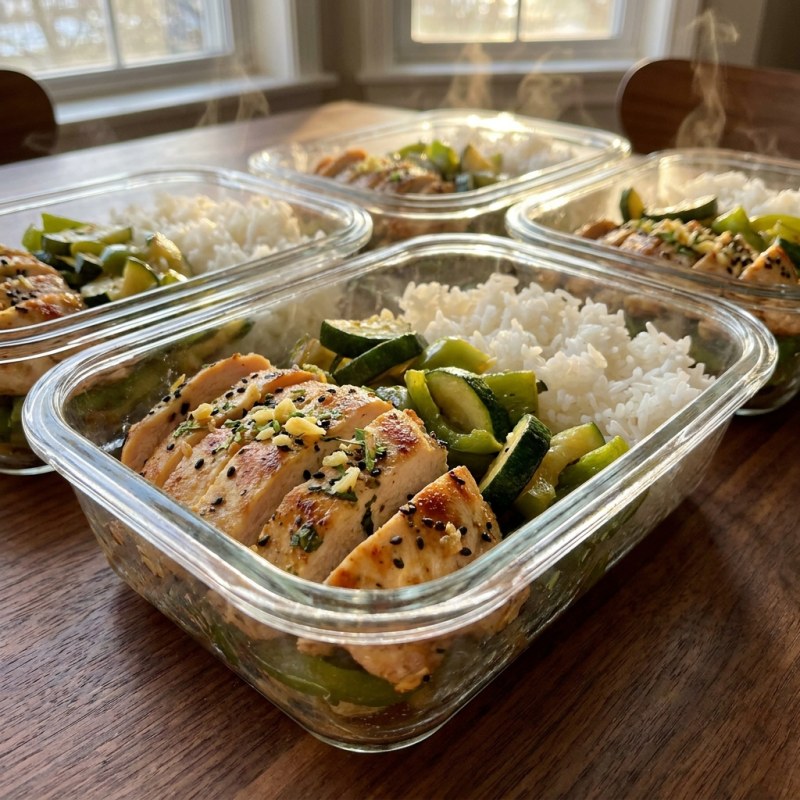
This bowl came out of the first week I actually stuck with low FODMAP eating without cheating, mostly because it doesn't taste like a diet — the garlic-infused olive oil does the heavy lifting flavor-wise, so you're not eating bland chicken and rice just to stay safe. Chicken and white rice are both naturally FODMAP-free, which is exactly why this combination anchors so much low FODMAP cooking.

The first time I made this, I used regular garlic powder out of habit and paid for it within a few hours. Most garlic powder blends aren't pure garlic — check the label, since a lot of them include onion powder as filler. Garlic-infused olive oil sidesteps the whole problem, since the FODMAPs in garlic are water-soluble and never dissolve into the oil in the first place.

Why This Recipe Works for IBS
Every ingredient here was chosen specifically to avoid FODMAP stacking. Chicken and rice are both genuinely low FODMAP with no serving-size caveats, red bell pepper and carrots are safe in normal portions, and the quarter-cup of rinsed canned chickpeas stays well under the threshold where FODMAPs become a problem. This is the exact combination the low fodmap meal prep ibs guide walks through in more depth if you want the full reasoning behind each ingredient choice.
Storage and Food Safety
Per USDA FoodKeeper guidance, cooked chicken holds safely for 3-4 days refrigerated at 40°F (4°C) or below, and the roasted vegetables last about the same window. Cooked white rice holds for roughly the same 3-4 days. Keep the rinsed chickpeas in their own small container — mixing everything together too early makes it harder to track how long each component has actually been stored.

Ingredient Swaps That Keep the FODMAP Level Low
If chicken thighs aren't available or you want a leaner option, chicken breast works identically in this recipe with the same 165°F (74°C) internal temperature target, just a slightly shorter roast time since breast meat cooks faster than thigh meat. For the vegetable side, green beans and zucchini are both low FODMAP substitutes if red bell pepper isn't in season — just avoid green bell pepper specifically, since it sits in the high FODMAP category unlike its red counterpart. If white rice feels repetitive by day 4, plain quinoa is also low FODMAP and swaps in one-to-one by volume.
How to Adjust the Recipe for Different Household Sizes
This recipe is written for 5 servings to match a standard work week, but it scales cleanly either direction. For 2 servings, use 3/4 lb chicken, 3/4 cup dry rice, and half a can of rinsed chickpeas. For a larger household eating this fresh in one sitting rather than storing it across the week, double every ingredient and use two sheet pans in the same oven, rotating halfway through roasting for even browning on both.

Serving Suggestions Beyond the Basic Bowl
The base recipe holds up fine as written, but a few additions change it up without introducing any FODMAP risk. A squeeze of fresh lemon juice brightens the whole bowl without adding any fermentable carbs. A tablespoon of chopped chives (safe in small amounts, unlike their close relatives onion and garlic) adds a mild onion-like flavor if you're missing that specific taste. For anyone finding five days of the same bowl repetitive, rotating between roasted red bell pepper one day and roasted carrots the next keeps the core chicken-and-rice base identical while making the week feel less monotonous.
Why Rinsing the Chickpeas Actually Matters
I mentioned this briefly above, but it's worth explaining fully since skipping it is the single most common mistake with this recipe. Dried chickpeas are high FODMAP, but the canning process causes some of the fermentable carbs to leach out into the canning liquid. Rinsing the canned chickpeas thoroughly under running water for at least 30 seconds removes additional FODMAPs beyond what canning alone accomplishes, which is what brings a quarter-cup portion down into genuinely safe territory. Skipping the rinse, or using the canning liquid in a sauce, undoes most of that benefit.
One last practical note: this recipe pairs naturally with the rest of a meal prep for beginners Sunday session if you're new to cooking in bulk. The technique — season, roast, portion — is identical to any other protein-and-carb bowl, the only real difference is which bottle of seasoning you reach for.
If you're still in the strict elimination phase, resist the urge to add a splash of regular soy sauce for extra flavor — most soy sauce contains wheat, which puts it firmly in high FODMAP territory. Tamari, which is naturally gluten-free and low FODMAP in small amounts (under 2 tablespoons), is the safer swap if you're craving that umami depth without breaking the elimination phase.

