Ingredients
- 1.5 cup dry lentils, rinsed
- 1 head broccoli, cut into florets
- 2 zucchini, sliced
- 1/2 cup dry quinoa
- 6 cup spinach or mixed greens
- 2 tbsp olive oil, measured
- 1 lemon, juiced
- 1 tsp ground cumin
- 1/2 tsp salt, divided
- 1/4 tsp black pepper
Instructions
- Preheat oven to 400°F (204°C). Rinse lentils under cold water.
- Simmer lentils in 3.5 cups water with half the salt for 20-25 minutes until tender.
- Cook quinoa according to package directions, about 15-18 minutes.
- Toss broccoli and zucchini with 1 tbsp olive oil, cumin, and remaining salt.
- Roast vegetables for 20-25 minutes until tender and lightly browned.
- Divide lentils, quinoa, and roasted vegetables evenly across 5 containers.
- Add fresh spinach or greens on top of each container just before storing or eating.
- Whisk remaining olive oil with lemon juice for the dressing. Measure carefully and add fresh before eating.
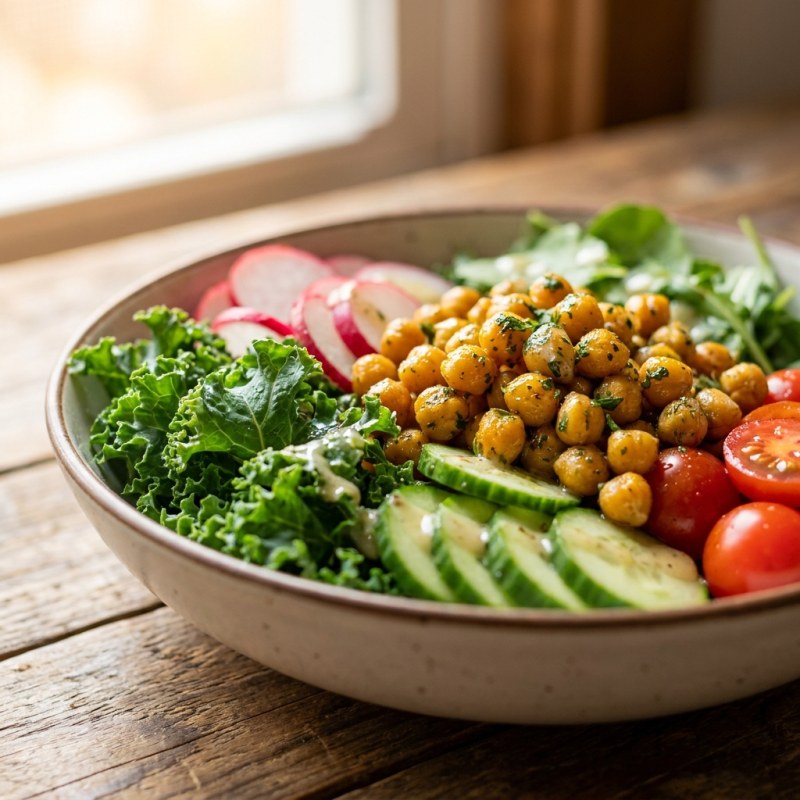
This bowl is built entirely around the volume-first principle — 380 calories, 22g protein, and a genuinely large plate of food thanks to leaning heavily on low-calorie-density vegetables and greens rather than oil or grains to fill it out.
The first time I made a "diet bowl" version of this, I skimped on the vegetables to save calories and ended up with a sad, small portion that left me hungry within an hour. The fix was the opposite of what I expected — adding more vegetables, not fewer, while keeping the oil and grain portions measured, produced a genuinely filling meal at the same calorie total.


Why This Recipe Works for Weight Loss
Roughly two-thirds of this bowl by volume is vegetables and greens, which carry very few calories relative to their size. The remaining third — lentils and a small measured portion of grain — delivers the protein and staying power. This is the exact ratio our vegan meal prep to lose weight 1400 cal guide is built around, and it's the reason this bowl feels substantial despite the modest calorie count.
Storage and Food Safety
Per USDA FoodKeeper guidance, cooked lentils and roasted vegetables both hold safely for 4-6 days and 4-5 days respectively, refrigerated at 40°F (4°C) or below. Fresh greens are best added just before eating rather than stored mixed in with the warm components, since they wilt faster once combined with heat.
Ingredient Swaps to Keep It Interesting
Chickpeas or black beans both work as a direct swap for lentils with a similar calorie and protein profile. Any low-calorie-density vegetable works in place of broccoli and zucchini — cauliflower, green beans, and bell pepper are all reasonable substitutes. For the greens, spinach, arugula, or a mixed greens blend all work interchangeably based on preference.
How to Adjust for Different Household Sizes
This recipe is written for 5 servings, but it scales cleanly. For 2 servings, use about 3/4 cup dry lentils and half the vegetable quantities. For a larger household, double the recipe and use two sheet pans for roasting, rotating positions halfway through for even cooking.
Serving Suggestions Beyond the Basic Bowl
A squeeze of fresh lemon adds brightness without any meaningful calories. A sprinkle of nutritional yeast adds a cheesy flavor and a small protein boost for very few calories. If you want more staying power on a particularly active day, adding an extra quarter-cup of cooked quinoa is a reasonable adjustment that keeps the meal within a similar overall structure.
Why Measuring the Oil Matters More Than Anything Else Here
Vegetables and greens are genuinely difficult to overeat calorie-wise — a doubled portion of broccoli adds maybe 30-40 calories. Oil is the opposite: a doubled pour can easily add 100-150 calories without any corresponding increase in fullness. That asymmetry is exactly why this recipe encourages generous vegetable portions alongside careful oil measurement, rather than treating every ingredient with the same level of portion caution. A simple kitchen scale or a set of measuring spoons kept next to the stove removes the guesswork entirely and takes only a few extra seconds per use.

Can You Make This Recipe Without Weighing or Measuring Everything?
Mostly, yes — the vegetables, greens, and lentils don't need to be precisely measured, since their calorie contribution per typical serving variance is small. The exceptions are the oil and the quinoa, both of which are calorie-dense enough that eyeballing versus measuring makes a real difference over a full week. A simple compromise: measure the oil and grain with actual measuring spoons and cups, and portion the vegetables and greens by eye without worrying about exact weights.
What If 380 Calories Per Meal Isn't Enough for You?
This recipe's calorie count is calibrated for a 1,400 calorie daily target split across several meals and snacks, but individual needs vary. If you're more active or simply find this portion isn't filling enough, adding an extra half-cup of roasted vegetables costs almost nothing calorie-wise, while adding an extra quarter-cup of quinoa or an extra tablespoon of a protein source like hemp seeds is a more calorie-conscious way to add staying power than simply increasing the oil. Listening to genuine hunger cues matters more than rigidly sticking to a fixed portion if you're consistently still hungry after a meal — that's useful information about your actual needs, not something to push through.
