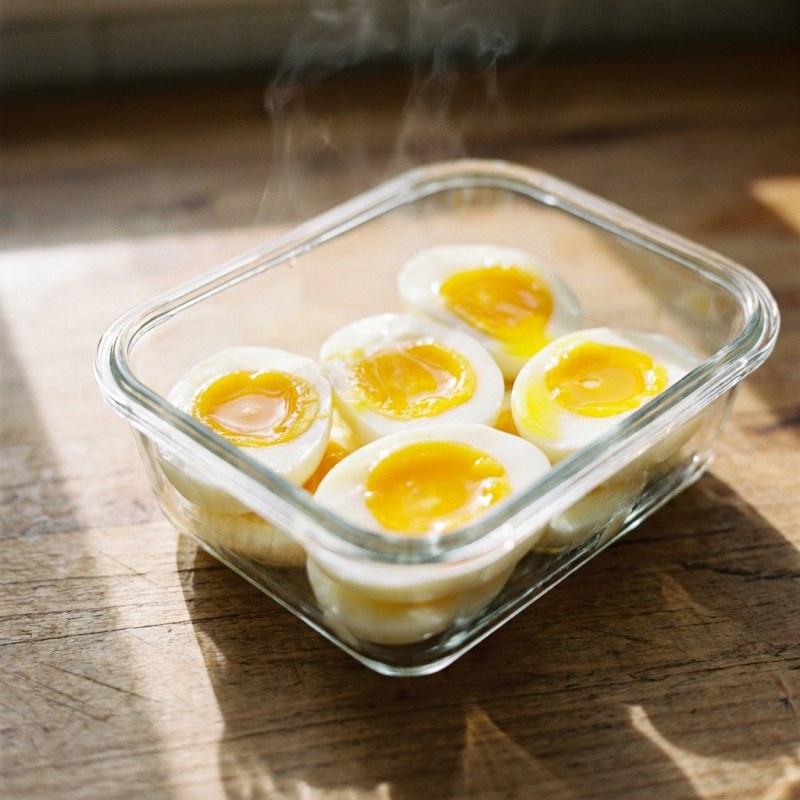
Eggs are arguably the most efficient meal prep protein available — cheap, fast to cook, and nutritionally dense at roughly 6g protein and 70 calories each. The question isn't whether to meal prep eggs, it's which method to use, because the six common ways to cook eggs ahead of time perform very differently once you factor in a full week of fridge storage and repeated reheating.

This is the full comparison: hard-boiled, soft-boiled, baked egg muffin cups, scrambled, poached, and fried, ranked on the three things that actually matter for meal prep — how long they last, how they reheat, and whether the texture holds up or falls apart. If you're specifically wrestling with the rubbery-scrambled-egg problem, the scrambled eggs deep dive covers the protein science behind why that happens in more detail than we'll go into here.
The Six Methods, Ranked
| Rank | Method | Fridge Life | Reheat Quality | Best For |
|---|---|---|---|---|
| 1 | Hard-boiled (in-shell) | 7 days | N/A — eaten cold, no reheat needed | Grab-and-go, snacking, salads |
| 2 | Baked egg muffin cups | 5 days | Excellent — minimal texture change | Hot breakfasts, customizable mix-ins |
| 3 | Soft-boiled (in-shell) | 4 days | N/A — eaten cold or gently warmed | Ramen, grain bowls, jammy-yolk fans |
| 4 | Frittata (oven-finished) | 4 days | Very good — dense structure reheats evenly | Sliceable, family-style batch cooking |
| 5 | Scrambled | 3–4 days | Poor by day 3 — turns rubbery | Same-day or next-day only |
| 6 | Poached or fried | Not recommended | Very poor — yolk and white texture collapse | Cook fresh only, don't meal prep |
The pattern across this ranking is consistent: methods that cook eggs into a denser, more set structure (hard-boiled, baked muffin cups, frittata) hold up far better over multiple days than methods that leave eggs loose and soft (scrambled, poached, fried). This comes down to how much free water remains trapped in a looser protein structure — more trapped water means more moisture loss during storage and reheating, which is what produces a rubbery or watery texture.
Method 1: Hard-Boiled Eggs (The Storage Champion)
Hard-boiled eggs, left in their shells, last a genuine 7 days refrigerated — longer than any other meal prep egg method, for one simple reason: there's no reheating cycle at all. You eat them cold or at room temperature, which means the texture-degrading process that affects every other method on this list (repeated heating and cooling) never happens. The shell also acts as a natural barrier against moisture loss and contamination.
The trade-off is versatility — hard-boiled eggs are great in salads, as a standalone snack, sliced into grain bowls, or mashed for egg salad, but they're not going to give you a hot breakfast experience. If you want eggs you eat warm in the morning, this isn't the method, but if you want maximum shelf life and zero reheating hassle, nothing beats it.
Method 2: Baked Egg Muffin Cups (The Best Hot Reheat)
If you want a hot breakfast and the best possible reheat performance, baked egg muffin cups win. The oven's even, sustained heat sets a tighter protein structure from the start than stovetop scrambling does, which means there's simply less moisture available to be lost during storage and reheating. They hold for 5 days and reheat in 30 to 45 seconds with minimal texture change even on the last day.
They're also the most customizable method — vegetables, cheese, and cooked meats fold directly into the batter before baking, so you can vary the flavor profile significantly across a single batch of 12 without changing the base technique.
Method 3: Soft-Boiled Eggs (For the Jammy-Yolk Crowd)
Soft-boiled eggs — cooked to a firm white and a still-liquid or jammy yolk — last about 4 days in their shells, slightly shorter than hard-boiled because the less-set yolk is more vulnerable to bacterial growth than a fully cooked one. They're best peeled and added cold or gently warmed (briefly dipped in hot water, not microwaved, which would overcook the yolk) to dishes like ramen or grain bowls right before eating.
Method 4: Frittata (The Sliceable Option)
A frittata is essentially a thick, oven-finished omelet that gets sliced into portions, similar in concept to baked egg muffin cups but in a single large format rather than individual cups. It holds 4 days and reheats well in 60 to 90 seconds, though muffin cups have a slight edge in reheat consistency since their smaller, uniform size heats more evenly than a thicker frittata wedge.
Method 5: Scrambled Eggs (Short Window Only)
Scrambled eggs are the most popular egg meal prep method by far, and also the one that performs worst over a multi-day storage window. The loose, soft protein structure created by stovetop scrambling traps a relatively large amount of water, and that water gets squeezed out progressively as the eggs sit and get reheated — a process called syneresis. By day 3, most people notice a distinctly rubbery, slightly grey texture that wasn't there on day 1. If you want to use scrambled eggs specifically, plan to eat them within 2 to 3 days, and consider whisking 1 tablespoon of cream cheese per 2 eggs into the raw mixture before cooking — this measurably slows the process. For the full explanation of the protein science here, see the dedicated scrambled eggs guide.
Method 6: Poached and Fried Eggs (Don't Meal Prep These)
Both poached and fried eggs are built around a specific textural contrast — a set white and a still-runny yolk — that simply doesn't survive storage and reheating. The yolk either overcooks into a chalky, crumbly texture or, if you try to keep it runny, falls into food safety concerns around partially-cooked eggs sitting in the fridge for days. These two methods are best made fresh, to order, every time. If you want a hot breakfast every morning, baked egg muffin cups deliver a comparable amount of effort with vastly better storage performance.

Storage Comparison at a Glance
Frequently Asked Questions
What is the best way to meal prep eggs for a full week?
Hard-boiled eggs left in their shells are the most reliable choice for a full 7-day week, since they require no reheating and the shell protects against both moisture loss and contamination. If you want a hot breakfast option that still holds well, baked egg muffin cups are the next best choice at 5 days, with significantly better reheat quality than scrambled eggs over the same period.
Why do scrambled eggs turn rubbery after a few days in the fridge?
This happens due to a process called protein syneresis — the loose egg protein network formed during stovetop scrambling continues tightening as it sits, squeezing out trapped moisture, and tightens further with each reheating cycle. Baked egg dishes avoid this more effectively because the oven's even heat sets a tighter initial protein structure with less excess moisture to lose in the first place.
How long do hard-boiled eggs last unpeeled versus peeled?
Unpeeled, in the shell: 7 days refrigerated at 40°F (4°C) or below. Peeled: 5 days. The shell acts as a natural protective barrier, which is why peeling eggs only on the day you plan to eat them — rather than peeling a whole batch in advance — meaningfully extends both shelf life and texture quality.
Can you freeze cooked eggs?
Whole hard-boiled eggs don't freeze well — the egg white becomes rubbery and watery after thawing, an effect that's even more pronounced than the syneresis seen with refrigerated storage. Baked egg muffin cups and frittata freeze reasonably well for up to 2 months, with a slight but acceptable texture change. Scrambled eggs can technically be frozen but the quality loss is significant; it's generally not recommended.
Is it safe to eat meal prepped eggs cold, straight from the fridge?
Yes — hard-boiled and soft-boiled eggs are commonly and safely eaten cold, directly from the fridge, with no food safety concern as long as they've been stored properly at 40°F (4°C) or below and consumed within their respective storage windows. Baked egg dishes and scrambled eggs can also be eaten cold, though most people prefer them reheated for both temperature and texture reasons.
If you want maximum shelf life with zero daily effort, hard-boiled eggs in the shell are the clear winner. If you want a hot breakfast that still holds up across the week, baked egg muffin cups are the better fit. Scrambled, poached, and fried eggs all have their place, but that place is fresh, same-day cooking — not a Sunday batch meant to last through Friday.