Ingredients
- 2 blocks firm tofu (14-16oz each), pressed
- 3 cup shelled edamame, frozen
- 1.5 cup dry rice
- 3 tbsp soy sauce
- 2 tbsp cornstarch
- 2 tbsp sesame oil
- 1 tbsp rice vinegar
- 1 tsp grated ginger
- 2 scallions, sliced
- 1 tbsp sesame seeds
Instructions
- Press tofu under a weighted plate for 15 minutes to remove excess water.
- Preheat oven to 400°F (204°C). Cook rice according to package directions.
- Cube pressed tofu and toss with soy sauce, cornstarch, and 1 tbsp sesame oil.
- Spread tofu on a sheet pan and roast 25-30 minutes, flipping halfway through.
- Steam or boil edamame for 5 minutes, then season lightly with salt.
- Whisk remaining sesame oil, rice vinegar, and grated ginger for the sauce.
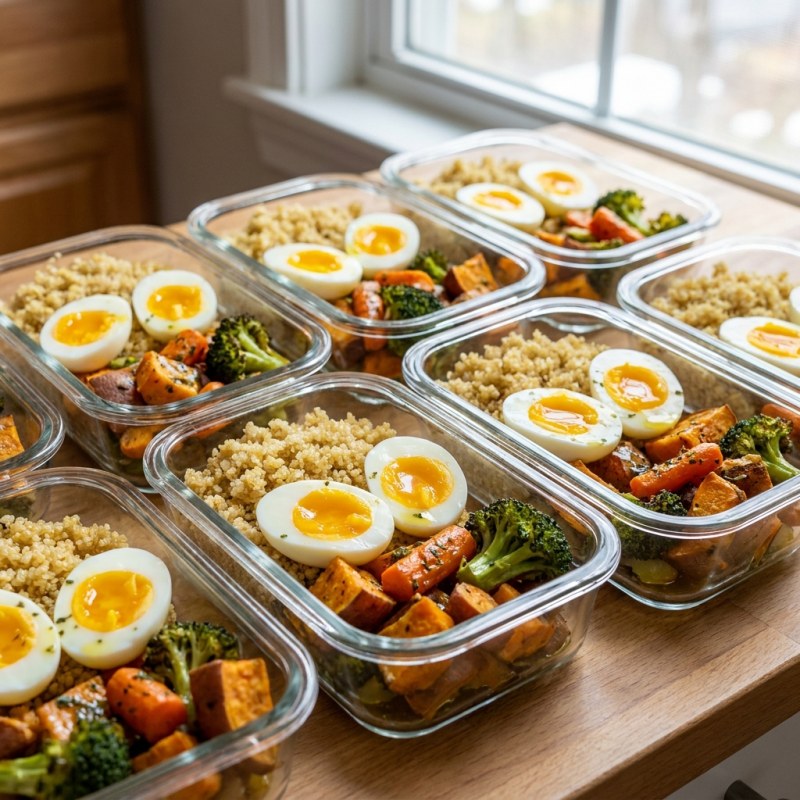
- Divide rice, roasted tofu, and edamame evenly across 5 containers.
- Top with scallions and sesame seeds, storing sauce separately to add fresh before eating.
This bowl is the backbone of my high protein vegetarian week — 32g of protein per serving with zero meat, and both the tofu and edamame hold up genuinely well across 5 days of storage, which isn't true of every plant protein.


The first time I baked tofu without pressing it first, the texture came out soft and a little mushy rather than crisp. Pressing out the excess water — 15 minutes under a weighted plate is enough — is the single step that determines whether your tofu crisps up properly in the oven or just steams in its own moisture.
Why This Recipe Works for High Protein Vegetarian Targets
Tofu and edamame together deliver a combined 32g of protein per serving, rivaling or beating most animal-protein meal prep bowls. Both ingredients also hold their texture well over several days of storage, unlike some plant proteins that turn mushy quickly. This is the exact combination our vegetarian high protein meal prep system guide covers in more depth if you want the full daily structure this recipe fits into.
Storage and Food Safety
Per USDA FoodKeeper guidance, baked tofu holds for 5-7 days refrigerated at 40°F (4°C) or below, and cooked edamame holds for about 4-5 days in the same conditions. Both ingredients are notably more forgiving on storage time than most animal proteins, giving this recipe some flexibility if a scheduled meal gets pushed back a day or two.

Ingredient Swaps to Keep It Interesting
If tofu texture isn't your thing, tempeh works as a direct swap with a similar protein density and a firmer, more substantial bite. For the sauce, swap the soy-based marinade for a peanut sauce (peanut butter, soy sauce, rice vinegar, a little water) if you want more variety across the week without changing the core protein components. Brown rice or quinoa both work as the grain base in place of white rice, adding fiber or extra protein respectively.
How to Adjust for Different Household Sizes
This recipe is written for 5 servings, but it scales cleanly. For 2 servings, use 1 block of tofu and 1.5 cups of edamame. For a larger household eating this fresh together, double the tofu and edamame and use two sheet pans for roasting, rotating positions halfway through for even browning.
Serving Suggestions Beyond the Basic Bowl
A soft-boiled egg on top adds another 6g of protein if you're not fully plant-based. A sprinkle of sesame seeds and sliced scallions rounds out the flavor without adding meaningful prep time. For a spicier version, a spoonful of chili crisp or sriracha stirred into the sauce changes the whole flavor profile with almost no additional effort.
Why Pressing the Tofu Actually Matters
This is worth explaining fully since it's the single biggest factor in whether this recipe turns out well. Fresh tofu straight from the package holds a significant amount of water inside its structure. That water needs to escape before roasting, or it steams the tofu from the inside rather than letting the exterior crisp and brown properly. Fifteen minutes under a weighted plate — a cutting board with a couple of cans on top works fine — pushes out enough of that water to make a genuinely noticeable difference in the final texture, especially important since this tofu needs to hold up well through several days of reheating, not just taste good fresh out of the oven.
Choosing the Right Tofu Firmness
Firm or extra-firm tofu is the right choice here — soft or silken tofu won't hold together through the pressing and roasting process and is better suited to smoothies or sauces rather than a roasted bowl component. Extra-firm holds up slightly better through multiple days of reheating than standard firm, so if your grocery store carries both, extra-firm is the marginally better pick for a full week of meal prep specifically.
Can You Freeze This Recipe?
The rice and edamame both freeze well for up to 2-3 months. Baked tofu can technically be frozen too, but the texture changes meaningfully once thawed, becoming spongier and less crisp than fresh-baked. If you want to freeze part of a batch, it's worth freezing the tofu unseasoned and unroasted, then baking it fresh after thawing, rather than freezing the fully cooked version.
A Note on Sauce Variety
The soy-ginger sauce in this recipe is deliberately simple, but it's easy to build in more variety without changing the underlying tofu and edamame prep. A peanut sauce version swaps the soy-vinegar mix for peanut butter thinned with warm water, soy sauce, and a touch of rice vinegar. A spicier version adds a spoonful of chili crisp or sriracha directly into the base sauce. Making two different sauces on Sunday and alternating them across the week is a low-effort way to keep the same core bowl from feeling repetitive by Thursday.
