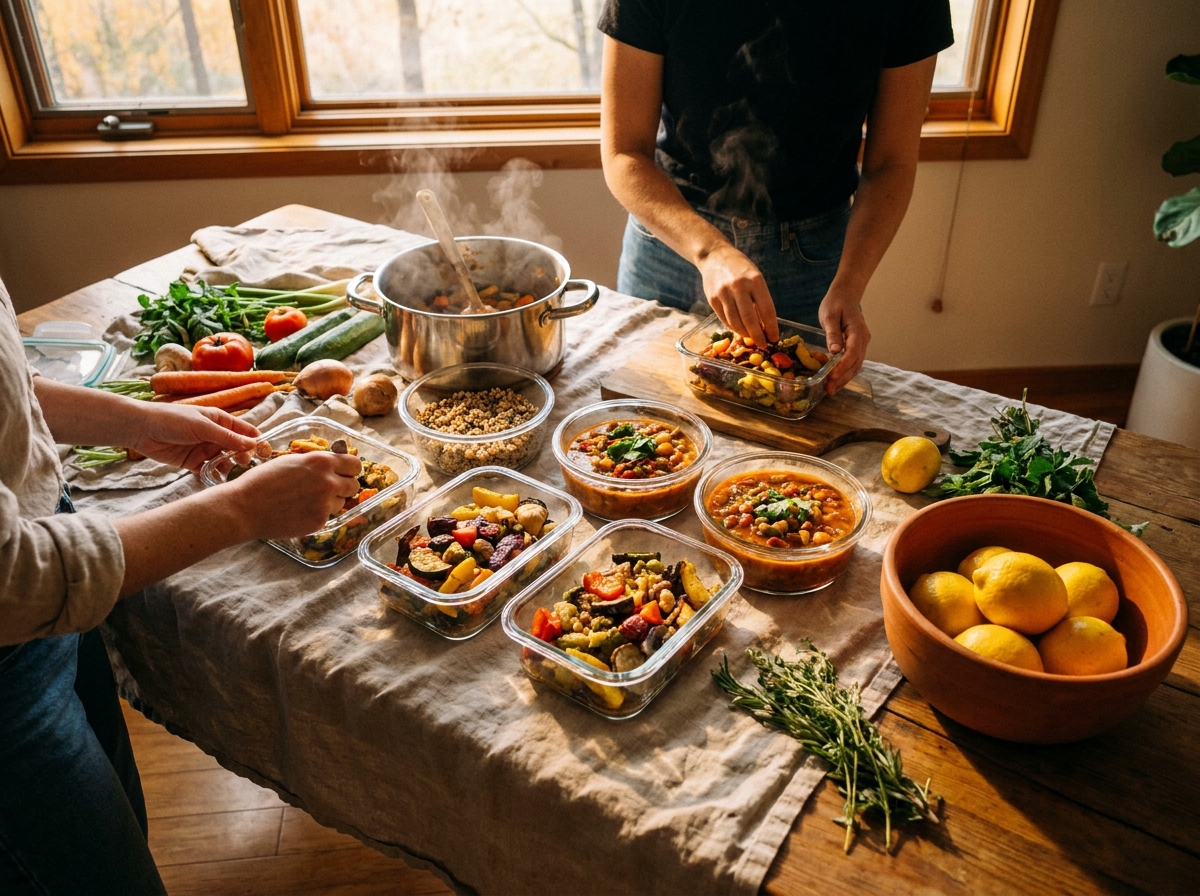
Sheet pan meal prep is the method I come back to every time life gets busy. One pan, one oven temperature, one cleanup. The reason it works so well for batch cooking is parallelism — you can run two or three sheet pans simultaneously at 425°F, with different items finishing at different times, and produce a full week of components in 35–40 minutes of actual oven time. I've tested every variation of this approach and the core system I'm going to show you reduces Sunday prep to 75 minutes with better results than anything more complicated.
This guide covers the exact 425°F sheet pan system that works for every protein and vegetable, the timing chart for running multiple pans without anything burning or undercooking, the 6 best sheet pan combinations with exact measurements and costs, the food safety temperatures that matter (the carryover cooking principle that prevents dry chicken), and the equipment facts nobody mentions — specifically why pan material and size matter more than the recipe.
The most common sheet pan meal prep mistake is using different temperatures for different items on different trays in the same oven. The fix: everything cooks at 425°F. Proteins take 30–38 minutes, dense vegetables (sweet potato, carrots, beets) take 25–30 minutes, tender vegetables (broccoli, zucchini, asparagus) take 18–22 minutes. Stagger entry times so everything finishes together. This one rule eliminates 90% of sheet pan timing problems.
Why Does Sheet Pan Meal Prep Work Better Than Other Methods?
Sheet pan cooking has three specific advantages for batch meal prep that other methods don't replicate. First, the dry high heat of 425°F roasting produces the Maillard reaction — the browning that creates flavour complexity impossible with steaming, boiling, or slow cooking. Meal prepped food that gets reheated through the week loses texture; the caramelised crust from roasting is robust enough to survive 4 days in the fridge and a 60-second microwave reheat with most of its texture intact.
Second, oven capacity scales linearly with sheet pans. A standard oven holds 2–3 full-size sheet pans simultaneously. That means 2–3 different items cooking at exactly the same time with zero active monitoring. The hands-on time for sheet pan prep is genuinely low — 10–15 minutes of chopping and seasoning, then the oven does the rest while you make sauces or overnight oat jars.
Third, cleanup is minimal. One pan per item, lined with parchment or foil. Total cleanup after a full sheet pan Sunday session: 3–4 minutes of wiping pans. This isn't a trivial point — cleanup resistance is one of the top three reasons people abandon meal prep routines, and removing it matters.
What Is the Sheet Pan Meal Prep Timing Chart?
All items below cook at 425°F. Use this chart to stagger entry times so everything finishes within the same 5-minute window:
| Item | Cook Time at 425°F | Enter Oven At | Internal Temp Target |
|---|---|---|---|
| Bone-in chicken thighs | 35–38 min | 0:00 | 175°F (165°F minimum, but thighs are better at 175°F) |
| Boneless chicken breast (brined) | 22–25 min | 0:12 | 160°F (carryover to 165°F during rest) |
| Salmon fillets | 12–14 min | 0:22 | 125°F for medium, 145°F for well done |
| Ground turkey patties (½ inch) | 18–20 min | 0:16 | 165°F |
| Sweet potato cubed | 25–28 min | 0:08 | Fork-tender |
| Broccoli florets | 18–20 min | 0:16 | Edges charred, stems tender |
| Bell peppers sliced | 20–22 min | 0:14 | Edges caramelised |
| Zucchini sliced ½ inch | 16–18 min | 0:18 | Golden edges |
| Cauliflower florets | 22–25 min | 0:12 | Deep golden, some char |
| Asparagus spears | 10–12 min | 0:24 | Tips crispy, stalks tender |
| Chickpeas (canned, dried) | 25–30 min | 0:06 | Deep golden, crispy throughout |
The carryover cooking note for chicken breast: pull it at 160°F and rest 5 minutes tented with foil. Internal temperature rises to 165°F during the rest. Pulling at the USDA minimum of 165°F directly means the breast finishes at 170–172°F — the point where breast meat begins losing moisture rapidly and becomes dry by day 3. The pull-early-rest method produces chicken breast that stays moist and edible on day 4. For bone-in thighs, target 175–180°F for best texture — the higher fat content handles the higher temperature, and connective tissue breaks down at temperatures above 165°F producing the tender result thighs are known for.
What Are the 6 Best Sheet Pan Meal Prep Combinations?
1. Honey Garlic Chicken Thighs + Broccoli + Sweet Potato — $2.85/serving
For 4 servings: 1.5 lbs bone-in chicken thighs + 1 lb broccoli florets + 2 medium sweet potatoes cubed. Toss chicken in: 2 tbsp honey + 2 tbsp soy sauce + 1 tbsp olive oil + 4 garlic cloves minced + ½ tsp smoked paprika. Toss vegetables separately in 1 tbsp olive oil + salt. Chicken on one pan (0:00), vegetables on second pan (0:16). Both out around 0:36. Per serving: 485 cal, 38g protein. Storage: chicken 4 days, vegetables 4–5 days (USDA FoodKeeper cooked poultry guidelines).
2. Lemon Herb Salmon + Asparagus + Cherry Tomatoes — $4.20/serving
For 3 servings: 1 lb salmon (3 × 5oz fillets) + 1 bunch asparagus trimmed + 1 cup cherry tomatoes halved. Season salmon with olive oil + lemon zest + fresh dill + salt + pepper. Asparagus and tomatoes on same pan tossed in olive oil + salt. Salmon enters at 0:22 when asparagus has been in 12 minutes. Everything out at 0:34–0:36. Per serving: 420 cal, 35g protein. Important: salmon lasts only 3–4 days refrigerated per USDA FoodKeeper — batch only what you'll eat Monday through Wednesday. Do not batch salmon for Thursday–Friday.
3. Sheet Pan Ground Turkey Taco Filling + Peppers + Onions — $2.40/serving
For 5 servings: 1.25 lbs 93% lean ground turkey formed into a rough rectangle on one pan (don't make individual patties — leave it as a slab and break up after cooking) + 2 sliced bell peppers + 1 sliced onion on a second pan. Season turkey with 2 tsp cumin + 1.5 tsp chili powder + 1 tsp smoked paprika + ½ tsp garlic powder + salt. Vegetables tossed in olive oil + salt. Turkey enters at 0:00, vegetables at 0:14. Break turkey into crumbles after removing from oven. Per serving: 310 cal, 32g protein. Most versatile combination — works as taco bowls, wrap filling, over rice, or with eggs for breakfast.
4. Sheet Pan Sausage + White Beans + Kale — $2.10/serving
For 4 servings: 12oz Italian turkey sausage sliced + 1 can white beans drained + 1 bunch kale stems removed, roughly chopped. Spread sausage and beans on pan (0:00), add kale at 0:18 (it cooks fast — 15 minutes maximum or it becomes bitter paper). Drizzle everything with olive oil + garlic powder + red pepper flakes. This is the most complete single-pan meal in the list — protein, fibre, and greens all on one pan. Per serving: 390 cal, 28g protein, 12g fibre.
5. Crispy Tofu + Broccoli + Edamame — $1.85/serving (vegetarian)
For 4 servings: 1 block extra-firm tofu pressed 20 minutes, cubed, tossed in 2 tbsp soy sauce + 1 tbsp sesame oil + 1 tbsp cornstarch (the cornstarch is the crispiness secret — skip it and tofu stays soft) + 1 tsp garlic powder. Tofu on one pan (0:00), frozen broccoli + frozen edamame (no thawing needed) on second pan tossed in sesame oil + salt (0:14). Tofu out at 0:28–0:30, vegetables at 0:32. Per serving: 320 cal, 24g protein.
6. Sheet Pan Chicken Breast Fajita Bowl — $2.65/serving
For 4 servings: 1.25 lbs boneless chicken breast (brine in salt water 30 minutes before — 1 tbsp salt per 2 cups water — critical for moist results) + 3 bell peppers sliced + 1 large onion sliced. Season brined chicken in fajita spice: cumin + chili powder + smoked paprika + garlic powder + oregano. Chicken enters at 0:12 (remember the stagger — vegetables go in at 0:00 since they need 22+ minutes and chicken only needs 22–25). Pull chicken at 160°F, rest 5 minutes. Per serving: 380 cal, 42g protein. Best protein-per-dollar ratio on this list.
What Sheet Pan Equipment Actually Matters?
Two things matter and everything else is marketing. Pan size: you need a full-size rimmed baking sheet (18×13 inches, also called a half-sheet pan). A standard home oven fits two of these side by side on separate racks. Quarter-sheet pans (9×13) are too small to roast without crowding — crowded vegetables steam rather than roast because the moisture can't escape the pan. Crowding is the number-one reason sheet pan vegetables come out soft and flavourless rather than caramelised.
Pan material: heavy-gauge aluminium (about 1mm thick). Thin pans warp at high temperatures and cook unevenly. The uneven surface means some areas of food burn while others are undercooked. A quality heavy-gauge aluminium half-sheet pan costs $15–$22 and lasts years. Non-stick coatings are unnecessary and degrade at 425°F over time — parchment paper provides all the non-stick properties you need without coating concerns. Never use glass baking dishes at 425°F for anything other than casseroles — they don't conduct heat fast enough for roasting and are thermal shock risks at high temperatures.
What Are the Batch Cooking Sunday Mistakes to Avoid with Sheet Pans?
- Overcrowding the pan: single layer, with space between pieces. If items are touching, they steam. The vegetables that come out soft and disappointing are almost always the result of an overcrowded pan. Use two pans rather than cramming everything onto one.
- Not drying protein before seasoning: pat chicken dry with paper towels. Surface moisture turns to steam in the oven, preventing browning. This applies to tofu especially — the pressing step is mandatory, not optional.
- Sealing hot food immediately: spread everything on open surfaces to cool 20–30 minutes before sealing. Hot food in a sealed container creates condensation, makes everything soggy, and raises container temperature into the bacterial growth zone.
- Adding delicate greens at the start: spinach, kale, and arugula burn at 425°F in under 12 minutes. Add them in the last 8–10 minutes only. A sheet pan of perfectly roasted vegetables ruined by burnt kale is a genuinely demoralising experience.
For the complete batch cooking framework that this sheet pan method sits inside, the batch cooking Sunday guide covers the full 90-minute parallel prep system. For budget-optimised sheet pan meals under $2 per serving, the budget meal prep guide has the shopping strategy.
Frequently Asked Questions About Sheet Pan Meal Prep
Can you meal prep sheet pan meals for the whole week?
Yes for most components. Roasted vegetables last 4–5 days refrigerated. Roasted chicken thighs last 4 days. Salmon should be batched for 3 days maximum. The practical approach: batch on Sunday for Monday through Thursday, then either do a 20-minute mid-week refresh on Wednesday or use the fastest-cooking proteins (salmon, shrimp, eggs) for Thursday–Friday rather than batching them ahead.
What temperature is best for sheet pan meal prep?
425°F for almost everything. It's high enough to brown and caramelise without burning at the standard cook times, and it's the sweet spot where proteins and vegetables can share oven space at the same temperature. 375°F is too low — food steams and turns pale. 450°F works but requires more active monitoring and burns thin vegetables in under 15 minutes. If you set one oven temperature and never change it for sheet pan meal prep, 425°F is the right one.
How do you keep sheet pan chicken moist after reheating?
Two things: use bone-in thighs (higher fat content than breast, stays moist through day 4), and don't overcook (pull at 175°F internal, not 185°F+). For chicken breast, brine before cooking and pull at 160°F with a 5-minute rest to carry over to 165°F. When reheating, add 1 tablespoon of water or broth to the container before microwaving, covered — the steam prevents moisture loss. Reheat at 70% microwave power for 60–90 seconds rather than full power for 45 seconds.
Is sheet pan meal prep healthy?
Roasting is one of the healthiest cooking methods. It requires minimal added fat (1–2 tablespoons of olive oil for a full pan), preserves more nutrients than boiling or steaming (water-soluble vitamins leach into boiling water), and produces food with no added sugar, no refined ingredients, and intact protein and fibre. The caramelisation and browning are purely flavour reactions — they don't change the nutritional profile of the food. A sheet pan of chicken thighs and roasted broccoli is as nutritionally dense as any method of cooking the same ingredients.